Clan Bruce
Clan Bruce gave Scotland the king who won its independence at Bannockburn. Today it is recognised as a family rather than a clan, its chief the Earl of Elgin and Kincardine, seated at Broomhall House in Fife.
History
The name comes from Brix, a place in Normandy between Cherbourg and Valognes. Robert de Brus, or de Bruis, crossed to England around the time of the Norman Conquest of 1066, and his descendants held land in Surrey and Dorset. In 1124 a later Robert de Brus accompanied his companion-in-arms Prince David to Scotland when David became king as David I, who granted him the lordship of Annandale in the south-west. The family's English and Scottish holdings later diverged; the Annandale lordship remained with the Scottish line that became Clan Bruce.
A later Robert Bruce, 4th Lord of Annandale, strengthened the family's standing by marrying Isabel, a kinswoman of King William the Lion — sources differ on whether she was his daughter or his niece. The match gave the Bruces a descent from David, Earl of Huntingdon, and so a claim to the Scottish throne. That claim was tested when the child queen Margaret, Maid of Norway, died in 1290 without an heir. Thirteen claimants came forward in the succession dispute known as the Great Cause; Edward I of England was asked to judge between them. In 1292 he found for John Balliol over the Bruce claimant and John Hastings, and it was a grandson of the unsuccessful competitor who would settle the matter by force.
Robert the Bruce held the earldom of Carrick through his mother, Marjorie, and the lordship of Annandale through his father. Most accounts place his birth at Turnberry Castle in Ayrshire on 11 July 1274, though Historic Environment Scotland records a local tradition that he was born at Lochmaben Castle in Annandale instead. After years of shifting fortune in the wars with England, he was crowned king in 1306 and won the battle that made his name, at Bannockburn in 1314. Scotland's independence was recognised by treaty in 1328. Bruce died the following year and was buried at Dunfermline Abbey; his heart, by his own wish, was carried on crusade before its burial at Melrose Abbey.
His son David II held the throne until 1371, when he died without a direct heir and the crown passed to the House of Stewart. The Bruce name continued through cadet branches. One such branch, granted part of the crown lands of Clackmannan in 1334 for service to the future Robert II, received confirmation of the grant from David II in 1359. The tower the family built there remained Bruce property until the late eighteenth century, and Historic Environment Scotland now cares for what survives of it.
From a Fife branch descended from the coal-mining pioneer Sir George Bruce of Carnock came the Earls of Kincardine, and in 1747 the earldom of Elgin passed to this line when the senior branch died out. Thomas Bruce, 7th Earl of Elgin, is remembered for a more controversial episode: as ambassador to the Ottoman Empire he arranged the removal of sculptures from the Parthenon in Athens between 1802 and 1812, and Parliament bought the collection, now known as the Elgin Marbles, for £35,000 in 1816.
The Standing Council of Scottish Chiefs classes the Bruces, like several other old Scottish names, as a family rather than a clan, though it still recognises a chief. That chief is styled the Earl of Elgin and Kincardine, whose seat is Broomhall House near Dunfermline in Fife. The Bruce tartan worn today is based on a weaver's pattern that Lord Bruce believed dated from 1571.
Clan Bruce tartans
Names and reference numbers follow the Scottish Register of Tartans. Mills sell most setts in modern, ancient and weathered colourways. The pattern is the same; only the shades change.
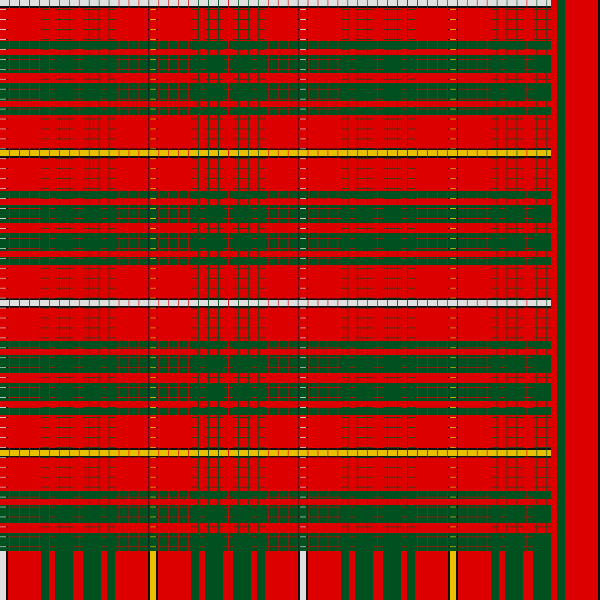 BruceClan tartan · Register ref. 398
This is the chief's own sett, still worn by today's Earl of Elgin and Kincardine. Lord Bruce believed the pattern came from a weaver's chart dating to 1571, and a specimen was kept by the Cumming-Bruces of Dumphail in the nineteenth century. Its age has not been independently confirmed, but it has long stood as the principal Bruce tartan.
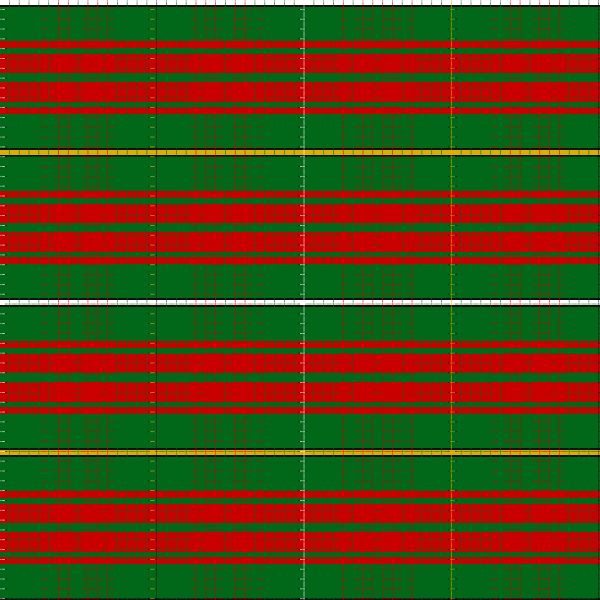 Bruce HuntingHunting tartan · Register ref. 402
This hunting version swaps the red and green of the main Bruce sett. The Register traces the threadcount to a sample from the weaver Coulson Bonner, labelled 'Earl of Elgin' and thought to have been woven around 1939 for a Colonel Bruce.
Get the kilt
When you order a kilt, ask for the tartan by its full name — for example “Bruce” — and say which colourway you want. “Modern” is dark and strong, “ancient” is lighter, “weathered” is muted. The sett is the same in each.
We are choosing retailers we trust and will list them here soon.
Wear the colours
Our own Bruce range is on its way: the name, the tartan and the motto on a heavyweight tee, a hoodie and a mug. About the shop.
Lands and seats
- Lochmaben Castle. In Annandale, the lordship the Bruces held from about 1124, when David I granted it to the family. The castle on this site was begun by Edward I of England in 1298, and the future Robert I besieged it for five days in 1299. Historic Environment Scotland also records a local tradition that Robert the Bruce was born here in 1274.
- Turnberry Castle. Head place of the earldom of Carrick, which Robert the Bruce inherited from his mother, Marjorie. Most accounts give this as his birthplace.
- Clackmannan Tower. Granted to the family by David II in 1359 and held by the Bruces until the late eighteenth century. Now cared for by Historic Environment Scotland.
- Broomhall House. Fife seat of the Earls of Elgin and Kincardine since the eighteenth century, and home of today's chief.
Surnames
The clan name and its spellings
- Bruce
- de Brus
- de Bruis
Names associated with Clan Bruce
- Carlisle
- Carruthers
- Crosbie
- Randolph
- Stenhouse
- Carlisle: Listed as a recognised sept by the Family of Bruce International, regardless of spelling.
- Carruthers: Also listed as a Bruce sept, though Carruthers is now recognised as a separate family with its own chief.
“Associated” means the name appears in published sept lists for this clan. It does not prove descent, and many names are linked to more than one clan. Where your family lived is often the better clue.
Questions people ask
What is the Bruce tartan?
The main Bruce tartan is the chief's own sett, recorded in the Scottish Register of Tartans with no confirmed date, though Lord Bruce believed it came from a weaver's chart of 1571. A hunting version, registered with a date of 1939, swaps the red and green of the main sett.
What is the Bruce motto and crest?
The motto is Fuimus, Latin for 'We have been'. The crest is a lion, shown standing with its tail extended, coloured blue with red claws and tongue.
Is Bruce a clan or a family?
The Standing Council of Scottish Chiefs classes Bruce as a family rather than a clan, a distinction it applies to several old Scottish names. Bruce still has a recognised chief, styled the Earl of Elgin and Kincardine, so it is widely called Clan Bruce in everyday use.
Which surnames are linked to Clan Bruce?
The Family of Bruce International lists Carlisle, Carruthers, Crosbie, Randolph and Stenhouse as recognised septs, alongside early spellings such as de Brus and de Bruis. Carruthers is now recognised as a separate family with its own chief.
Sources
- Bruce Family History — Family of Bruce International
- The Bruces from the years 1120 through 1329 — Family of Bruce International
- House Of Bruce — Family of Bruce International
- Broomhall — Family of Bruce International
- Q&A — Family of Bruce International
- Chiefs, Clans and Families — Standing Council of Scottish Chiefs
- Lochmaben Castle: History — Historic Environment Scotland
- Clackmannan Tower: History — Historic Environment Scotland
- Dunfermline Abbey and Palace: History — Historic Environment Scotland
- Robert the Bruce — Encyclopaedia Britannica
- Thomas Bruce, 7th earl of Elgin — Encyclopaedia Britannica
- The Competitors — The Royal Family
- Robert the Bruce — World History Encyclopedia
- Scottish Register of Tartans: Bruce — tartanregister.gov.uk
- Scottish Register of Tartans: Bruce Hunting — tartanregister.gov.uk
Clan histories are contested and sources disagree. If you can correct something here with a source, write to hello@tartanflag.com. Last updated 17 September 2026.