Clan Buchanan
Canonaich
A Loch Lomondside clan that lost its chiefly line to debt in 1681 and went without a chief for 337 years, until the Lord Lyon confirmed a new one in 2018.
History
Clan Buchanan takes its name from the old barony of Buchanan on the eastern shore of Loch Lomond, usually explained as the Gaelic Both Chanain, 'house of the canon'; the Buchanan Society gives the clan's Gaelic name as Canonaich. Tradition holds that an Irish prince, Anselan Ó Catháin, crossed from Ulster to Argyll around 1016 and was granted land for help against Norse raiders — a striking, undocumented story. The clan's traceable history begins later, with charters of the thirteenth and fourteenth centuries.
Solid record starts with the Earls of Lennox, who held superiority over the district. In 1225 the Earl of Lennox granted the small island of Clairinch, in Loch Lomond, to his seneschal Anselan of Buchanan (Absalon), for a nominal yearly rent; the island's name is said to be the source of the clan's war cry, 'Clar Innis'. In 1282 Donald, 6th Earl of Lennox, gave Maurice de Buchanan a charter of the lands of Buchanan itself, with the right to hold his own courts. A further charter, confirmed by David II in 1371, regranted the lands to Maurice's son; by then the family held Buchanan Auld House, near Drymen, as its seat.
The Buchanans backed Robert the Bruce during the Wars of Independence; tradition holds that Bruce sheltered on their land after his defeat at Dalrigh, though evidence for Bannockburn in 1314 is thin. Their best-attested feat of arms came a century later, in France: at the Battle of Baugé in 1421, Sir Alexander Buchanan is credited with striking down Thomas, Duke of Clarence, brother of Henry V, after Sir John Carmichael had already unhorsed him. The crest, a hand raising a ducal coronet, is said to recall that moment. The clan fought on at Flodden in 1513, Pinkie in 1547 and Langside in 1568; sources differ on whether the chief or his son Patrick died at Flodden.
The most celebrated Buchanan was not a soldier but a scholar. George Buchanan, born at Killearn in 1506, became one of Europe's leading Latin poets and humanist scholars, tutor to young James VI and a sharp critic of church and state; he died in Edinburgh in 1582. A lighter, local story concerns John Buchanan of Arnprior, uncle of the clan's 15th chief, said to have helped himself to royal deer meant for James V and, when challenged, replied that if James was king in Scotland, he was king of Kippen — a tale told locally, unproven but persistent.
The clan's fortunes declined through the seventeenth century under debt, its last fighting years spent in civil war. Sir George Buchanan commanded a Stirlingshire regiment for the Covenant, fought at Dunbar in 1650, and was captured at Inverkeithing in 1651, dying a prisoner. His successor, John Buchanan of that Ilk, was the last chief of the old line: he died in 1681 without a male heir, and his estate was sold to satisfy creditors, passing to the Marquess of Montrose. No chief was confirmed for the better part of 340 years. The Montrose family later replaced the ruined Auld House with Buchanan Castle, a Victorian mansion built nearby in 1852-58; roofless today, it survives as a listed building.
That long gap ended in 2018, when the Lord Lyon King of Arms confirmed John Michael Baillie-Hamilton Buchanan of that Ilk and Arnprior as Chief of the Name and Arms of Buchanan, after years of genealogical research into his descent from the old chiefly line. It was widely reported at the time as the first Buchanan chief in 337 years. He is styled 'The Buchanan', with his seat at Cambusmore, near Callander.
Clan Buchanan tartans
Names and reference numbers follow the Scottish Register of Tartans. Mills sell most setts in modern, ancient and weathered colourways. The pattern is the same; only the shades change.
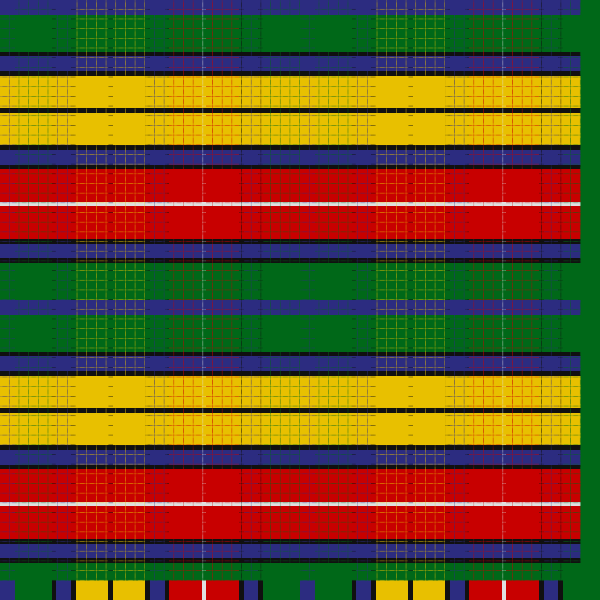 BuchananClan tartan · Register ref. 414
The Register traces this sett to W. & A. Smith of Mauchline, who recorded it in their 1850 book of clan and family tartans as the sett generally accepted as the genuine Buchanan pattern. At the time it was noted as worn by Archibald Buchanan of Catrinebank in Ayrshire.
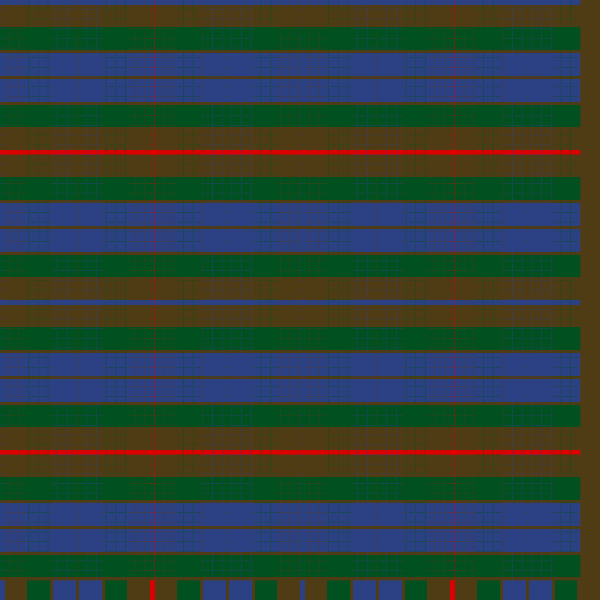 Buchanan HuntingHunting tartan · Register ref. 425
This muted brown, blue and green sett was given to the Highland Society by Sir Charles Buchanan in 1955. The Register traces its origin to the same nineteenth-century Vestiarium Scoticum material as the Fraser hunting tartan, a source whose authors are known to have blended genuine and invented setts.
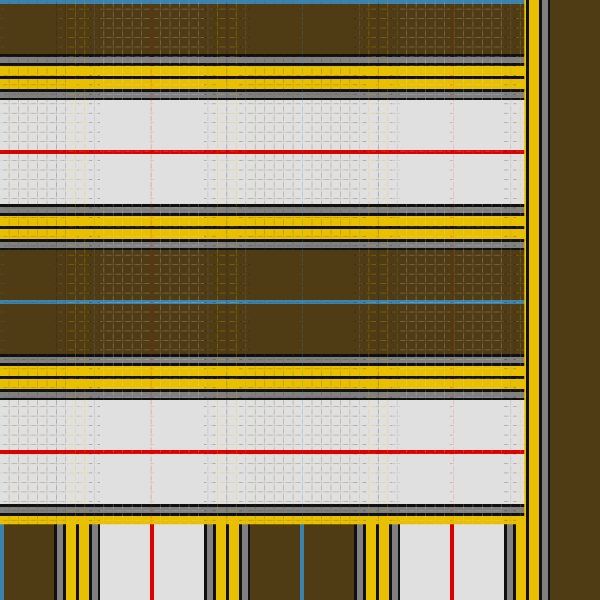 Buchanan DressDress tartan · Register ref. 423
A paler dress version of the sett, held in the Scottish Tartans Society's archive. The Register records no further documented history for it, and gives no date for its origin.
Get the kilt
When you order a kilt, ask for the tartan by its full name — for example “Buchanan” — and say which colourway you want. “Modern” is dark and strong, “ancient” is lighter, “weathered” is muted. The sett is the same in each.
We are choosing retailers we trust and will list them here soon.
Wear the colours
Our own Buchanan range is on its way: the name, the tartan and the motto on a heavyweight tee, a hoodie and a mug. About the shop.
Lands and seats
- Clairinch. A small island in Loch Lomond, granted to the clan's seneschal in 1225. The island's name is said to have given the clan its war cry, 'Clar Innis'. The Buchanan Society owns the island today.
- Buchanan Auld House. The chiefs' seat near Drymen from at least the thirteenth century until the estate was sold to pay debts in 1682. Only fragmentary ruins remain.
- Buchanan Castle. A Victorian mansion built in 1852-58 for the Dukes of Montrose near Drymen, replacing the Auld House. It is now roofless, though it survives as a category B listed building, LB4045, on Historic Environment Scotland's record.
- Cambusmore. Near Callander in the Trossachs; the seat of the present chief, confirmed by the Lord Lyon in 2018.
Surnames
The clan name and its spellings
- Buchanan
Names associated with Clan Buchanan
- MacAuslan
- MacWattie
- Risk
- Watson
- Watt
- Weir
- Gibson
- Gibb
- Gilbert
- MacGibbon
- Harper
- Lennie
- MacInally
- MacKinlay
- MacMaster
- Morris
- Richardson
- Spittal
- Yuille
- Dewar
- MacAuslan: One of only three septs recognised by the Buchanan Society of Glasgow, founded in 1725.
- MacWattie: One of only three septs recognised by the Buchanan Society of Glasgow, founded in 1725.
- Risk: One of only three septs recognised by the Buchanan Society of Glasgow, founded in 1725.
- Gibson: Also listed among the associated surnames of Clan Campbell.
- MacGibbon: Also listed among the associated surnames of Clan Campbell.
“Associated” means the name appears in published sept lists for this clan. It does not prove descent, and many names are linked to more than one clan. Where your family lived is often the better clue.
Questions people ask
What is the Buchanan tartan?
The main Buchanan tartan is a bold sett of blue, yellow, black, red and white, recorded in the Scottish Register of Tartans with a date of 1850. Hunting and dress versions are also registered, in a muted brown-and-green colourway and a paler variant respectively.
What is the Buchanan motto and crest?
The motto is Clarior hinc honos, Latin for roughly 'Hence the brighter honour'. The crest is a hand raising a ducal coronet within two laurel branches, a device said to recall Sir Alexander Buchanan's killing of the Duke of Clarence at the Battle of Baugé in 1421. The clan's war cry, 'Clar Innis', is said to come from Clairinch, the small Loch Lomond island granted to the family in 1225.
Does Clan Buchanan have a chief?
Yes, since 2018. The Lord Lyon confirmed John Michael Baillie-Hamilton Buchanan of that Ilk and Arnprior as Chief of the Name and Arms of Buchanan that year, the first chief the clan had had since the last of the old line died in 1681.
Which surnames are linked to Clan Buchanan?
The Clan Buchanan Society lists more than fifty associated surnames, including MacAuslan, MacWattie, Risk, Watson, Gibson, Harper and Spittal. The separate, older Buchanan Society of Glasgow, a charity founded in 1725, recognises a narrower set of three: MacAuslan, MacWattie and Risk.
Sources
- Clan History, part 1 — The Clan Buchanan
- Clan History, part 2 — The Clan Buchanan
- Our Chief — The Clan Buchanan
- Clan Buchanan surnames list — The Clan Buchanan
- About the Society — Buchanan Society (Glasgow, est. 1725)
- Crest and Motto — Buchanan Society (Glasgow, est. 1725)
- Buchanan Castle (LB4045) — Historic Environment Scotland
- The Island of Clairinch — The Clan Buchanan
- Battles — The Clan Buchanan
- The Family Tree of Clan Buchanan — The Clan Buchanan
- George Buchanan — Encyclopaedia Britannica
- Battle of Baugé — Encyclopaedia Britannica
- Thomas Plantagenet, duke of Clarence — Encyclopaedia Britannica
- Buchanan clan crowns chief for first time since 1681 — The Scotsman
- The King of Kippen — Kippen Village
- Clan Buchanan — Wikipedia (supplementary check)
- Scottish Register of Tartans: Buchanan — tartanregister.gov.uk
- Scottish Register of Tartans: Buchanan Hunting — tartanregister.gov.uk
- Scottish Register of Tartans: Buchanan Dress — tartanregister.gov.uk
Clan histories are contested and sources disagree. If you can correct something here with a source, write to hello@tartanflag.com. Last updated 17 September 2026.