Clan Burnett
The Burnetts of Leys are said to have held land on Deeside, in Aberdeenshire, since a grant dated 1323. Their home from the sixteenth century was Crathes Castle, now in the care of the National Trust for Scotland.
History
Accounts of the Burnetts of Leys begin in 1323. Several say that Robert the Bruce rewarded Alexander Burnard, also spelled Alexander de Burnard or Alexander Burnett, with land near Banchory and the post of Royal Forester of Drum. The surname appears in different spellings from one account to the next, which is typical of families from this era.
A carved ivory horn, the Horn of Leys, is said to have symbolised that forestry post. Today it hangs in the High Hall at Crathes. One account has the Bruce handing it over together with the charter. That is tradition, not documented fact, and we cannot show that the horn is as old as the story says.
According to these accounts, the family spent roughly its first 250 years on a crannog, a man-made island, in the Loch of Leys north of Banchory. The loch has since been drained. An island home gave a measure of security, though it can hardly have been comfortable across so many generations.
The family reached dry land in the sixteenth century. Building of the tower house at Crathes Castle started in 1553, stalled more than once, and was completed in 1596. One account puts the delays down to the unrest of Mary, Queen of Scots' reign. Sources disagree about which lairds oversaw the work, so we name none. Crathes remains a fine Scottish tower house, with painted ceilings and heraldic decoration indoors.
Crathes stayed with the Burnetts into the twentieth century. One account says Major-General Sir James Burnett, thirteenth baronet of Leys, gave the castle and estate to the National Trust for Scotland in 1951, while another says 1952. One source reports that a fire in 1966 damaged the Queen Anne wing. Visitors can now tour the castle, which the Trust looks after.
The family motto, Virescit vulnere virtus, is usually rendered as courage flourishes at a wound, though some sources phrase the English a little differently, so that is a question of wording rather than fact. Not everyone called Burnett, Burnet or Barnet descends from the Leys line, and a shared surname alone proves nothing about ancestry.
Clan Burnett tartans
Names and reference numbers follow the Scottish Register of Tartans. Mills sell most setts in modern, ancient and weathered colourways. The pattern is the same; only the shades change.
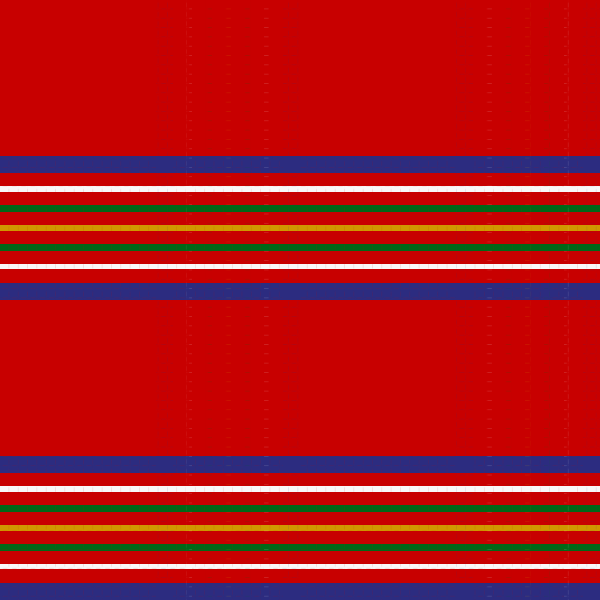 BurnettClan tartan · Register ref. 444
The Register says this sett was recorded at the Lyon Court in October 1838 but was not defined there. It cites D.C. Stewart for the entry. A broad red field carries narrow bands of blue, white and green.
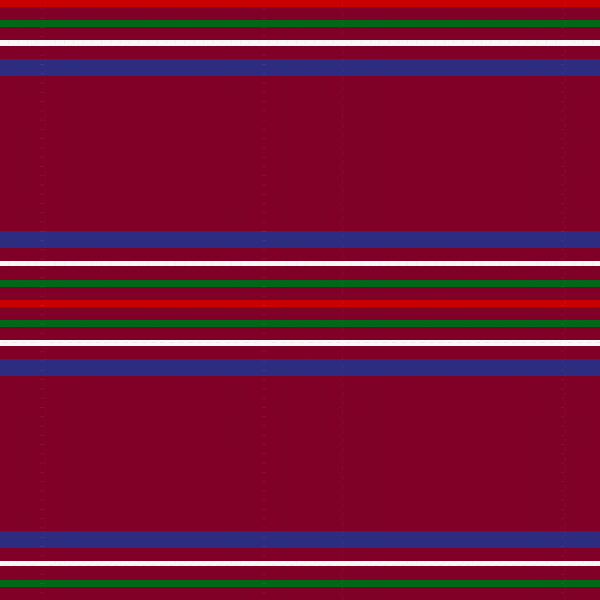 Burnett HuntingHunting tartan · Register ref. 445
The Register says this is a sample sent by Burnett of Leys in 1988. It differs only slightly in colour from the usual Burnett of Leys sett, with dark ruby in place of most of the red.
Get the kilt
When you order a kilt, ask for the tartan by its full name — for example “Burnett” — and say which colourway you want. “Modern” is dark and strong, “ancient” is lighter, “weathered” is muted. The sett is the same in each.
We are choosing retailers we trust and will list them here soon.
Wear the colours
Our own Burnett range is on its way: the name, the tartan and the motto on a heavyweight tee, a hoodie and a mug. About the shop.
Lands and seats
- Crathes Castle. Near Banchory on Deeside. The Burnetts of Leys built it in the sixteenth century. It passed to the National Trust for Scotland in the early 1950s, and sources give 1951 or 1952.
Surnames
The clan name and its spellings
- Burnett
- Burnet
- Burnette
- Burnard
- MacBurnet
Names associated with Clan Burnett
- Bernard
- Barnet
- Barnett
- Bernard: A widely held surname with other origins.
- Barnet: May be a separate surname in Scotland; the name alone does not prove a link.
- Barnett: As for Barnet.
“Associated” means the name appears in published sept lists for this clan. It does not prove descent, and many names are linked to more than one clan. Where your family lived is often the better clue.
Questions people ask
What is the Burnett tartan?
The Scottish Register of Tartans lists Burnett of Leys as the main sett, recorded at the Lyon Court in 1838. A hunting version in a darker ruby red is also registered.
What is the Burnett motto?
The motto is Virescit vulnere virtus, 'Courage flourishes at a wound'. Some sources word the English a little differently.
Which surnames are linked to Burnett?
Spellings such as Burnet, Burnette, Burnard, Barnet and Barnett are linked to Burnett. Some of these, Barnet in particular, may be separate surnames, so the name alone does not prove a link.
Where are the Burnetts from?
The Burnetts of Leys are from Deeside in Aberdeenshire. Their castle at Crathes, near Banchory, is now cared for by the National Trust for Scotland.
Sources
- Burnett of Leys (ref. 444) — Scottish Register of Tartans
- Burnett of Leys Hunting (ref. 445) — Scottish Register of Tartans
- History & Heritage — Leys Estate
- House of Burnett International — Scots of Canada (scotscanada.ca)
- Crathes Castle — Undiscovered Scotland
Clan histories are contested and sources disagree. If you can correct something here with a source, write to hello@tartanflag.com. Last updated 10 October 2026.