Clan Campbell
Na Caimbeulaich
Clan Campbell rose from Loch Awe to dominate Argyll and the western Highlands. Its chief is the Duke of Argyll, styled MacCailein Mòr, and its tartan is the dark sett shared with the Black Watch.
History
The Campbells rose from modest beginnings to become the most powerful family in the western Highlands. The first of the name in surviving records held land near Stirling in 1263, and a Campbell landowner is recorded in Kintyre in 1293. Clan tradition says an ancestor married the heiress of the O'Duibne people of Loch Awe, and the Clan Campbell Society traces the family's deeper roots to the Britons of Strathclyde. Neither claim can be documented. The name is usually explained as the Gaelic cam beul, 'crooked mouth', a nickname that stuck. It was first written Cambel.
Sir Cailean Mòr of Loch Awe was killed in a fight with the MacDougalls in 1296. Every chief since has been styled MacCailein Mòr, 'son of Great Colin'. His son Sir Neil backed Robert the Bruce and married the king's sister Mary. Bruce's victory brought the Campbells lands and standing in Argyll.
The climb continued through the fifteenth century. Duncan Campbell became Lord Campbell in 1445. Colin Campbell was created 1st Earl of Argyll in 1457 and served as Chancellor of Scotland. In 1465 he gained a Lowland stronghold near Dollar through marriage. Renamed Castle Campbell in 1489, it served the earls for some two hundred years. Branches spread the name well beyond Argyll: the Campbells of Breadalbane in Perthshire, of Cawdor in Nairnshire and of Loudoun in Ayrshire.
The earls were leading Protestants at the Reformation, and they paid for their politics in the century that followed. The 8th Earl led the party opposed to the king during the civil wars and was executed in 1661. His son, the 9th Earl, was executed in 1685 for opposing James VII. The 10th Earl fared better under William of Orange and was created Duke of Argyll in 1701.
The Campbell name is often tied to the Massacre of Glencoe. In February 1692 soldiers of the Earl of Argyll's regiment, led by Captain Robert Campbell of Glenlyon, killed around 38 MacDonalds. It is worth being precise about it. The order came from Sir John Dalrymple, Secretary of State for Scotland, under King William's signature. It was the state's doing, not a clan quarrel, though it has coloured feeling between the two names ever since.
In the Jacobite risings the chiefs stood with the government. The 2nd Duke commanded the government army in 1715, and Campbells fought on the Hanoverian side at Culloden. Today the chief is the Duke of Argyll, whose home is Inveraray Castle on Loch Fyne. According to the Clan Campbell Society he approves four tartans: the main Campbell sett, and those of Breadalbane, Cawdor and Loudoun.
Clan Campbell tartans
Names and reference numbers follow the Scottish Register of Tartans. Mills sell most setts in modern, ancient and weathered colourways. The pattern is the same; only the shades change.
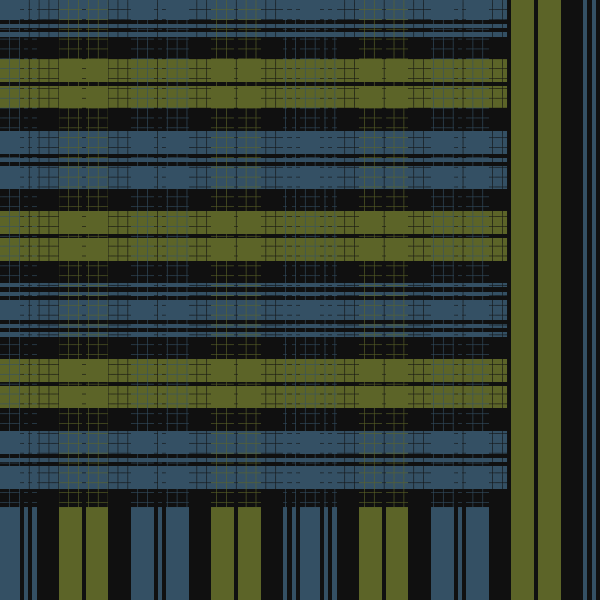 CampbellClan tartan · Register ref. 502
The Register dates this sett to 1725, when it was appointed for the Highland Independent Companies, and later the Black Watch. It notes that Campbells may well have worn it earlier, and that the Duke of Argyll wears and has approved it. Black Watch is the same sett dyed in darker shades.
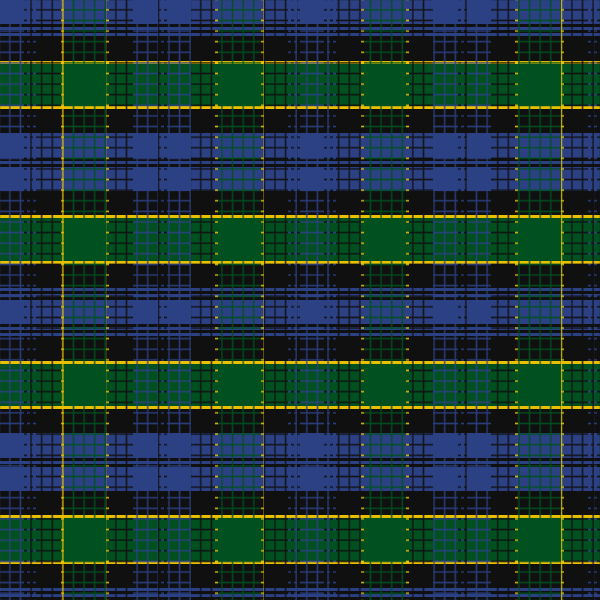 Campbell of BreadalbaneOther sett · Register ref. 515
The sett of the Breadalbane branch, marked by yellow lines on the green. The Register records a thread count given by James Logan in 1831 and plates in Smibert (1850) and later collections. The Clan Campbell Society lists it among the tartans approved by the chief.
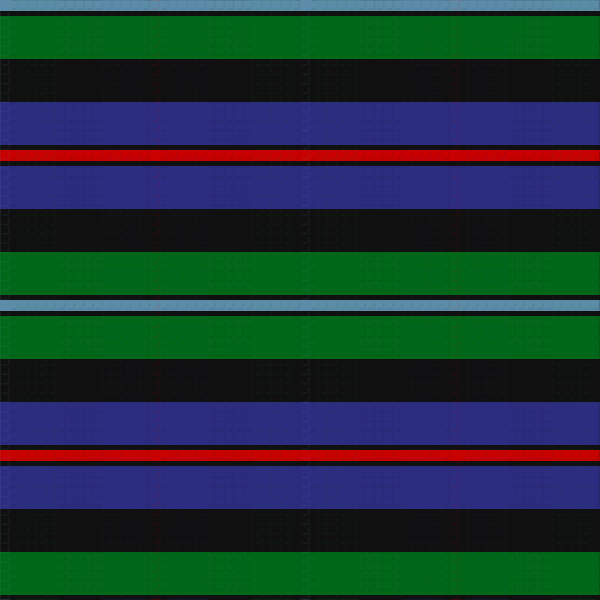 Campbell of CawdorOther sett · Register ref. 518
One of Wilsons of Bannockburn's variations on the military sett, with azure and red lines. The Register says it began as a numbered pattern, was sold as 'Argyle' from 1798, and was first called Campbell of Cawdor in print in 1850. It is authorised by the chief.
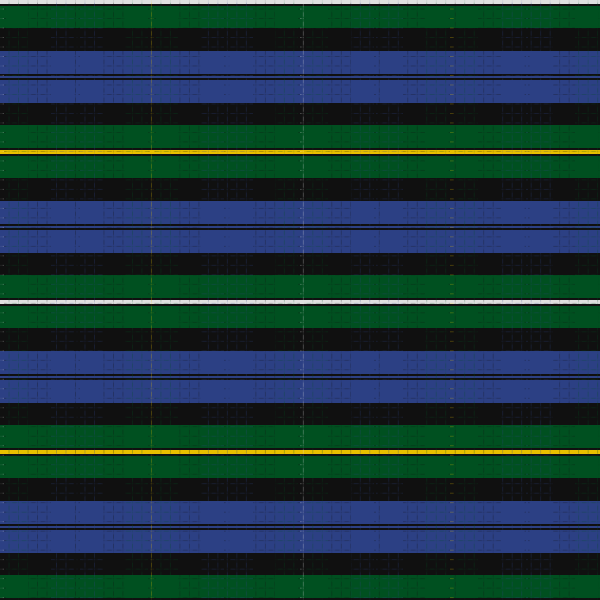 Campbell of LoudounOther sett · Register ref. 524
The sett of the Ayrshire branch, with white and yellow lines. The Register gives this as the accepted version shown in W. & A. K. Johnston's 1906 books, and notes that it differs from an earlier version in the 1880 Clans Originaux.
Get the kilt
When you order a kilt, ask for the tartan by its full name — for example “Campbell” — and say which colourway you want. “Modern” is dark and strong, “ancient” is lighter, “weathered” is muted. The sett is the same in each.
We are choosing retailers we trust and will list them here soon.
Wear the colours
Our own Campbell range is on its way: the name, the tartan and the motto on a heavyweight tee, a hoodie and a mug. About the shop.
Lands and seats
- Inveraray Castle. Home of the Dukes of Argyll on Loch Fyne, and the seat of the chief.
- Castle Campbell. Lowland stronghold above Dollar, acquired by the 1st Earl of Argyll in 1465 and renamed Castle Campbell in 1489. Now cared for by Historic Environment Scotland.
- Cawdor Castle. Nairnshire seat of the Campbells of Cawdor.
Surnames
The clan name and its spellings
- Campbell
- Cambel
Names associated with Clan Campbell
- MacArthur
- Bannatyne
- Burns
- Calder
- MacConnochie
- Denoon
- Gibson
- MacGibbon
- Harris
- Hastings
- MacIsaac
- MacIver
- Orr
- Ure
- MacKellar
- Lorne
- Loudoun
- MacTavish
- Thomson
- Bannatyne: Also appears in sept lists for the Stewarts of Bute.
- Calder: Listed with Caddell and Cadell.
- MacConnochie: Similar forms such as MacConachie are also linked to Clan Donnachaidh (Robertson).
- MacIver: Also appears in the Clan Donnachaidh Society's list of names.
- Lorne: Also appears in sept lists for the Stewarts of Appin.
- MacTavish: Listed as a Campbell sept. Clan MacTavish is a separate clan with its own chief, listed by the Standing Council of Scottish Chiefs.
- Thomson: A very common surname. The Clan Campbell Society points out that many unconnected families bear names meaning 'son of Thomas'.
“Associated” means the name appears in published sept lists for this clan. It does not prove descent, and many names are linked to more than one clan. Where your family lived is often the better clue.
Questions people ask
What is the Campbell tartan?
The main Campbell tartan is a dark sett of blue, green and black, recorded in the Scottish Register of Tartans with a date of 1725. It is the same pattern as the Black Watch, which is dyed in darker shades. The Clan Campbell Society says the chief also approves the Breadalbane, Cawdor and Loudoun setts.
What is the Campbell motto and crest?
The motto is Ne obliviscaris, Latin for 'Forget not'. The crest is a boar's head, worn by clan members inside a strap and buckle bearing the motto.
Which surnames are associated with Clan Campbell?
The Clan Campbell Society lists names such as MacArthur, Burns, Calder, MacIver, MacKellar, Loudoun, MacTavish and Thomson. The society itself warns that the evidence for some links is thin, and that common names such as Thomson have many unconnected origins.
Where do the Campbells come from?
The clan's heartland is Argyll, first around Loch Awe and later Inveraray on Loch Fyne. Branches settled in Breadalbane in Perthshire, Cawdor in Nairnshire and Loudoun in Ayrshire.
Sources
- Clan Campbell History — Clan Campbell Society (North America)
- Septs of Clan Campbell — Clan Campbell Society (North America)
- Clan Campbell FAQ — Clan Campbell Society (North America)
- Members: chiefs — Standing Council of Scottish Chiefs
- Castle Campbell: History — Historic Environment Scotland
- Campbell family — Encyclopaedia Britannica
- Massacre of Glencoe — Encyclopaedia Britannica
- The Glencoe Massacre — National Trust for Scotland
- Clan Campbell Timeline — Clan Campbell Society (North America)
- Archibald Campbell, 10th earl and 1st duke of Argyll — Encyclopaedia Britannica
- Na Caimbeulaich agus an 45 (The Campbells and the 45) — LearnGaelic
- Clan Campbell — Wikipedia (supplementary check)
- Scottish Register of Tartans: Campbell — tartanregister.gov.uk
- Scottish Register of Tartans: Campbell of Breadalbane — tartanregister.gov.uk
- Scottish Register of Tartans: Campbell of Cawdor — tartanregister.gov.uk
- Scottish Register of Tartans: Campbell of Loudoun — tartanregister.gov.uk
Clan histories are contested and sources disagree. If you can correct something here with a source, write to hello@tartanflag.com. Last updated 17 September 2026.