Clan Chisholm
The Chisholms came originally from Roxburghshire and grew into a Highland clan in Strathglass, Inverness-shire, centred on Erchless Castle. The Lord Lyon recognises a Chisholm chief.
History
The Chisholms did not start out in the Highlands. Their surname is usually derived from the lands of Chisholme in Roxburghshire, where the family shows up in Scottish records during the twelfth and thirteenth centuries, one of many Border houses holding land in the crown's service.
The route north ran through royal office. Sir Robert de Chesholme, captured at the Battle of Neville's Cross in 1346, is said to have become Constable of Urquhart Castle on Loch Ness by 1359, and tradition credits that appointment with drawing the family into the Great Glen. The better documented event came later: in 1368 his son Alexander married Margaret, Lady of Erchless, and Erchless Castle became the family's home.
Working from Erchless, the Chisholms held Strathglass, Glen Affric and Glen Cannich in the Inverness-shire Highlands, and their chiefs took the title The Chisholm. The castle sits on the River Beauly at the point where the river leaves the hills. It was the estate's administrative centre and stayed in the family for over five hundred years. These three glens formed the core of the clan's territory.
The clan's best-known link is with the Jacobite rising of 1745. The chief of the time kept officially neutral, yet his youngest son, Roderick Og Chisholm, led about eighty men to Culloden in 1746. He was killed there, and some thirty of his followers are said to have died alongside him. Hard times followed in Strathglass through the eighteenth and nineteenth centuries, as the Highland clearances emptied the glens and many families emigrated. Their descendants form a large share of the Chisholm community worldwide.
Erchless left the family in 1935, but the clan carried on. The Clan Chisholm Society keeps members in touch worldwide through newsletters and gatherings, the latest recorded here being in Inverness in 2024, when a picnic took place in the grounds of Erchless.
Chisholm is a widespread surname in Scotland and further afield, and not every bearer descends from the Strathglass chiefs. The name may have arisen separately in several places, so, as a general rule, anyone researching a Chisholm line should check the records rather than presume a link to Erchless.
Clan Chisholm tartans
Names and reference numbers follow the Scottish Register of Tartans. Mills sell most setts in modern, ancient and weathered colourways. The pattern is the same; only the shades change.
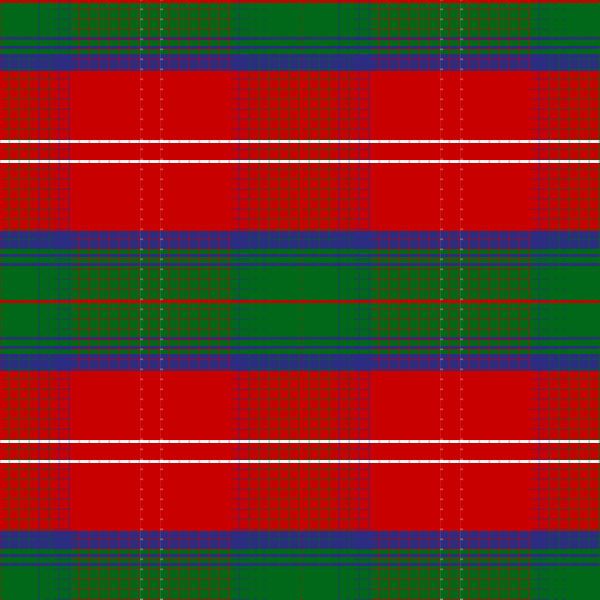 ChisholmClan tartan · Register ref. 638
The Register records this sett as it appears in James Grant's 1886 book on the clan tartans. It is close to a sample held by the Highland Society of London, which dates from 1815.
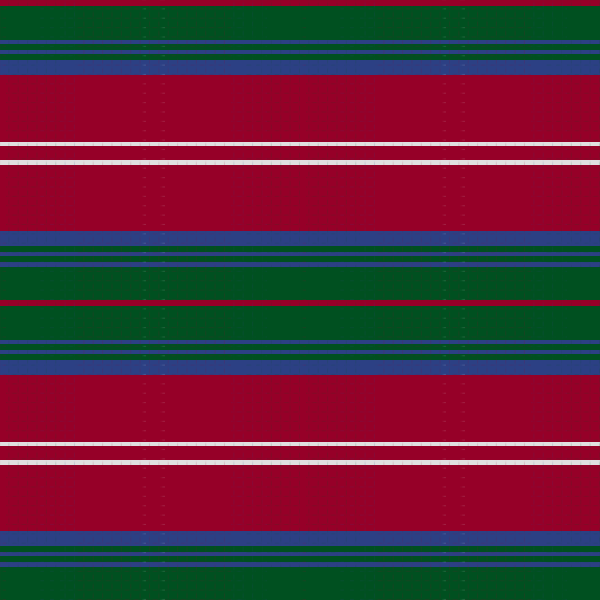 Chisholm HuntingHunting tartan · Register ref. 640
The Register suggests this may be the true source of the sett published in the Vestiarium Scoticum, with the crimson changed to red. The Highland Society of London collection, now in the National Museum in Edinburgh, holds a related sample.
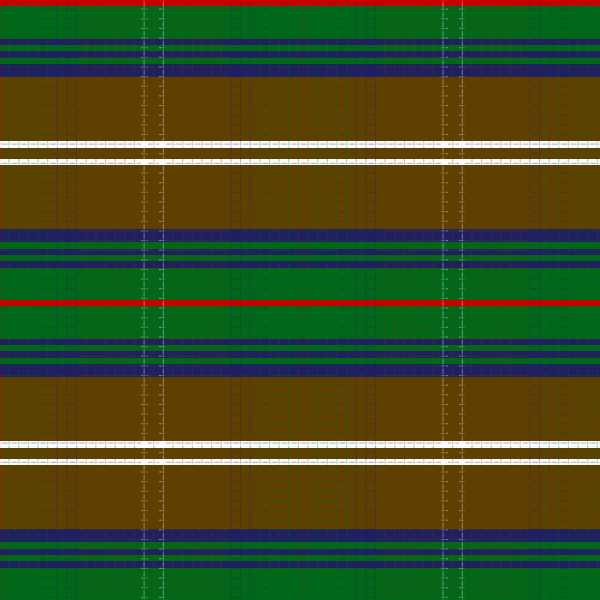 Chisholm HuntingHunting tartan · Register ref. 641
A subdued version of the tartan with a brown ground in place of red. The Register notes that Victorian makers often toned down the bright aniline dyes of the 1860s this way. The count comes from a woven sample in the Scottish Tartans Authority's collection.
Get the kilt
When you order a kilt, ask for the tartan by its full name — for example “Chisholm” — and say which colourway you want. “Modern” is dark and strong, “ancient” is lighter, “weathered” is muted. The sett is the same in each.
We are choosing retailers we trust and will list them here soon.
Wear the colours
Our own Chisholm range is on its way: the name, the tartan and the motto on a heavyweight tee, a hoodie and a mug. About the shop.
Lands and seats
- Erchless Castle. Stands beside the River Beauly in Strathglass. It passed to the family through a marriage in 1368 and remained theirs until 1935.
Surnames
The clan name and its spellings
- Chisholm
- Chisolm
- Chisham
- Chisam
- Chism
- Chisum
Names associated with Clan Chisholm
- Fenton
- Kinglass
- Fenton: Listed among the names associated with Clan Chisholm. Fenton is also a surname in its own right elsewhere.
- Kinglass: Listed among the names associated with Clan Chisholm. Rare today.
“Associated” means the name appears in published sept lists for this clan. It does not prove descent, and many names are linked to more than one clan. Where your family lived is often the better clue.
Questions people ask
What is the Chisholm tartan?
The main Chisholm tartan is a red-ground sett with green and blue, recorded in the Scottish Register of Tartans as the sett published by James Grant in 1886. There are also hunting versions, including one with a brown ground.
What is the Chisholm motto?
The motto is Feros ferio, Latin for 'I am fierce with the fierce'. The chiefly arms include a boar's head.
Where is Clan Chisholm from?
The name derives from Chisholme in Roxburghshire. The family became a Highland clan after a marriage in 1368 gave them Erchless Castle and Strathglass.
What surnames are associated with Clan Chisholm?
Chisolm, Chisham, Chisam, Chism and Chisum are spelling variants, while Fenton and Kinglass appear as associated names. A shared surname does not prove descent from the Strathglass chiefs.
Sources
- Chisholm — COSCA - Council of Scottish Clans & Associations
- Chisholm History — Strathglass Heritage Association
- International Clan Chisholm Society — clanchisholmsociety.org
- International Clan Gathering 2024, Inverness — clanchisholmsociety.org
- Clan Chisholm and the History of Erchless Castle — Erchless Castle Estate
- Chisholm tartan (ref. 638) — Scottish Register of Tartans
- Chisholm Hunting tartan (ref. 640) — Scottish Register of Tartans
- Chisholm Hunting #2 tartan (ref. 641) — Scottish Register of Tartans
Clan histories are contested and sources disagree. If you can correct something here with a source, write to hello@tartanflag.com. Last updated 29 September 2026.