Clan Cochrane
Clan Cochrane traces its roots to Renfrewshire and rose to prominence as the Earls of Dundonald, the family that still holds the chiefship today.
History
The Cochrane surname is territorial, taken from an estate the family once held near Paisley in Renfrewshire; the name turns up in early charters spelled variously as Cochrane, Coueran and Couran. Documented family history begins in the mid-to-late thirteenth century, and among the earliest individuals named is William de Coughran, who swore fealty to Edward I of England in 1296. A more colourful family story pushes the line back further, to a Norse forebear said to have put down roots in the district generations before that, though no record backs this up, and genealogists generally favour the plainer explanation that the family simply took its name from the Renfrewshire land it held.
The Cochranes remained a Renfrewshire family of local standing for several centuries before their fortunes changed sharply in the seventeenth century. Sir William Cochrane, knighted under Charles I, backed the Royalist cause during the Wars of the Three Kingdoms and was fined heavily for it under Cromwell's government in 1654. He had bought the Ayrshire estate of Dundonald in 1638, and in 1647 was made Baron Cochrane of Dundonald. After the Restoration his loyalty was rewarded again: in 1669 he was created Earl of Dundonald, and that earldom has been the chiefly title of Clan Cochrane ever since.
The family's prominence continued, not always smoothly, into the next generations of Earls, several drawn into the political upheavals of the later Stuart period before settling their allegiance behind the 1688-89 revolution. The Cochranes sold most of the Dundonald estate in 1726 but kept the castle itself, by then already ruinous, as a link to the title it had given them.
The clan's best-known figure is Thomas Cochrane, 10th Earl of Dundonald, a Royal Navy officer whose daring raids against French shipping in the Napoleonic Wars made his name before a wrongful fraud conviction cost him his commission and his seat in Parliament. Undeterred, he spent much of the 1820s at sea again, this time commanding first Chile's navy, then Brazil's and finally Greece's, as each fought free of imperial rule, a run of exploits that earned him the nickname "the Sea Wolf". Pardoned and reinstated as a Royal Navy admiral in 1832, his exploits later helped inspire well-known fictional naval captains of twentieth-century fiction.
In the twentieth century the family's direct ownership of Dundonald Castle ended when the 13th Earl gave the ruin to the state in 1953; it is now cared for by Historic Environment Scotland as a visitor attraction. The chiefly seat moved west to Lochnell in Argyll, a house built in the 1700s that had earlier belonged to the Campbells of Lochnell. The 14th Earl altered the proportions of the clan tartan in 1974, and his son, the present 15th Earl, restored the original sett and registered it in 1984, later adding a hunting tartan in 2008 and reviving an older azure tartan first recorded to the 12th Earl.
Today the Earl of Dundonald is recognised as chief of Clan Cochrane, represented internationally through bodies such as the Clan Cochrane Society. Cochranes and their variant-spelled kin are found across Scotland, Ireland and the wider Scottish diaspora, and the family's path from Renfrewshire landowners to an Ayrshire earldom and, eventually, an Argyll seat traces one of the more eventful stories among Scotland's lowland clans.
Clan Cochrane tartans
Names and reference numbers follow the Scottish Register of Tartans. Mills sell most setts in modern, ancient and weathered colourways. The pattern is the same; only the shades change.
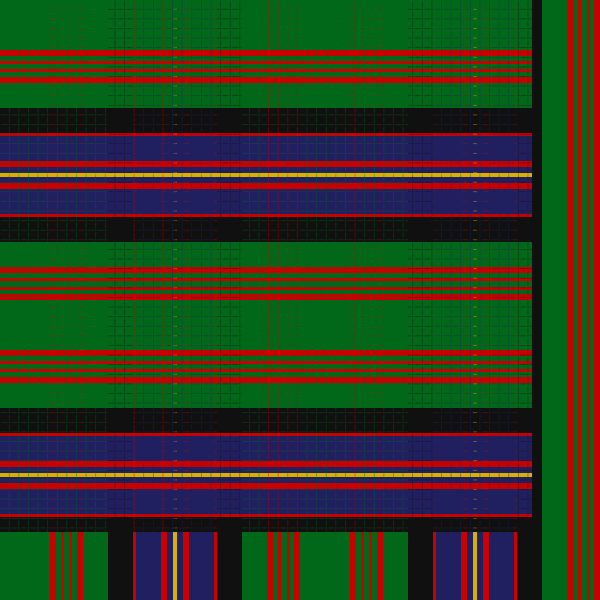 CochraneClan tartan · Register ref. 695
The 14th Earl of Dundonald altered this sett's proportions in 1974, and the 15th Earl reverted to the original grouping of lines and registered it with the Lord Lyon in 1984. It is the version currently recommended as the clan tartan.
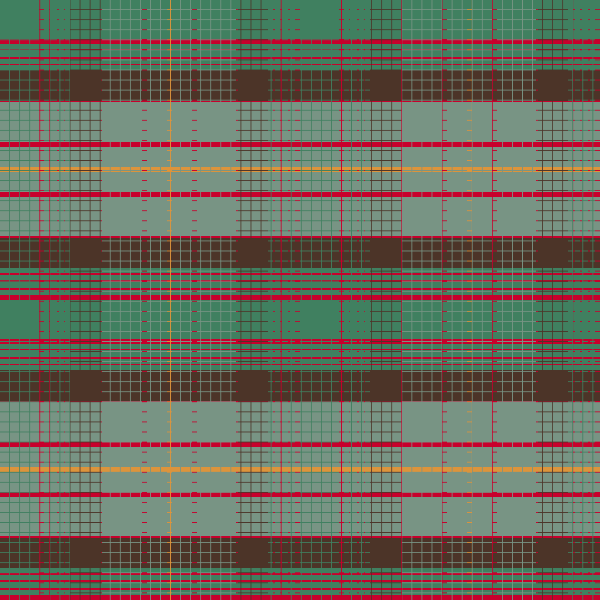 Cochrane HuntingHunting tartan · Register ref. 11165
Registered by the 15th Earl of Dundonald in 2008 for informal, day-to-day wear. Its muted tones are meant to echo the effect of natural dyes, though the tartan itself is woven with modern dyeing methods.
 Cochrane AzureOther sett · Register ref. 698
A blue-ground tartan first associated with the 12th Earl of Dundonald, recreated by the 15th Earl in 1985. It is a less common sett than the standard clan tartan and is recommended today for evening wear.
Get the kilt
When you order a kilt, ask for the tartan by its full name — for example “Cochrane” — and say which colourway you want. “Modern” is dark and strong, “ancient” is lighter, “weathered” is muted. The sett is the same in each.
We are choosing retailers we trust and will list them here soon.
Wear the colours
Our own Cochrane range is on its way: the name, the tartan and the motto on a heavyweight tee, a hoodie and a mug. About the shop.
Lands and seats
- Lochnell Castle and House, Argyll. An eighteenth-century house originally built for the Campbells of Lochnell; it later passed to the Cochranes and is the current home of the Earls of Dundonald.
- Dundonald Castle, South Ayrshire. Bought by Sir William Cochrane in 1638, giving the family the title from which their earldom takes its name; the 13th Earl gave the ruined castle to the state in 1953 and it is now cared for by Historic Environment Scotland.
- Cochrane Castle (site), near Johnstone, Renfrewshire. The family's original home near Paisley, held from at least the fourteenth century; little survives beyond a small Victorian memorial tower built in 1896.
Surnames
The clan name and its spellings
- Cochrane
- Cochran
- Cochren
- Cockran
- Cockrum
- Coughran
- Couran
- Coueran
“Associated” means the name appears in published sept lists for this clan. It does not prove descent, and many names are linked to more than one clan. Where your family lived is often the better clue.
Questions people ask
Who is the chief of Clan Cochrane?
The chief of Clan Cochrane holds the title Earl of Dundonald, currently the 15th holder of that earldom. The chiefship has passed down through the Earls of Dundonald since the title was created in 1669.
What is the Cochrane clan motto?
The motto is Virtute et Labore, Latin for "by virtue and by labour". It appears on the belt-and-buckle crest badge worn by clan members.
Is Cochrane a Scottish clan?
Yes. Cochrane is a Lowland Scottish clan with its roots in Renfrewshire, and its chiefly house, the Earls of Dundonald, is recognised by the Standing Council of Scottish Chiefs.
What tartan does Clan Cochrane wear?
The main Cochrane tartan (Scottish Register of Tartans reference 695) is the recommended clan tartan, last set by the 15th Earl of Dundonald in 1984. A hunting tartan (2008) and a blue-ground Cochrane Azure tartan, recreated in 1985 from an older sett, are also registered.
Sources
- Cochrane, Scottish Register of Tartans — National Records of Scotland
- Cochrane Hunting, Scottish Register of Tartans — National Records of Scotland
- Cochrane Azure, Scottish Register of Tartans — National Records of Scotland
- Members of the Standing Council of Scottish Chiefs — The Standing Council of Scottish Chiefs
- The Clan / Our Chief — Clan Cochrane Society of North America
- History and stories, Dundonald Castle — Historic Environment Scotland
- Thomas Cochrane, 10th earl of Dundonald — Encyclopaedia Britannica
- Cochran or Cochrane — Electric Scotland
Clan histories are contested and sources disagree. If you can correct something here with a source, write to hello@tartanflag.com. Last updated 26 September 2026.