Clan Colquhoun
A Dunbartonshire clan from the shores of Loch Lomond, chiefed by Colquhoun of Luss and remembered for the 1603 rout at Glen Fruin.
History
Clan Colquhoun takes its name from a stretch of land on the north bank of the River Clyde, near Dumbarton, rather than from a Gaelic forename — one of the reasons historians tend to place it among the Lowland clans rather than the Highland ones. By clan tradition the story starts around 1241, during Alexander II's reign, when the Earl of Lennox made a grant to a man called Humphrey de Kilpatrick covering not just Colquhoun but Auchentorlie and Dumbuck alongside it. A generation on, his son Ingram is remembered as the one who let the family's old surname go and took a new one instead, borrowed straight from that same patch of ground.
For over a century the family held Dunglass Castle, a stronghold on a rocky point above the Clyde, and later generations of Colquhoun lairds served as keepers of the nearby royal fortress at Dumbarton. The clan's centre of gravity shifted north and west around 1368, when Sir Robert Colquhoun married the heiress of the barony of Luss, on Loch Lomond. The match brought substantial new lands into the family, and within a century — a charter of 1457 folded the older Colquhoun holdings into a single free barony of Luss — the chiefly style had settled into "of Colquhoun and Luss," which the family still carries.
The clan motto, Si je puis, is said by clan tradition to go back to 1424, when James I ordered Sir John Colquhoun to retake Dumbarton Castle from the Earl of Lennox. According to the story, Colquhoun answered the king with those words, then lured the castle's garrison out by staging a stag hunt past its gates so his men could seize the walls while the soldiers gave chase. It is a good tale, and it sits neatly alongside the stag's-head crest the family still bears, but like a great deal of clan lore it survives as tradition rather than as a documented event, and is best read that way.
The clan's grimmest chapter came on 7 February 1603, at the Battle of Glen Fruin, a few miles inland from Luss. A running feud with Clan Gregor over stolen livestock boiled over into open battle, and the Colquhouns were routed, with well over a hundred of their men left dead on the field. The defeat had consequences far beyond the glen: an outraged James VI, moved in part by an account of the Colquhoun dead being paraded before him in Edinburgh, had the MacGregor name proscribed outright, banning it for close to a century and a half.
The clan's symbolic home today is Rossdhu, on a low headland jutting into Loch Lomond. The medieval castle that once stood there was replaced in 1773 by the Georgian mansion of Rossdhu House, built for Sir James Colquhoun, and the house still stands as the family's traditional seat, even though the wider estate is now run as a golf club. The Colquhoun baronetcy of Luss was created in 1786, and the family has held the clan chiefship alongside it ever since. The present chief, Sir Malcolm Rory Colquhoun of Luss, 9th Baronet, succeeded his father in 2008, and the Clan Colquhoun International Society continues to gather members with the surname and its variants from around the world.
Clan Colquhoun tartans
Names and reference numbers follow the Scottish Register of Tartans. Mills sell most setts in modern, ancient and weathered colourways. The pattern is the same; only the shades change.
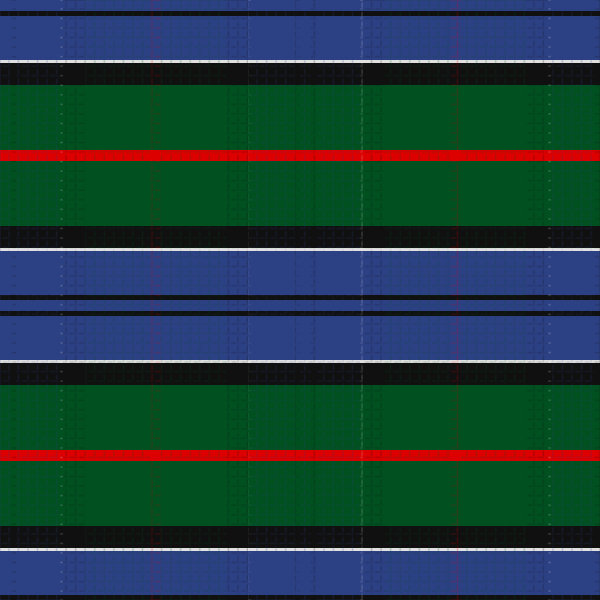 ColquhounClan tartan · Register ref. 714
The Sobieski brothers presented this sett as an ancient pattern in their nineteenth-century Vestiarium Scoticum, but the claim has not held up well. The design is very close to one printed eleven years earlier, in 1831, in The Scottish Gael, and its small differences look more like a copying error, or a deliberate change made to give the pattern an air of mystery, than evidence of real age.
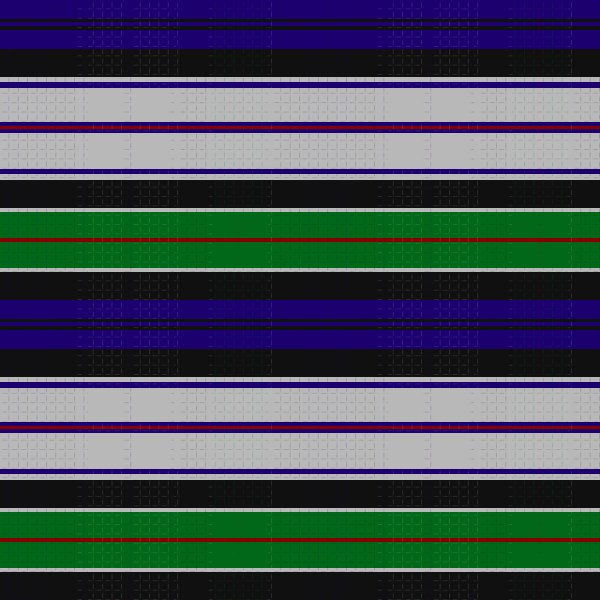 Colquhoun DressDress tartan · Register ref. 717
This dress sett has an unusually asymmetric thread count. The Scottish Tartans Society recorded, in a note dated 25 January 1984, that the tartan had been woven by Johnstons of Elgin around 1960 — making it a twentieth-century design rather than a historic one.
Get the kilt
When you order a kilt, ask for the tartan by its full name — for example “Colquhoun” — and say which colourway you want. “Modern” is dark and strong, “ancient” is lighter, “weathered” is muted. The sett is the same in each.
We are choosing retailers we trust and will list them here soon.
Wear the colours
Our own Colquhoun range is on its way: the name, the tartan and the motto on a heavyweight tee, a hoodie and a mug. About the shop.
Lands and seats
- Rossdhu House. A Georgian mansion built in 1773 on the shore of Loch Lomond, near Luss, replacing an earlier medieval castle on the same site. It remains the clan's traditional seat, though the surrounding estate is now run as a golf club.
- Dunglass Castle. An early stronghold on a rocky point above the River Clyde, held by the family before its move west to Luss in the 14th century.
Surnames
The clan name and its spellings
- Colquhoun
- Calhoun
Names associated with Clan Colquhoun
- Cowan
- Cowen
- Ingram
- Kilpatrick
- Kirkpatrick
- King
- Laing
- Lang
- MacCowan
- MacLintock
- MacManus
- MacMains
- Macowan
- MacAchounich
- Cowen: A variant spelling of Cowan.
- Ingram: Clan tradition names Ingram, son of Humphrey de Kilpatrick, as the first to take the Colquhoun name from the family's lands.
- Kilpatrick: Traces to Humphrey de Kilpatrick, who held the lands of Colquhoun before his son adopted the territorial surname.
- Kirkpatrick: A variant form of the same founding name, Kilpatrick.
- MacAchounich: An older Gaelicised rendering of Colquhoun, used mainly in the Highlands.
“Associated” means the name appears in published sept lists for this clan. It does not prove descent, and many names are linked to more than one clan. Where your family lived is often the better clue.
Questions people ask
What tartan does Clan Colquhoun wear?
There are two registered Colquhoun tartans: the main Colquhoun clan sett (Scottish Register of Tartans ref. 714), in blue, black, white, green and red, and a separate Colquhoun Dress tartan (ref. 717) woven by Johnstons of Elgin around 1960, in black, dark red, green, off-white and royal blue.
What does the Colquhoun motto mean?
The motto is Si je puis, French for "If I can." Clan tradition ties it to Sir John Colquhoun's recapture of Dumbarton Castle for James I in 1424, though the details of the story are traditional rather than firmly documented.
Is my surname a Colquhoun sept?
Names such as Kilpatrick, Kirkpatrick, Calhoun, Cowan, King, Laing and MacManus are traditionally associated with Clan Colquhoun. These links are matters of tradition and family record rather than proven descent, so treat "associated with" as just that, not as a guarantee your surname belongs to the clan.
Where is Clan Colquhoun from?
The clan's original lands lie in Dunbartonshire on the River Clyde, and from the 14th century its centre moved to Luss, on the western shore of Loch Lomond, where Rossdhu House remains the traditional seat of the chiefs.
Sources
- Colquhoun (tartan ref. 714) — Scottish Register of Tartans
- Colquhoun Dress (tartan ref. 717) — Scottish Register of Tartans
- Colquhoun — Standing Council of Scottish Chiefs (COSCA)
- Clan Colquhoun International Society — Clan Colquhoun International Society
- The Battle of Glen Fruin: the day 200 clansmen were slaughtered near Loch Lomond — The Scotsman
- Rossdhu (GDL00330) — Historic Environment Scotland
- The Blood and the Hart — Bagtown Clans
Clan histories are contested and sources disagree. If you can correct something here with a source, write to hello@tartanflag.com. Last updated 24 September 2026.