Clan Cunningham
A Lowland clan from Ayrshire whose chiefs once held the earldom of Glencairn, long remembered for their feud with the Montgomeries.
History
Clan Cunningham takes its name from Cunninghame, the district of northern Ayrshire between the Irvine and Garnock rivers. Family tradition credits a Norman or Flemish settler named Warnebald with the founding grant, said to have received the lands of Kilmaurs from Hugh de Morville, Lord High Constable of Scotland, around the 1140s. The name itself is debated: some read it as an Old English 'king's home', others trace it to an earlier Brittonic or Gaelic root. By the thirteenth century the family was established at Kilmaurs Place and at Kerelaw Castle further north.
The clan's fortunes grew through marriage. When Sir William Cunningham married Margaret Denniston in 1405, the match settled two properties on the family that would matter for generations: the barony of Glencairn in Dumfriesshire, and Finlaystone House on the Clyde, where the chiefs made their home for the next four centuries. Glencairn later lent its name to the family's earldom: James III created Alexander Cunningham the first Earl of Glencairn in 1488, though the honour was short-lived for him personally, as he and the king were both killed barely a fortnight later at the Battle of Sauchieburn.
Cunningham's rise brought it into direct rivalry with its Ayrshire neighbours, the Montgomeries, in a feud that ran from the fifteenth century into the seventeenth. At its root was a contest for local power, sharpened when a Montgomery was appointed bailie of Cunninghame over Cunningham objections. Cunninghams are said to have burned Montgomery's Eglinton Castle in 1528, after Montgomeries had earlier put the Cunninghams' own Kerelaw Castle to the torch. The bloodiest moment came in 1586, when the fourth Earl of Eglinton was ambushed and killed near Stewarton, an act blamed on the Cunninghams. Peace came slowly, helped along by royal pressure from James VI and, eventually, by marriage between the two families.
The fifth Earl of Glencairn, Alexander Cunningham, became one of the most committed Protestant lords of the Scottish Reformation and a close ally of John Knox. Knox is said to have held the west of Scotland's first reformed communion service at Finlaystone in 1556, gathering his congregation under a yew tree in the grounds said still to survive today. The earl's zeal extended to the physical destruction of Catholic furnishings, including at the Chapel Royal in Holyrood.
The earldom continued for several more generations, but the direct line failed in 1796, when the fifteenth Earl of Glencairn died without an heir. Finlaystone passed out of Cunningham hands to a cousin's family, and with no settled heir to the earldom, the chiefship of the clan itself fell vacant, a gap that would last more than two hundred years.
That gap closed in December 2013, when the Lord Lyon recognised Sir John Christopher Foggo Montgomery Cunninghame of Corsehill, head of a long-established Ayrshire branch of the family, as Chief of the Name and Arms of Cunningham. Today the clan is represented internationally through societies such as Clan Cunningham International and the Clan Cunningham Global Society, which keep its history and genealogy alive.
Clan Cunningham tartans
Names and reference numbers follow the Scottish Register of Tartans. Mills sell most setts in modern, ancient and weathered colourways. The pattern is the same; only the shades change.
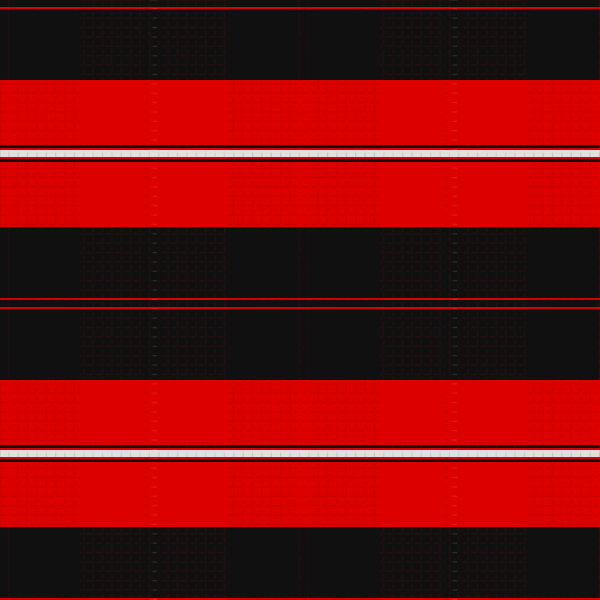 CunninghamClan tartan · Register ref. 842
This is the principal Cunningham tartan, first published in the Vestiarium Scoticum in 1842. Early versions used dark blue guard lines either side of the white, which had become black by the time the sett was recorded in tartan books of 1906 and 1976.
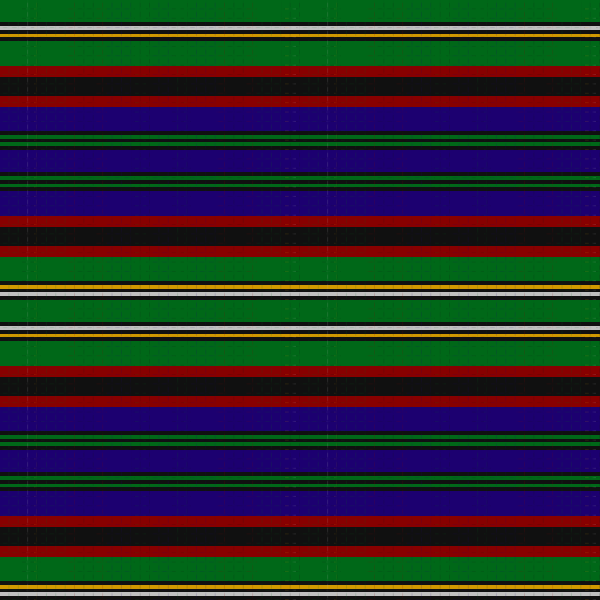 Cunningham HuntingHunting tartan · Register ref. 850
The Scottish Register of Tartans records this design as seen at the Santa Rosa Highland Games in 1990, and notes it is also known as the McNicol Hunting tartan, a link the Register itself says is still under research. It should be treated as a modern hunting sett rather than a historic clan tartan.
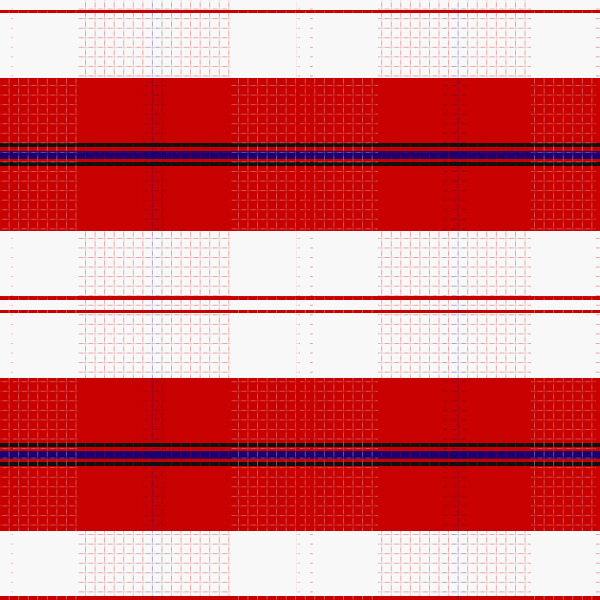 Cunningham DressDress tartan · Register ref. 846
A lighter dress version registered in 1986, keeping the clan's black and red but brightened with white and a royal blue overcheck, suited to evening and dance wear.
Get the kilt
When you order a kilt, ask for the tartan by its full name — for example “Cunningham” — and say which colourway you want. “Modern” is dark and strong, “ancient” is lighter, “weathered” is muted. The sett is the same in each.
We are choosing retailers we trust and will list them here soon.
Wear the colours
Our own Cunningham range is on its way: the name, the tartan and the motto on a heavyweight tee, a hoodie and a mug. About the shop.
Lands and seats
- Kilmaurs Place. An early seat of the family in Ayrshire, held from around the thirteenth century.
- Kerelaw Castle. A further early Cunningham stronghold, later used as a summer residence and a flashpoint in the feud with Clan Montgomery.
- Finlaystone House. Came to the family through marriage in 1405 and served as the chiefly seat of the Earls of Glencairn for around four centuries, until 1796.
Surnames
The clan name and its spellings
- Cunningham
- Cunninghame
- Cuninghame
- Conyngham
- Coningham
Names associated with Clan Cunningham
- Boyd
- Dunlop
- Chancellor
- Hemphill
- Hair
- Hare
- Stirrat
- Starrett
- Winchester
- Gunion
- Hackney
- Paisley
- Powers
- Boyd: Listed as a family name associated with Clan Cunningham by Clan Cunningham International; Boyd also has its own clan society.
- Dunlop: Listed as a family name associated with Clan Cunningham by Clan Cunningham International; Dunlop also has its own clan society.
- Chancellor: Listed as a family name associated with Clan Cunningham by Clan Cunningham International.
- Hemphill: Listed as a family name associated with Clan Cunningham by Clan Cunningham International.
- Hair: Listed as a family name associated with Clan Cunningham by Clan Cunningham International.
- Hare: Listed as a family name associated with Clan Cunningham by Clan Cunningham International.
- Stirrat: Listed as a family name associated with Clan Cunningham by Clan Cunningham International.
- Starrett: Listed as a family name associated with Clan Cunningham by Clan Cunningham International.
- Winchester: Listed as a family name associated with Clan Cunningham by Clan Cunningham International.
- Gunion: Listed as a family name associated with Clan Cunningham by Clan Cunningham International.
- Hackney: Listed as a family name associated with Clan Cunningham by Clan Cunningham International.
- Paisley: Listed as a family name associated with Clan Cunningham by Clan Cunningham International.
- Powers: Listed as a family name associated with Clan Cunningham by Clan Cunningham International.
“Associated” means the name appears in published sept lists for this clan. It does not prove descent, and many names are linked to more than one clan. Where your family lived is often the better clue.
Questions people ask
What tartan does Clan Cunningham wear?
The main Cunningham tartan (Scottish Register of Tartans ref. 842) is a red, black and white sett first published in the Vestiarium Scoticum in 1842. There is also a 1986 dress tartan and a 1990 hunting tartan, the latter with an unresolved link to the McNicol Hunting sett.
What does the Cunningham motto mean?
The motto is 'Over Fork Over', a Scots phrase referring to the shakefork on the clan's coat of arms. Family tradition ties it to a legend of an ancestor hiding a fugitive under hay with a pitchfork, though this is a story handed down rather than a documented event.
What surnames are linked to Clan Cunningham?
Besides spelling variants such as Cunninghame, Cuninghame and Conyngham, Clan Cunningham International lists a number of associated family names, including Boyd, Dunlop, Chancellor, Hemphill, Hair, Hare, Stirrat, Starrett and Winchester. Being listed reflects a traditional or historical association rather than proof of direct descent.
Where does Clan Cunningham come from?
The clan takes its name from Cunninghame, a district of northern Ayrshire. Its chiefs later held the earldom of Glencairn and, for around four centuries, the seat of Finlaystone House on the Clyde.
Sources
- In the Petition of Sir John Christopher Foggo Montgomery Cunninghame of Corsehill (interlocutor of the Lord Lyon, 18 December 2013) — Court of the Lord Lyon
- Clan History — Clan Cunningham (Global Society)
- Names — Clan Cunningham International
- Cunningham — Council of Scottish Clans and Associations (COSCA)
- Cunningham (tartan no. 842) — The Scottish Register of Tartans
- Cunningham Dress (tartan no. 846) — The Scottish Register of Tartans
- Cunningham Hunting (tartan no. 850) — The Scottish Register of Tartans
Clan histories are contested and sources disagree. If you can correct something here with a source, write to hello@tartanflag.com. Last updated 19 September 2026.