Clan Douglas
One of the most powerful families of medieval Scotland, from Douglasdale in Lanarkshire. Clan Douglas has no recognised chief today and is counted as an armigerous clan.
History
The Douglases take their name from Douglas in Lanarkshire, where Douglas Castle was the centre of their lordship. The first of the name on record is William de Duglas, who witnessed a charter of the Bishop of Glasgow in the later twelfth century. Where he came from is not known. One tradition links the family to a Flemish settler granted land on the Douglas Water in 1147. It remains a tradition, not a proven descent.
The family's rise began with Sir James Douglas, 'the Good Sir James', one of Robert the Bruce's closest lieutenants. He took Roxburgh Castle from its English garrison and fought at Bannockburn in 1314. After Bruce died, Douglas set out to carry the king's heart on crusade. He was killed fighting the Moors at Teba in Spain in 1330. Bruce rewarded the family's service with the royal forest of Selkirk and other lands across the south of Scotland.
In 1358 William Douglas was made 1st Earl of Douglas. He built Tantallon Castle on the East Lothian coast. Archibald 'the Grim', a son of the Good Sir James, became Lord of Galloway and built Threave Castle in 1369. He died in 1400 as 3rd Earl and one of the most powerful men in southern Scotland. The 2nd Earl had been killed in 1388 at Otterburn, in the moment of a Scottish victory. In the 1380s the family divided into two lines: the Black Douglases, Earls of Douglas, and the Red Douglases, Earls of Angus.
The power of the Black Douglases alarmed the Stewart kings. On 24 November 1440 the 6th Earl, aged sixteen, and his younger brother were invited to dine with the young James II at Edinburgh Castle. They were seized and beheaded after a trial that was no more than a show. The episode is remembered as the Black Dinner. In 1452 James II himself stabbed the 8th Earl at Stirling. Three years later the 9th Earl's forces were beaten at Arkinholm by a royal army led by his Red Douglas kinsman, the Earl of Angus. Threave surrendered after a two-month siege, and the Black Douglas estates were forfeited.
The Red Douglases carried on at Tantallon. They often clashed with the Crown: James IV besieged the castle in 1491 and James V in 1528. Cromwell's guns wrecked it in 1651. The head of the house became Marquess of Douglas in 1633 and Duke of Douglas in 1703. The Duke died in 1761 without an heir and the dukedom died with him. His estates were fought over in the long lawsuit known as the Douglas Cause. His older titles passed to the Dukes of Hamilton.
That inheritance explains the clan's position today. The Duke of Hamilton is the heir male of the house of Douglas, but his surname is Douglas-Hamilton. The Lord Lyon will recognise as chief only someone who bears the single name Douglas. So the clan has no chief and is described as armigerous. The Clan Douglas Society notes that only a future chief could settle the clan's list of septs.
Clan Douglas tartans
Names and reference numbers follow the Scottish Register of Tartans. Mills sell most setts in modern, ancient and weathered colourways. The pattern is the same; only the shades change.
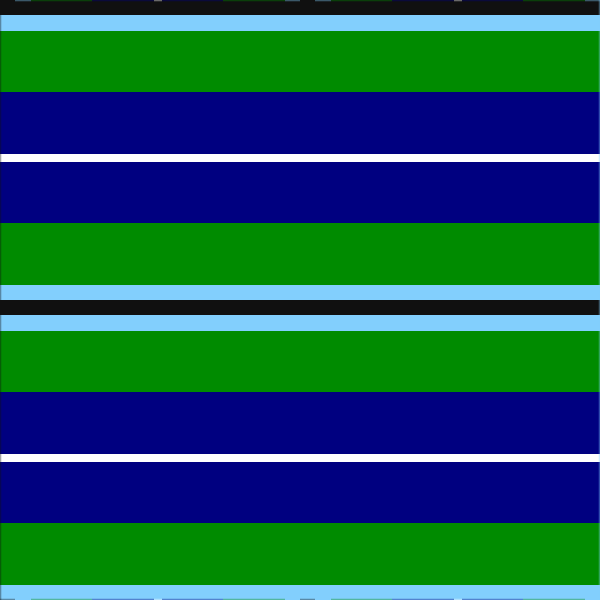 DouglasClan tartan · Register ref. 4695
The Register calls this the accepted Douglas clan and family tartan. It first appeared in the 1819 pattern list of Wilsons of Bannockburn, and the Douglas name was attached to it by 1880 at the latest.
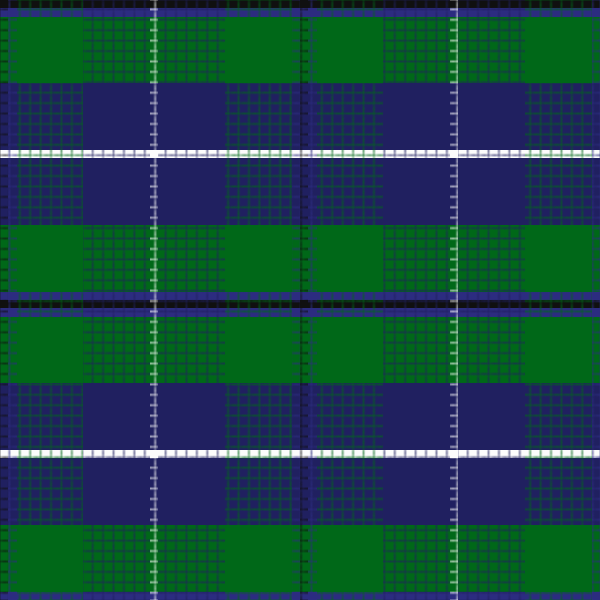 Douglas GreenOther sett · Register ref. 4811
Often called the Green Douglas. Wilsons told the writer James Logan around 1830 that they had sold it as Douglas for a considerable time, and Logan published it in The Scottish Gael in 1831.
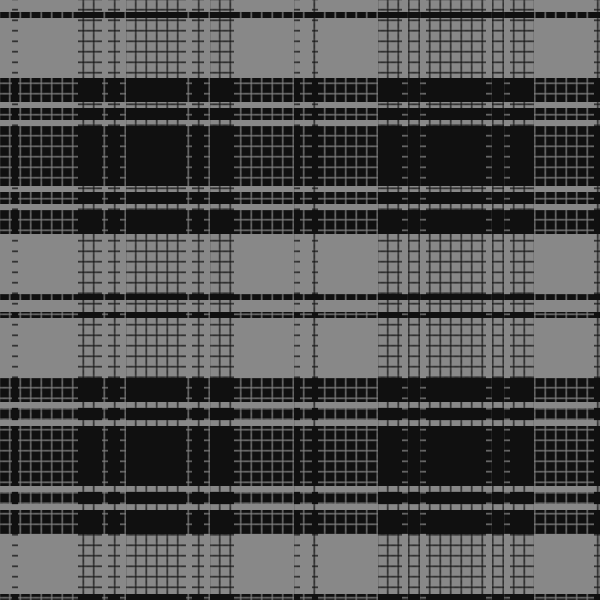 Douglas GreyOther sett · Register ref. 957
A grey and black sett first published in the Vestiarium Scoticum of 1842. The Register is frank that the book's authors, the Sobieski Stuart brothers, mixed romance and spurious documentation with their tartans.
Get the kilt
When you order a kilt, ask for the tartan by its full name — for example “Douglas” — and say which colourway you want. “Modern” is dark and strong, “ancient” is lighter, “weathered” is muted. The sett is the same in each.
We are choosing retailers we trust and will list them here soon.
Wear the colours
Our own Douglas range is on its way: the name, the tartan and the motto on a heavyweight tee, a hoodie and a mug. About the shop.
Lands and seats
- Douglas Castle. The family's original stronghold in Douglasdale, Lanarkshire.
- Tantallon Castle. Built by the 1st Earl of Douglas in the mid-1300s and held by the Red Douglases for about 300 years. Now in the care of Historic Environment Scotland.
- Threave Castle. Island tower in Galloway built in 1369 by Archibald the Grim; it surrendered to James II in 1455 after a two-month siege.
Surnames
The clan name and its spellings
- Douglas
- Douglass
Names associated with Clan Douglas
- Cavers
- Drysdale
- Forest
- Forrester
- Foster
- Glendinning
- Inglis
- Kirkpatrick
- Kilpatrick
- Lockerby
- MacGuffie
- MacGuffock
- Morton
- Sandilands
- Cavers: On the Clan Douglas Society's original 1975 list of septs and allied families.
- Drysdale: On the Clan Douglas Society's original 1975 list of septs and allied families.
- Forest: On the Clan Douglas Society's original 1975 list of septs and allied families.
- Forrester: On the Clan Douglas Society's original 1975 list of septs and allied families.
- Foster: On the Clan Douglas Society's original 1975 list of septs and allied families.
- Glendinning: On the Clan Douglas Society's original 1975 list of septs and allied families.
- Inglis: On the Clan Douglas Society's original 1975 list of septs and allied families.
- Kirkpatrick: On the Clan Douglas Society's original 1975 list of septs and allied families.
- Kilpatrick: On the Clan Douglas Society's original 1975 list of septs and allied families.
- Lockerby: On the Clan Douglas Society's original 1975 list of septs and allied families.
- MacGuffie: On the Clan Douglas Society's original 1975 list of septs and allied families.
- MacGuffock: On the Clan Douglas Society's original 1975 list of septs and allied families.
- Morton: On the Clan Douglas Society's original 1975 list of septs and allied families. A branch of the Douglases held the earldom of Morton.
- Sandilands: On the Clan Douglas Society's original 1975 list of septs and allied families.
“Associated” means the name appears in published sept lists for this clan. It does not prove descent, and many names are linked to more than one clan. Where your family lived is often the better clue.
Questions people ask
What is the Douglas tartan?
The accepted Douglas tartan is a green and dark blue sett with black, azure and white lines, reference 4695 in the Scottish Register of Tartans. It dates from Wilsons of Bannockburn's 1819 list. A Green Douglas and a Grey Douglas are also recorded.
What is the Clan Douglas motto?
The motto is 'Jamais arrière', French for 'Never behind'. The crest is a green salamander surrounded by flames.
Does Clan Douglas have a chief?
No. The Duke of Hamilton is the heir male of the Douglases, but his surname is Douglas-Hamilton, and a chief must bear the single name Douglas. The clan is therefore described as armigerous.
Which surnames are associated with Clan Douglas?
The Clan Douglas Society's original list includes Cavers, Drysdale, Forrester, Glendinning, Inglis, Kirkpatrick, Lockerby, MacGuffie, Morton and Sandilands. The Society itself says the list is imperfect, and many of these names have histories of their own.
Sources
- Members (list of chiefs; Douglas is not listed) — Standing Council of Scottish Chiefs
- Septs & Allied Families — Clan Douglas Society of North America
- Tantallon Castle: History — Historic Environment Scotland
- Threave Castle: History — Historic Environment Scotland
- Douglas family — Encyclopaedia Britannica
- Clan Douglas — Electric Scotland
- Clan Douglas (supplementary check) — Wikipedia
- Douglas – tartan details — The Scottish Register of Tartans
- Douglas, Green (Wilsons) – tartan details — The Scottish Register of Tartans
- Douglas, Grey (Vestiarium Scoticum) – tartan details — The Scottish Register of Tartans
Clan histories are contested and sources disagree. If you can correct something here with a source, write to hello@tartanflag.com. Last updated 17 September 2026.