Clan Dunbar
A once-powerful Lowland family descended from the medieval Earls of Dunbar and March, whose chiefship is today held by the Dunbar baronets of Mochrum.
History
By about 1128, the title Earl of Dunbar belonged to the son of Gospatric, a man whose grandfather was Crinan of Dunkeld and whose uncle had been King Duncan I. Gospatric had once held the English earldom of Northumberland but lost it once the Normans took England, and he made his way back to Scotland; there Malcolm III rewarded him with lands centred on the East Lothian town of Dunbar. Out of that grant grew a dynasty that would rule the eastern Borders and Lothian for the next three hundred years.
Later earls expanded the family's titles, adding the earldom of March and, through the marriage of one earl to Agnes Randolph, the earldom of Moray. By then the Dunbars ranked among medieval Scotland's most powerful dynasties: their base at Dunbar Castle was backed by lands across Roxburgh, Selkirk, Peebles and Berwickshire, with further estates reaching over the border into Northumberland. One of the earls, Patrick, traced his own descent to a daughter of William the Lion, a lineage that put him forward as a contender for the vacant Scottish throne when the Great Cause was decided in 1291-92 -- a contest that John Balliol went on to win.
The family's best-known moment came in 1338, when the Earl of Dunbar and March was away campaigning and left Dunbar Castle in the hands of his wife, Agnes Randolph, remembered as Black Agnes. For roughly five months she directed its defence against an English army led by the Earl of Salisbury, and the castle held out until the besiegers withdrew in June 1338. The episode remains the most often-told chapter of the family's history.
The earldom's fortunes turned in the fifteenth century. Sources differ on the exact numbering of the later earls, but by 1435 the reigning Earl of Dunbar and March, George Dunbar, had fallen foul of King James I, who resented the family's wealth and its grip on the border marches. Parliament declared his titles and estates forfeit, and the senior line lost both the earldom and Dunbar Castle, which passed into royal hands.
The name continued through cadet branches that rose to baronetcies in later centuries: Dunbar of Mochrum in Wigtownshire, created in 1694, Dunbar of Durn in Banffshire in 1698, Dunbar of Northfield, and Dunbar of Hempriggs in Caithness in 1706. One Northfield-descended baronet, Sir Archibald Dunbar, married Mary Brander of Pitgaveny, near Elgin in Moray, carrying the Dunbar name onto that estate and giving its name to a separate Dunbar of Pitgaveny tartan.
Today the chiefship of the Name and Arms of Dunbar sits with the Dunbar baronets of Mochrum, in Galloway rather than in the family's ancestral East Lothian heartland. Dunbar Castle itself is now a scheduled ruin in public care, a visible marker of how far the centre of the family's fortunes shifted after the forfeiture of 1435.
Clan Dunbar tartans
Names and reference numbers follow the Scottish Register of Tartans. Mills sell most setts in modern, ancient and weathered colourways. The pattern is the same; only the shades change.
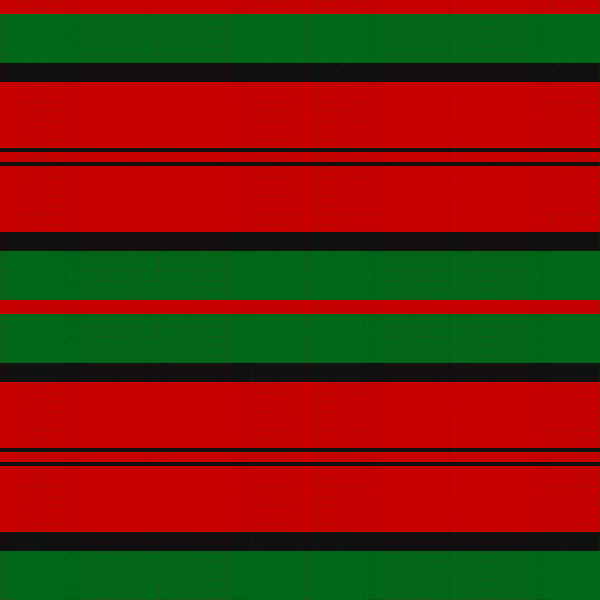 DunbarClan tartan · Register ref. 1014
This sett was first published in the early nineteenth-century Vestiarium Scoticum, a source whose accuracy historians still debate. A separate Dunbar district tartan was later woven by Wilsons of Bannockburn around 1850, and some weavers today sell the 1842 pattern under the name 'Dunbar Modern'.
 Dunbar HuntingHunting tartan · Register ref. 1017
This hunting sett was designed in 1986 and approved at the time by the family's chief, although it was not formally entered on the Scottish Register until 2000.
 Dunbar of PitgavenyDistrict tartan · Register ref. 1018
This crimson, grey and white sett is one of a set of tartan samples that Highland chiefs signed and sealed for the Highland Society of London between 1815 and 1822; the surviving originals are held by National Museums Scotland.
Get the kilt
When you order a kilt, ask for the tartan by its full name — for example “Dunbar” — and say which colourway you want. “Modern” is dark and strong, “ancient” is lighter, “weathered” is muted. The sett is the same in each.
We are choosing retailers we trust and will list them here soon.
Wear the colours
Our own Dunbar range is on its way: the name, the tartan and the motto on a heavyweight tee, a hoodie and a mug. About the shop.
Lands and seats
- Dunbar Castle, East Lothian. The family's historic stronghold; now a ruined, scheduled monument in public ownership.
- Mochrum, Wigtownshire. Seat of the Dunbar baronets of Mochrum, the branch that holds the chiefship today.
- Pitgaveny, near Elgin, Moray. Estate linked to the family through the marriage of a Dunbar of Northfield descendant into the Brander family of Pitgaveny.
Surnames
The clan name and its spellings
- Dunbar
- Dumbar
- Dumbarr
- Dumbarre
- Dunbarr
- Dunbarre
- Dunebar
- Donbar
- Dunbare
“Associated” means the name appears in published sept lists for this clan. It does not prove descent, and many names are linked to more than one clan. Where your family lived is often the better clue.
Questions people ask
Who is the chief of Clan Dunbar?
The Dunbar baronets of Mochrum hold the chiefship of the Name and Arms of Dunbar. The clan's own society, the Council of Scottish Clans & Associations, and independent baronetage records (Cracroft's Peerage) currently name Sir James Dunbar of Mochrum, 14th Baronet, in that role.
Where did Clan Dunbar originate?
The family's roots lie in East Lothian, where Gospatric was granted lands around the town of Dunbar in the eleventh century. Later generations extended the family's reach into the Borders, Moray, Caithness and Galloway.
What is the Dunbar clan tartan?
The Scottish Register of Tartans lists three Dunbar setts: a clan tartan recorded in 1842, a hunting tartan designed in 1986, and the older Dunbar of Pitgaveny district tartan drawn from an early nineteenth-century sample sett.
What does the Dunbar motto mean?
The motto 'In promptu' is Latin for 'in readiness'. It is recorded as the motto of Dunbar of Mochrum, the branch that holds the chiefship today.
Sources
- Dunbar (ref. 1014) — Scottish Register of Tartans
- Dunbar Hunting (ref. 1017) — Scottish Register of Tartans
- Dunbar of Pitgaveny (ref. 1018) — Scottish Register of Tartans
- Dunbar — COSCA (Council of Scottish Clans & Associations)
- Clan Dunbar History — Clan Dunbar International Society
- Dunbar Castle & Fort (SM766) — Historic Environment Scotland
- Patrick Dunbar, 2nd Earl of March — Encyclopaedia Britannica
- Dunbar One-Name Study — Guild of One-Name Studies
- Current Nova Scotia Baronetcies (Dunbar of Mochrum) — Cracroft's Peerage
Clan histories are contested and sources disagree. If you can correct something here with a source, write to hello@tartanflag.com. Last updated 26 September 2026.