Clan Graham
A clan of the Highland edge, with lands from Loch Lomond and Menteith to Montrose. The chief is the Duke of Montrose, heir to the great Marquis of the civil wars.
History
The Grahams were most likely Anglo-Norman incomers. The first on record in Scotland is William de Graham, who witnessed David I's foundation charter for Holyrood Abbey in 1128. He received the lands of Abercorn and Dalkeith in Lothian. Some writers trace the name to a manor called Gregham in Domesday Book. That link is a likelihood, not a certainty.
Marriage into the family of the Earls of Strathearn brought the Grahams land around Auchterarder, where Kincardine Castle became their chief seat. They were confirmed in Old Montrose in Angus in 1325. Mugdock, north of Glasgow, became their main stronghold, though sources disagree on when. Some say they held the lands from the twelfth or thirteenth century, and the castle is usually dated to around 1370. Sir John de Graham was a close companion of William Wallace. He was killed at Falkirk in 1298. A western branch of the family became known as the Grahams of Menteith and has tartans of its own.
Patrick Graham of Kincardine was made Lord Graham in 1451. In 1504 the head of the family became Earl of Montrose. The 1st Earl died with James IV at Flodden in 1513.
The most famous Graham is James, 5th Earl and 1st Marquis of Montrose, born in 1612. He was a scholar and a poet as well as a soldier. In 1644 and 1645 he led a royalist army for Charles I through a run of victories, among them Tippermuir, Inverlochy and Alford. Covenanting cavalry beat him at Philiphaugh on 13 September 1645. His castle of Kincardine was pulled down the next year. He later took up arms for Charles II, was captured, and was executed in Edinburgh on 21 May 1650. A generation later another Graham took up the Stuart cause. John Graham of Claverhouse, Viscount Dundee, raised the Highlands for James VII in 1689. He was killed at Killiecrankie at the moment of victory.
The main line prospered under the new order. The 3rd Marquess bought the Buchanan estate near Loch Lomond in 1682. The 4th Marquess was made Duke of Montrose in 1707. In 1782 James Graham, later the 3rd Duke, carried through Parliament the repeal of the ban on Highland dress that had followed the 1745 rising.
Buchanan Castle, built in the 1850s, was sold in 1925 and is now a roofless shell. The Duke of Montrose remains chief. The Clan Graham Society, founded in the United States in 1975, has been revising its list of septs and associated families.
Clan Graham tartans
Names and reference numbers follow the Scottish Register of Tartans. Mills sell most setts in modern, ancient and weathered colourways. The pattern is the same; only the shades change.
 Graham of MontroseClan tartan · Register ref. 1484
Named for the Montrose line of the chiefs. The Register notes a small sample, only four inches square, in the Highland Society of London collection, which was founded in 1815.
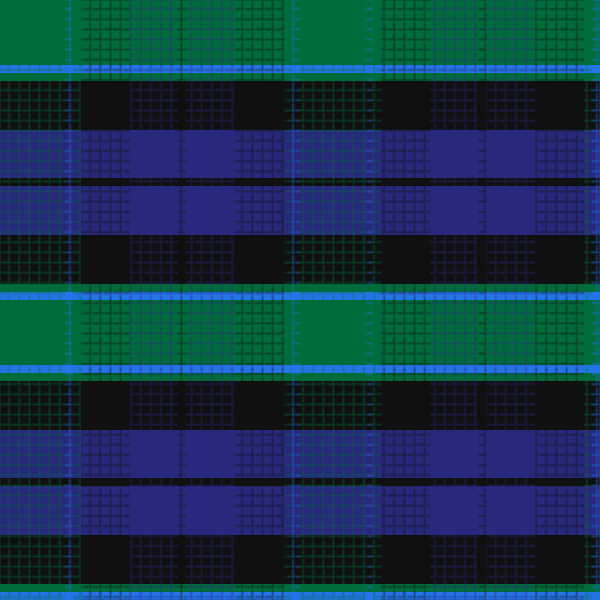 Graham of MenteithClan tartan · Register ref. 1482
The sett of the western, Menteith branch. The Register says it first appeared in 1819 under the name 'Cobourg' and was published as a Graham tartan by James Logan in 1831. Logan himself later admitted that its antiquity was questionable.
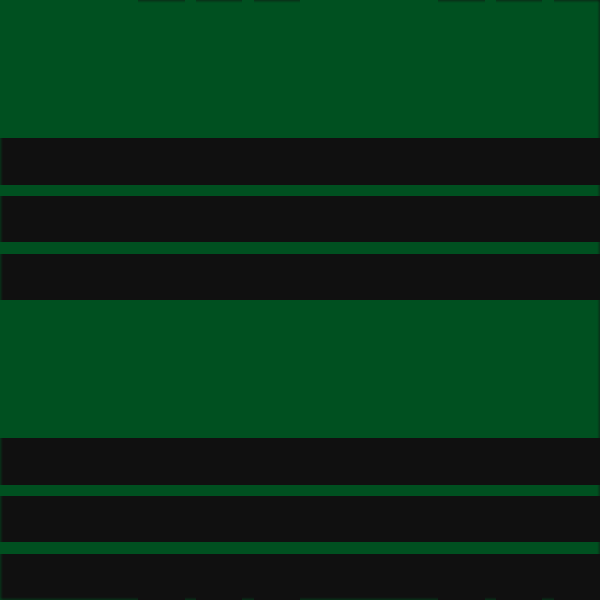 GrahamOther sett · Register ref. 1479
A simple green and black sett first recorded in the Vestiarium Scoticum of 1842. The Register doubts it has real historical significance, since the Graham tartan worn today was already well established by 1815.
Get the kilt
When you order a kilt, ask for the tartan by its full name — for example “Graham of Montrose” — and say which colourway you want. “Modern” is dark and strong, “ancient” is lighter, “weathered” is muted. The sett is the same in each.
We are choosing retailers we trust and will list them here soon.
Wear the colours
Our own Graham range is on its way: the name, the tartan and the motto on a heavyweight tee, a hoodie and a mug. About the shop.
Lands and seats
- Mugdock Castle. Stronghold of the Graham chiefs north of Glasgow through the later Middle Ages.
- Kincardine Castle. Near Auchterarder in Strathearn; an early principal seat, demolished in 1646.
- Buchanan Castle. Built 1852–58 on the estate bought by the 3rd Marquess of Montrose in 1682; sold in 1925 and roofless since 1954.
Surnames
The clan name and its spellings
- Graham
- Graeme
- Grahame
- Grahm
- Grame
- Grayham
Names associated with Clan Graham
- Airth
- Allardice
- Allardyce
- Bonar
- Bontein
- Bontine
- Buntain
- Bunting
- Haldane
- MacGibbon
- MacGilvernock
- Menteith
- Monteith
- Pitcairn
- Pye
- Pyott
- Airth: Appears in the Graham sept list published by Electric Scotland.
- Allardice: Appears in the Graham sept list published by Electric Scotland.
- Allardyce: Appears in the Graham sept list published by Electric Scotland.
- Bonar: Appears in the Graham sept list published by Electric Scotland.
- Bontein: Appears in the Graham sept list published by Electric Scotland.
- Bontine: Appears in the Graham sept list published by Electric Scotland.
- Buntain: Appears in the Graham sept list published by Electric Scotland.
- Bunting: Appears in the Graham sept list published by Electric Scotland.
- Haldane: Appears in the Graham sept list published by Electric Scotland. Haldane has a chief of its own, Haldane of Gleneagles, listed by the Standing Council of Scottish Chiefs.
- MacGibbon: Appears in the Graham sept list published by Electric Scotland.
- MacGilvernock: Appears in the Graham sept list published by Electric Scotland.
- Menteith: Appears in the Graham sept list published by Electric Scotland. Also the name of the western branch of the Grahams.
- Monteith: Appears in the Graham sept list published by Electric Scotland.
- Pitcairn: Appears in the Graham sept list published by Electric Scotland.
- Pye: Appears in the Graham sept list published by Electric Scotland.
- Pyott: Appears in the Graham sept list published by Electric Scotland.
“Associated” means the name appears in published sept lists for this clan. It does not prove descent, and many names are linked to more than one clan. Where your family lived is often the better clue.
Questions people ask
What is the Graham tartan?
There are two main Graham tartans. Graham of Montrose, with its white line, is named for the chief's line. Graham of Menteith, with an azure line, is named for the western branch. Both are green, blue and black setts recorded in the Scottish Register of Tartans.
What is the Clan Graham motto?
The motto is 'Ne oublie', French for 'Do not forget'. The crest is a falcon killing a stork.
Who is the chief of Clan Graham?
The chief is the Duke of Montrose. The dukedom was created in 1707 for the 4th Marquess of Montrose.
Which surnames are associated with Clan Graham?
Spellings such as Graeme and Grahame are variants of the clan name. Published sept lists also associate names such as Allardice, Bontine, Haldane, MacGibbon, Menteith, Monteith and Pitcairn with the clan. The Clan Graham Society has been revising its own list.
Sources
- Members (list of chiefs) — Standing Council of Scottish Chiefs
- Sept names and families of Clan Graham — Clan Graham Society
- Origin of Clan Graham Society — Clan Graham Society
- Graham — scotland.org.uk
- Clan Graham — Electric Scotland
- Scottish clan septs — Electric Scotland
- Graham — Council of Scottish Clans & Associations (COSCA)
- Clan Graham; Buchanan Castle (supplementary check) — Wikipedia
- Graham of Montrose – tartan details — The Scottish Register of Tartans
- Graham of Menteith – tartan details — The Scottish Register of Tartans
- Graham – tartan details — The Scottish Register of Tartans
Clan histories are contested and sources disagree. If you can correct something here with a source, write to hello@tartanflag.com. Last updated 22 September 2026.