Clan Keith
Ceiteach
The Keiths held the hereditary title of Earl Marischal of Scotland for centuries, based at Dunnottar Castle, until the earldom was forfeited after the 1715 Jacobite rising.
History
Clan Keith takes its name from the East Lothian barony of Keith, which passed to a Norman newcomer named Hervey when he married into the family already holding it; King David I confirmed the lands to him by charter in the mid-twelfth century, and the clan has long counted this Hervey de Keith as its founding ancestor. His descendants inherited far more than land: as hereditary marischals to the Scottish crown from the fourteenth century onward, they carried joint responsibility for the king's personal safety at each sitting of parliament and for guarding the royal regalia in trust.
Keith fortunes shifted towards the north-east during the Wars of Independence. Sir Robert Keith commanded the small Scottish cavalry force at the Battle of Bannockburn in 1314, service rewarded with grants of forfeited Comyn land in the north-east of Scotland. A few decades later, marriage to an heiress of the Cheyne family brought the Keiths the lordships of Inverugie in Aberdeenshire and Ackergill in Caithness, stretching their landholdings from the Mearns coast to the far north.
The family's standing peaked in 1458, when James II created William Keith the first Earl Marischal, fixing Dunnottar Castle, on its clifftop above Stonehaven, as the clan's principal seat. Later Earls Marischal used their wealth to shape Aberdeen's civic and intellectual life: George Keith, the fifth Earl, founded Marischal College in the city in 1593, a Protestant foundation that later merged with King's College to form the University of Aberdeen.
Dunnottar's best-known moment came during the Cromwellian wars. Besieged through the winter of 1651 into 1652, the castle's small garrison managed to smuggle the Honours of Scotland, the crown, sceptre and sword of state, out of the fortress before it fell, and the regalia were kept hidden nearby until they could safely be restored after the Restoration. Sir John Keith, who helped secure their safety, was later created Earl of Kintore and settled at what became Keith Hall, near Inverurie, founding the branch of the family that would eventually carry the clan's chiefship.
It was the Jacobite cause that brought the senior line down. George Keith, tenth and last of the Earls Marischal, threw his support behind the 1715 rising and its renewed attempt in 1719, as did his brother James, who would go on to a distinguished career as a field marshal in the Prussian army. Their gamble cost the family everything: in 1716 the Crown stripped George of the earldom and confiscated the Dunnottar estates, bringing four hundred years of Keith ownership of the castle to a close and extinguishing a title that has never since been restored.
With the senior title gone, the clan's chiefship in time came to rest with the Kintore branch descended from Sir John Keith. Among the clan's older rivalries was a long-running hostility toward the neighbouring Irvines of Drum, traced back to an armed clash in 1402; that quarrel was finally put to rest in 2002, when the Earl of Kintore and the chief of Clan Irvine met on a span over the River Dee and put their names to a peace agreement. Today the Earl of Kintore, based at Keith Hall, is recognised as Chief of Clan Keith, and clan societies in Scotland and overseas continue to mark the family's history.
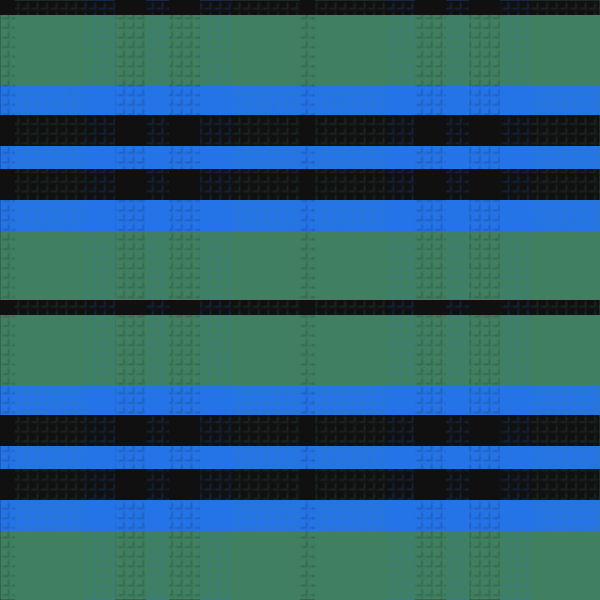
Clan Keith tartans
Names and reference numbers follow the Scottish Register of Tartans. Mills sell most setts in modern, ancient and weathered colourways. The pattern is the same; only the shades change.
Get the kilt
When you order a kilt, ask for the tartan by its full name — for example “Keith” — and say which colourway you want. “Modern” is dark and strong, “ancient” is lighter, “weathered” is muted. The sett is the same in each.
We are choosing retailers we trust and will list them here soon.
Wear the colours
Our own Keith range is on its way: the name, the tartan and the motto on a heavyweight tee, a hoodie and a mug. About the shop.
Lands and seats
- Dunnottar Castle. Ruined clifftop fortress near Stonehaven; principal seat of the Earls Marischal from the fourteenth century until the earldom's forfeiture in 1716.
- Keith Hall. Estate near Inverurie, Aberdeenshire, home of the Earls of Kintore since the seventeenth century and seat of today's Chief of Clan Keith.
Surnames
The clan name and its spellings
- Keith
- Keyth
- Keath
Names associated with Clan Keith
- Austin
- Dickson
- Falconer
- Harvey
- Hervey
- Marshall
- Urie
- Hackston
- Lumgair
- Austin: Traditionally associated with the Keiths; the clan tartan appears under the name 'Austin' in an 1819 Wilsons of Bannockburn pattern book.
- Dickson: Traditionally said to descend from a son of a medieval Keith of that name.
- Falconer: A family linked to the Keiths through marriage and through the hereditary office of King's Falconer; shares a tartan design with Keith.
- Harvey: A form of Hervey, the Norman forename of the clan's traditional founder, Hervey de Keith.
- Hervey: From Hervey de Keith, the Norman incomer traditionally regarded as the clan's founder.
- Marshall: Connected to the hereditary office of Marischal held by the Keiths; shares a tartan design with Keith.
- Urie: Linked to the Keith of Urie estate near Stonehaven.
“Associated” means the name appears in published sept lists for this clan. It does not prove descent, and many names are linked to more than one clan. Where your family lived is often the better clue.
Questions people ask
Does Clan Keith have a chief today?
Yes. Although the Earldom Marischal itself was forfeited in 1716 and has never been restored, the chiefship of Clan Keith came to rest with the Kintore branch of the family, and the present Earl of Kintore, seated at Keith Hall in Aberdeenshire, is recognised as Chief of Clan Keith.
What does the Keith clan motto mean?
The motto is 'Veritas Vincit', Latin for 'Truth conquers'. It appears on the clan's crest badge together with a stag's head rising from a gold coronet.
Why did Clan Keith lose Dunnottar Castle?
George Keith, the tenth Earl Marischal, backed the Jacobite rising of 1715. As a result, the Crown forfeited his titles and estates in 1716, ending over 250 years of the Keiths holding both the earldom and Dunnottar Castle.
Is Falconer a Keith sept?
Falconer is generally listed as a name associated with Clan Keith rather than a variant of the surname itself. The link runs through marriage and through the hereditary office of King's Falconer, and the two families share a tartan design.
Sources
- Keith Clan, Scottish Register of Tartans — National Records of Scotland
- James William Falconer Keith, 14th Earl of Kintore — thepeerage.com
- Kintore, 14th Earl of (James William Falconer Keith) — Who's Who / Who Was Who, Oxford University Press
- Obituary: David Irvine of Drum, chief who helped end a centuries-old clan feud — The Scotsman
- The History of Clan Keith — Clan Keith USA, Inc.
- Dunnottar Castle (SM986) — Historic Environment Scotland
Clan histories are contested and sources disagree. If you can correct something here with a source, write to hello@tartanflag.com. Last updated 26 September 2026.