Clan Leslie
A Lowland clan whose name comes from lands in the Garioch, Aberdeenshire. The Leslies rose through the barons of Balquhain to the earldom of Rothes, and their motto 'Grip Fast' recalls a cherished river-rescue legend.
History
Clan tradition traces the Leslies to a nobleman named Bartolf, also recorded as Bartholomew, said to have been Hungarian or Flemish by birth and to have arrived in Scotland in 1067 in the retinue of the exiled English prince Edgar Ætheling and his sister Margaret. This is family tradition rather than documented history, and none of its detail can be independently checked. Margaret went on to marry King Malcolm III and was later venerated as Saint Margaret. Bartolf is said to have been granted an estate in the Garioch district of Aberdeenshire then known as Lesselyn, and it is from this place name that the surname Leslie is thought to derive.
The clan's best-loved story explains its motto. As the queen's chamberlain, Bartolf is said to have carried Margaret on his own horse, her hand gripping his belt, while fording a swollen river in a storm. When the buckle threatened to give way, tradition has him crying 'Grip fast!' Whatever the truth of the tale, the phrase became the Leslie motto and still frames the demi-griffin on the clan crest badge today.
Whatever their precise origins, the Leslies were established landholders in the Garioch by the fourteenth century. A branch of the family held Balquhain, a tower house west of Inverurie, from 1340, and its barons became one of the clan's most enduring lines: John Leslie of Balquhain contracted masons to finish building work there in 1441, and the castle stood until it was burned by government forces during the 1746 Jacobite rising. In the mid-sixteenth century the Balquhain Leslies also acquired Fetternear, near Kemnay, formerly a residence of the bishops of Aberdeen, which stayed a principal Leslie home until fire destroyed it in 1919.
A separate line rose further still. Around 1390 a Balquhain Leslie married the heiress of Rothes, a barony in Moray, and by the late 1450s their descendant George Leslie had been created Earl of Rothes, the family's first Scottish peerage. For centuries the clan chiefship went hand in hand with that earldom, and Rothes Castle in Speyside remained a Leslie seat for generations even as the family's wider interests spread south into Fife and the Mearns.
The Leslie name also produced one of the seventeenth century's most notable soldiers of fortune. Alexander Leslie spent his early career in Swedish service, where he held Stralsund against a besieging imperial army under Albrecht von Wallenstein in 1628 and had risen to the rank of field marshal by 1636. Charles I tried to win his loyalty by making him Earl of Leven in 1641, but Leslie instead commanded the Scottish army that fought for Parliament in the English Civil Wars from 1644, and Charles I gave himself up to Leslie's forces at Newark-on-Trent in May 1646.
The earldom of Rothes continues today, held by James Leslie, 22nd Earl of Rothes. The working role of clan chief, though, currently sits with his brother, the Hon. Alexander Leslie, recognised in that role by the Standing Council of Scottish Chiefs and by COSCA.
Clan Leslie tartans
Names and reference numbers follow the Scottish Register of Tartans. Mills sell most setts in modern, ancient and weathered colourways. The pattern is the same; only the shades change.
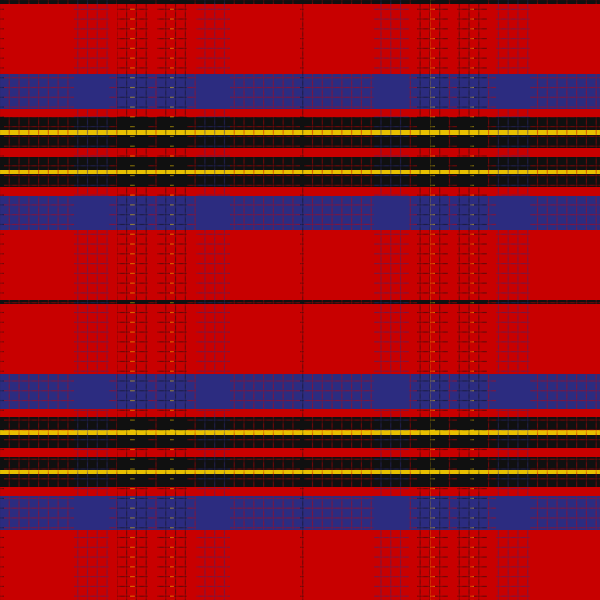 Leslie Red (VS)Clan tartan · Register ref. 2104
The sett most weavers sell today as the Leslie clan tartan. It comes from the Vestiarium Scoticum, the tartan book produced between 1829 and 1842 by the Sobieski Stuart brothers, whose patterns went on to form the basis of many clan tartans now in general use.
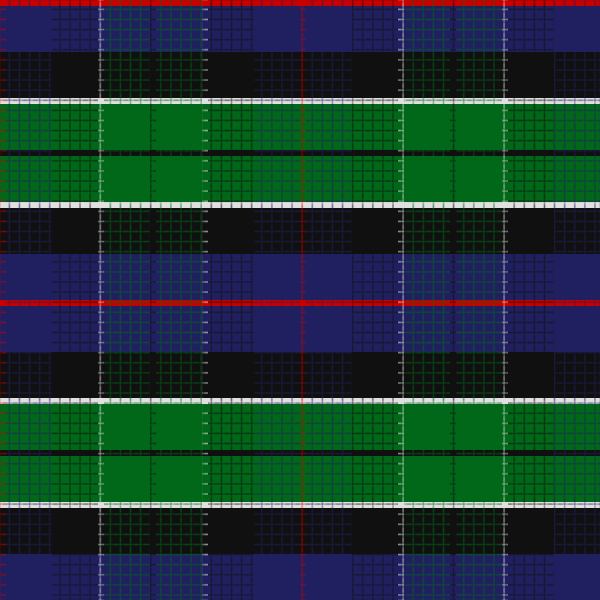 Leslie HuntingHunting tartan · Register ref. 2103
An older, quieter green-and-blue sett, said to have been worn by George Leslie, 14th Earl of Rothes, who died in 1841. Nineteenth-century tartan writers Smibert and Smith recorded it around 1850.
Get the kilt
When you order a kilt, ask for the tartan by its full name — for example “Leslie Red (VS)” — and say which colourway you want. “Modern” is dark and strong, “ancient” is lighter, “weathered” is muted. The sett is the same in each.
We are choosing retailers we trust and will list them here soon.
Wear the colours
Our own Leslie range is on its way: the name, the tartan and the motto on a heavyweight tee, a hoodie and a mug. About the shop.
Lands and seats
- Leslie Castle. The site in the Garioch, once called Lesselyn, held to be the place the Leslie name comes from.
- Balquhain Castle. A tower house west of Inverurie held by the Leslies from 1340; John Leslie of Balquhain contracted masons to complete building work there in 1441, and the castle was burned by government troops during the 1746 Jacobite rising.
- Fetternear. Formerly a residence of the bishops of Aberdeen, granted to the Leslies of Balquhain in the mid-sixteenth century; it remained one of the family's principal homes until fire destroyed it in 1919.
- Rothes Castle. In Speyside, Moray. It came to the Leslies through marriage to a local heiress around 1390, and gave its name to the earldom created for the family in the 1450s.
Surnames
The clan name and its spellings
- Leslie
- Lesley
- Lesly
- Lessley
- Lesslie
Names associated with Clan Leslie
- Abernethy
- Abernath
- Bartholomew
- Cairney
- Carney
- Carnie
- Laing
- Lang
- Moar
- Moic
- Moore
- Mor
- Muir
- O'More
- Abernethy: Listed by COSCA as linked to Clan Leslie; Abernethy also has its own separate clan history.
- Bartholomew: Echoes the name of the clan's traditional founder.
- Moore: A common surname; only some Moores have a traditional Leslie connection.
- Muir: A common surname also linked to other Lowland families.
“Associated” means the name appears in published sept lists for this clan. It does not prove descent, and many names are linked to more than one clan. Where your family lived is often the better clue.
Questions people ask
What is the Clan Leslie tartan?
Two tartans are registered for the name. Leslie Red, drawn from the Vestiarium Scoticum, is the sett most weavers sell as the clan tartan. Leslie Hunting is an older, more muted green-and-blue pattern said to have been worn by the 14th Earl of Rothes and recorded by tartan writers around 1850.
What does the Leslie motto 'Grip Fast' mean?
'Grip Fast' is already plain Scots, so it needs no translation. Clan tradition ties it to a story of the family's founder carrying Queen Margaret across a flooded river, though this is a cherished legend rather than a documented event.
Who is the chief of Clan Leslie?
The chiefly title is the Earl of Rothes, currently held by James Leslie, 22nd Earl of Rothes. The working role of chief is carried out by his brother, the Hon. Alexander Leslie, who is recognised as Clan Leslie's chief by the Standing Council of Scottish Chiefs and by COSCA.
What surnames are associated with Clan Leslie?
Leslie has several older spellings, including Lesley, Lesly and Lesslie. Names COSCA lists as associated with the clan include Abernethy, Bartholomew, Cairney, Laing and Muir, though these are sept links rather than proof that the families are one and the same.
Sources
- Leslie — Council of Scottish Clans & Associations (COSCA)
- A Letter From Chief Alex — Clan Leslie Society International
- Leslie Castles — Clan Leslie Society International
- The Leslie Story — Clan Leslie Trust
- Alexander Leslie, 1st earl of Leven — Encyclopaedia Britannica
- Rothes, 22nd Earl of (James Malcolm David Leslie) — Who's Who & Who Was Who, Oxford University Press
- Leslie Red (VS), ref. 2104 — The Scottish Register of Tartans, National Records of Scotland
- Leslie Hunting, ref. 2103 — The Scottish Register of Tartans, National Records of Scotland
Clan histories are contested and sources disagree. If you can correct something here with a source, write to hello@tartanflag.com. Last updated 22 September 2026.