Clan Lindsay
Lindsay is a Lowland and Border family whose chiefly line, the Earls of Crawford, rose to become one of Scotland's most powerful noble houses. Its story runs from Clydesdale through Angus to Fife.
History
The Lindsays trace their Scottish beginnings to two brothers, Walter and William de Lindsay, sons of a Norman lord of Bocquencé. Tradition holds they travelled north in the household of Prince David, later King David I, in the early twelfth century. William was granted lands at Crawford in upper Clydesdale, and it is from this estate that the family's chiefly title, Earl of Crawford, eventually took its name. The surname itself is generally traced to Lindsey in Lincolnshire.
By the fourteenth century the Lindsays were established among Scotland's leading baronial families. A David Lindsay's seal was attached to the Declaration of Arbroath in 1320, the letter sent to Pope John XXII asserting Scottish independence. Later in that century, another David Lindsay built a formidable reputation as a knight, and in 1398 he was created Earl of Crawford, one of the oldest and most senior earldoms in the Scottish peerage.
The earldom brought power, and power brought conflict. The 4th Earl, known as 'the Tiger', allied himself with the Black Douglases against the crown, and in 1452 his forces were defeated at the Battle of Brechin by the Gordons and Ogilvys. He was attainted for treason but later pardoned, a pattern of high ambition and reversal that recurs through the family's history over the following two centuries.
Lindsay influence spread across Angus and Fife through several branches. The family acquired the estate of Edzell by marriage in 1358, and it passed in the mid-1400s to a younger son of the 3rd Earl, founding the Lindsays of Edzell; the castle there, with its notable walled garden added in 1604, remained a Lindsay house until it was sold in 1715. Another branch produced Sir David Lyndsay of the Mount, poet, playwright and Lyon King of Arms under James V, whose satirical verse is still counted among the best-known literature of the Scottish Reformation period.
A further branch grew from Balcarres in Fife. John Lindsay, a younger son of the 9th Earl of Crawford, built Balcarres House in 1595, and his descendants were created Earls of Balcarres in 1651 for service to the Stuart cause during the civil wars. When the senior Crawford line eventually failed in the nineteenth century, the earldom of Crawford passed to the Balcarres branch, uniting the two titles in one family.
That union holds today. The current chief carries both titles, Earl of Crawford and Earl of Balcarres, and the family still resides at Balcarres House near Colinsburgh. The Clan Lindsay Society was founded in Edinburgh in 1897 to bring Lindsays together across the world, and continues that work. Lindsay is generally described as a Lowland and Border family rather than a Highland clan in the older sense, though it holds full standing among Scotland's chiefly houses.
Clan Lindsay tartans
Names and reference numbers follow the Scottish Register of Tartans. Mills sell most setts in modern, ancient and weathered colourways. The pattern is the same; only the shades change.
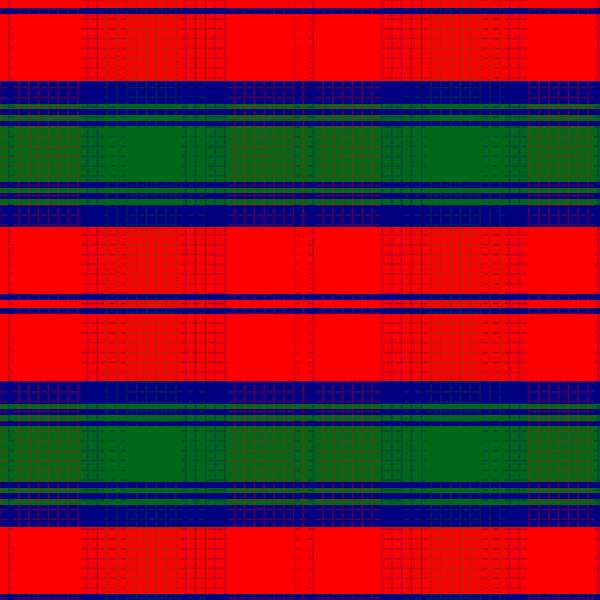 LindsayClan tartan · Register ref. 2115
This sett was published in 1842 in the Vestiarium Scoticum, a book presented as a record of ancient clan tartans but long since discredited as a Victorian invention rather than genuine history. We can't call this pattern ancient or authenticated; it belongs to that mid-19th-century wave of tartan-naming, alongside many other Border clan setts. It is closely related to the Stewart of Atholl sett, with dark blue standing in for black.
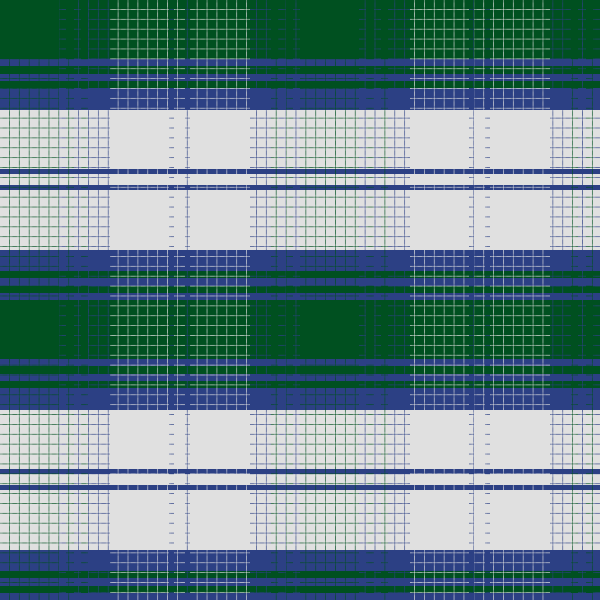 Lindsay DressDress tartan · Register ref. 2119
A lighter dress version of the Lindsay sett, built around green and blue with white brightening the ground. No registration date is recorded for this variant.
Get the kilt
When you order a kilt, ask for the tartan by its full name — for example “Lindsay” — and say which colourway you want. “Modern” is dark and strong, “ancient” is lighter, “weathered” is muted. The sett is the same in each.
We are choosing retailers we trust and will list them here soon.
Wear the colours
Our own Lindsay range is on its way: the name, the tartan and the motto on a heavyweight tee, a hoodie and a mug. About the shop.
Lands and seats
- Balcarres House. Near Colinsburgh in Fife. Built in 1595 by John Lindsay, founder of the Balcarres branch, and still the chief's seat today.
- Edzell Castle. In Angus. Held by a junior Lindsay branch from the mid-1400s until the estate was sold in 1715; now cared for by Historic Environment Scotland.
Surnames
The clan name and its spellings
- Lindsay
- Lindsey
- Linsey
Names associated with Clan Lindsay
- Affleck
- Byres
- Cobb
- Crawford
- Deuchar
- Downie
- Fotheringham
- Rhynd
- Summers
- Affleck: Traditionally linked through territorial and family ties to the Lindsays.
- Byres: Takes its name from the barony of The Byres in East Lothian, held by the Lindsay family.
- Cobb: A name long established in the Brechin area, historically Lindsay country.
- Crawford: Shares its origin with the lands of Crawford in Clydesdale, from which the Lindsay earldom takes its name.
- Fotheringham: Derived from a place name in Angus, in the heart of Lindsay territory.
“Associated” means the name appears in published sept lists for this clan. It does not prove descent, and many names are linked to more than one clan. Where your family lived is often the better clue.
Questions people ask
What does the Lindsay tartan mean?
The Lindsay tartan was published in 1842 in the Vestiarium Scoticum, a book presented as an ancient record of clan tartans but long since shown to be a Victorian invention. So the sett isn't ancient or authenticated; it dates from that mid-19th-century romantic revival, like many other clan tartans registered around the same time.
What does the Lindsay motto mean?
The motto is 'Endure Fort', usually translated as 'endure bravely' or 'endure with strength'. It appears wrapped around the clan crest, a swan rising from a coronet.
What surnames are linked to Clan Lindsay?
Lindsey and Linsey are spelling variants of Lindsay itself. Names traditionally associated with the clan through territory and family ties include Byres, Cobb, Crawford, Deuchar, Downie, Fotheringham, Rhynd and Summers. Lindsay is a Lowland family, so these are traditional associations rather than septs formally recognised by the Lord Lyon.
Where does Clan Lindsay come from?
The family's roots lie in Clydesdale, where William de Lindsay held the lands of Crawford from the twelfth century. Later generations expanded into Angus, at Edzell, and into Fife, at Balcarres, which remains the chief's seat today.
Sources
- Lindsay tartan (ref. 2115) — Scottish Register of Tartans
- Lindsay Dress tartan (ref. 2119) — Scottish Register of Tartans
- Lindsay — Council of Scottish Clans & Associations (COSCA)
- Hereditary Chief of Clan Lindsay Passes — Council of Scottish Clans & Associations (COSCA)
- About Us — The Clan Lindsay Society
- History of the Lindsay family — Clan Lindsay Society of Australia
- History of associated names — Clan Lindsay Society of Australia
- Edzell Castle and Garden: History and stories — Historic Environment Scotland
Clan histories are contested and sources disagree. If you can correct something here with a source, write to hello@tartanflag.com. Last updated 19 September 2026.