Clan MacFarlane
MacPhàrlain
Clan MacFarlane held the wild ground on the western shore of Loch Lomond around Arrochar and were long known for night raids on their neighbours' cattle. No chief has been recognised since the direct line grew dormant in the nineteenth century.
History
Clan MacFarlane traces its descent from the old Celtic Earls of Lennox. Tradition holds that Gilchrist, a younger brother of an early Earl of Lennox, was granted the upper lands of Arrochar, and that his descendants held this ground for centuries afterwards. The clan's name is said to come from a later member of the family known in Gaelic as Parlan, or Bartholomew: his descendants became Mac Pharlain, sons of Parlan, in time anglicised to MacFarlane.
Arrochar sits at the head of Loch Long, hard against the western shore of Loch Lomond, and this narrow, hilly ground was MacFarlane country for centuries. The clan mustered at Loch Sloy, a modest stretch of water tucked beneath Ben Vorlich, and turned its name into their rallying cry, shouted on the march and, tradition says, loudest of all when the men rode out on a raid.
The MacFarlanes had a long-running and often violent rivalry with their neighbours Clan Colquhoun, and the clan's name became attached to a particular kind of local mischief. They built a reputation for lifting cattle from neighbouring lands after dark, and a bright full moon, handy light for that sort of work, earned itself the nickname 'MacFarlane's lantern'.
Like most clans of the western Highlands, MacFarlane fortunes were tied to the wider conflicts of Scotland. The clan is said to have lost its chief at Flodden in 1513 and again, along with other kinsmen, at Pinkie in 1547. At Langside in 1568 the MacFarlanes fought on the side of the infant King James VI against the forces of Mary, Queen of Scots, and the clan's crest and motto are said to commemorate this stand in defence of the crown.
Clan strongholds moved between two island castles on Loch Lomond over the centuries: Inveruglas, the older seat, and later Eilean a' Bhùth, also known as Island I Vow. Inveruglas is reported to have been destroyed around the time of the civil wars of the 1650s, after the clan had supported the Stewart cause.
The chiefly line's fortunes declined through debt in the eighteenth century, and the Arrochar estate passed out of the family's hands. The direct succession of chiefs is understood to have run out entirely in the nineteenth century, and since then no one has re-established a chiefly claim recognised by the Lord Lyon. Clan MacFarlane today is organised through clan societies rather than a chief, with members tracing descent to the old Arrochar family and its many related names.
Clan MacFarlane tartans
Names and reference numbers follow the Scottish Register of Tartans. Mills sell most setts in modern, ancient and weathered colourways. The pattern is the same; only the shades change.
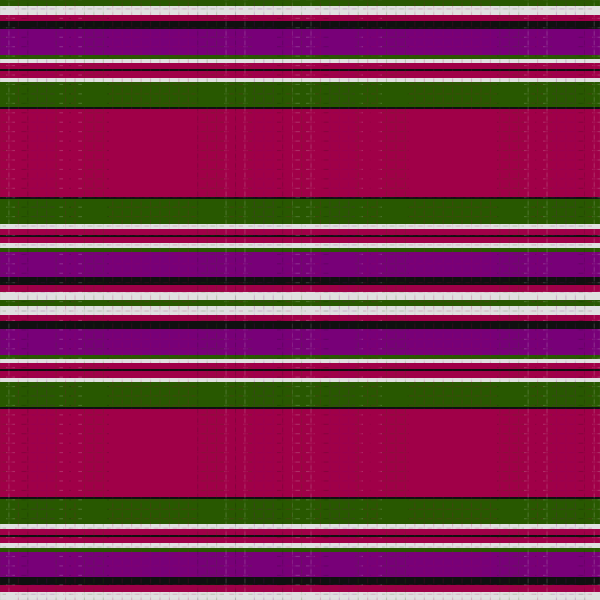 MacFarlaneClan tartan · Register ref. 2432
Recorded with the Court of the Lord Lyon in 1957, though the researcher D. C. Stewart believed the design itself to be considerably older.
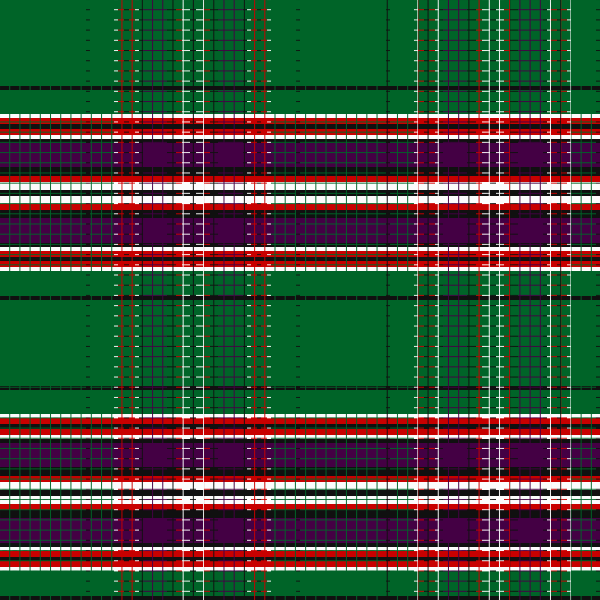 MacFarlane HuntingHunting tartan · Register ref. 2434
Drawn from the MacGregor-Hastie collection, based on a nineteenth-century thread count for the MacFarlane sett with red substituted by green.
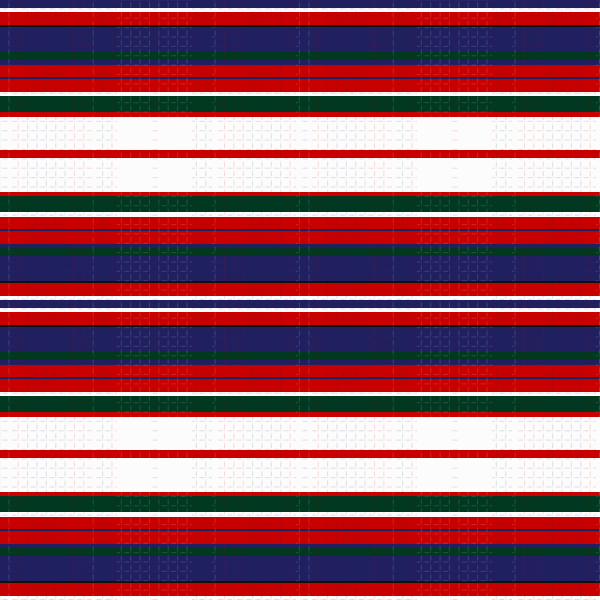 MacFarlane DressDress tartan · Register ref. 2433
Get the kilt
When you order a kilt, ask for the tartan by its full name — for example “MacFarlane” — and say which colourway you want. “Modern” is dark and strong, “ancient” is lighter, “weathered” is muted. The sett is the same in each.
We are choosing retailers we trust and will list them here soon.
Wear the colours
Our own MacFarlane range is on its way: the name, the tartan and the motto on a heavyweight tee, a hoodie and a mug. About the shop.
Lands and seats
- Inveruglas Castle. An island stronghold on Loch Lomond that served as the chiefs' main seat until it was destroyed, reportedly around 1654, after the clan's support for Charles I during the civil wars.
- Eilean a' Bhùth (Island I Vow). A second island stronghold on Loch Lomond, said to have been built in the 1570s, which became the chiefs' residence after Inveruglas Castle was lost.
Surnames
The clan name and its spellings
- MacFarlane
- Macfarlane
- MacFarland
- McFarland
- McFarlane
Names associated with Clan MacFarlane
- Parlane
- Bartholomew
- Allan
- Allanson
- MacAllan
- MacCaa
- MacCaw
- MacNair
- MacNiter
- MacRob
- MacRobb
- MacWalter
- MacWilliam
- Miller
- Napier
- Stalker
- Weaver
- Weir
- Parlane: From Parlan, the Gaelic personal name said to be the clan's namesake.
- Bartholomew: Given as the English equivalent of the Gaelic name Parlan.
“Associated” means the name appears in published sept lists for this clan. It does not prove descent, and many names are linked to more than one clan. Where your family lived is often the better clue.
Questions people ask
What is the MacFarlane tartan?
The main MacFarlane tartan is the sett recorded with the Court of the Lord Lyon in 1957, though the researcher D. C. Stewart believed the pattern itself was older. There are also registered hunting (1906) and dress (1930) versions.
What does the MacFarlane motto mean?
The motto is 'This I'll Defend', in English. It appears with the clan crest, a Highland figure pointing to a crown, said to recall the clan's support for the young King James VI at Langside in 1568.
Does Clan MacFarlane have a chief?
No. The direct chiefly line is understood to have died out in the nineteenth century, and no one has since had a claim to the chiefship matriculated by the Lord Lyon, so the clan is currently without a recognised chief.
Where is MacFarlane clan country?
The clan's traditional lands lie around Arrochar, on the western shore of Loch Lomond and the ground between Loch Long and Loch Lomond, with the gathering place of Loch Sloy nearby below Ben Vorlich.
Sources
- MacFarlane (ref. 2432) — Scottish Register of Tartans
- MacFarlane Hunting (ref. 2434) — Scottish Register of Tartans
- MacFarlane Dress (ref. 2433) — Scottish Register of Tartans
- About Clan MacFarlane — International Clan MacFarlane Society (macfarlane.org)
- Septs & Tartans — International Clan MacFarlane Society (macfarlane.org)
- The MacFarlane Coat of Arms — Clan MacFarlane (clanmacfarlane.org)
- MacFarlane — Council of Scottish Clans and Associations (COSCA)
- History — Clan MacFarlane Society, Australia
Clan histories are contested and sources disagree. If you can correct something here with a source, write to hello@tartanflag.com. Last updated 19 September 2026.