Clan MacFie
MacFie, also spelled MacPhee and MacPhie, is the clan of Colonsay and Oronsay in the Inner Hebrides. The motto is Pro Rege, and the clan has had no chief since 1623.
History
The MacFies are the people of Colonsay, a small island in the Inner Hebrides, and its tidal neighbour Oronsay. The name comes in many forms, among them MacPhee, MacPhie, MacDuffie and Duffie. Electric Scotland gives the Gaelic form as MacDhubhsith and describes the clan as the earliest people on Colonsay. Where they came from before that is uncertain. The Clan Macfie Society of Australia counts them among the Siol Alpin, the kindreds said to descend from Kenneth MacAlpin. A submission by Eric Macfie on Electric Scotland argues that the DNA results do not bear out that descent, so the question stays open.
In the later Middle Ages the chiefs were loyal to the MacDonald Lords of the Isles. Electric Scotland records a Donald MacDuffie as a witness to a charter that John, Lord of the Isles, issued at Dingwall in 1463. The Australian society says the chiefs kept the records of the Lordship by hereditary right. The Electric Scotland submission argues that the evidence only places the role in the later 15th century, not earlier. Several of the priors of the Augustinian house on Oronsay were MacFies, the society adds.
The society also says the chiefs were buried at the priory. Electric Scotland cites Martin Martin, writing in 1703, who saw MacDuffie tombs on the south side of the church. The main stone was carved with a sailing ship and a two-handed sword, and carried the name of Malcolm MacDuffie of Colonsay. Nearby stood a stone cross called MacDuffie's Cross. When a head of the family was carried to burial, the body was rested there on the way.
The forfeiture of the Lordship in 1493 left the island clans exposed, and the MacFies turned to the MacDonalds of Islay. In 1609 Donald MacPhee of Colonsay was one of the twelve island chiefs and leading men who consented to the Statutes of Iona. Electric Scotland treats him as the chief. The Australian society, following an older history, suggests he was the Vicar of Oronsay acting for his brother Malcolm. Malcolm took the side of Sir James MacDonald of Islay in the rising of 1615. Once it collapsed, Electric Scotland says, Coll Ciotach MacDonald, known as Colkitto, surrendered him to the Earl of Argyll with eighteen other men.
Malcolm, the last chief, was killed in 1623. Electric Scotland says an entry in the Council records for that year charges Colkitto with his killing. The Australian society puts the murder at a standing stone on Colonsay, where several clansmen died with him. Colonsay went first to the MacDonalds and in time to the MacNeils. Stripped of their lands, the MacFies became a broken clan.
The family scattered. In Lochaber a branch found shelter with the Camerons and fought beside them at Culloden in 1746. Arms were granted in 1864 to two clansmen, Robert Macfie of Langhouse and Robert Andrew Macfie of Dreghorn. The revival was the work of a Canadian, Dr Earle Douglas MacPhee. The Australian society dates the clan's official return as an active clan to 27 May 1981, and he was made its first commander. COSCA reports that the clan has since taken the name Clan MacDubhsith, but no new commander has been appointed.
Clan MacFie tartans
Names and reference numbers follow the Scottish Register of Tartans. Mills sell most setts in modern, ancient and weathered colourways. The pattern is the same; only the shades change.
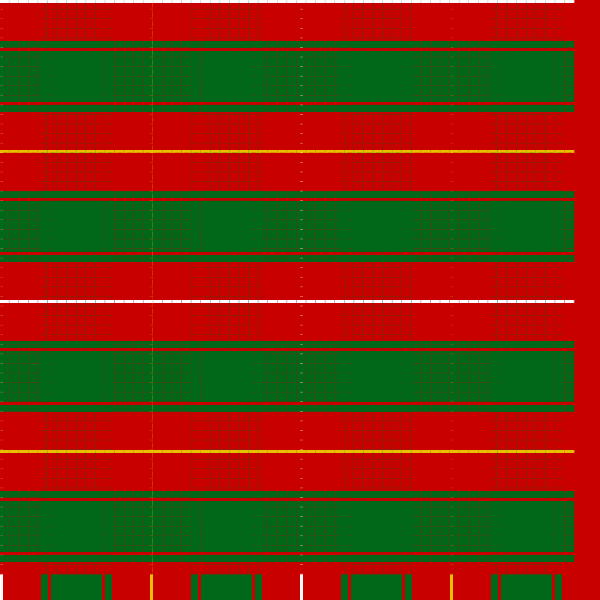 MacFieClan tartan · Register ref. 2727
The Register traces this red and green sett to the Clans Originaux of 1880, where it appears as McPhee, and to W. & A.K. Johnston's book of 1906. It was recorded by the Lord Lyon in 1991. The Register suggests its likeness to the Cameron tartan may reflect the MacFies' later ties to that clan.
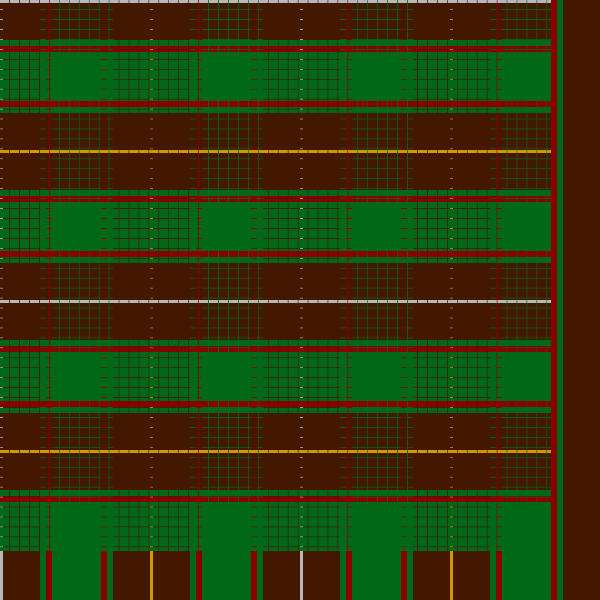 MacFie HuntingHunting tartan · Register ref. 5035
A hunting version of the clan sett, with dark brown taking the place of the main red. The Register gives no date or further history for it.
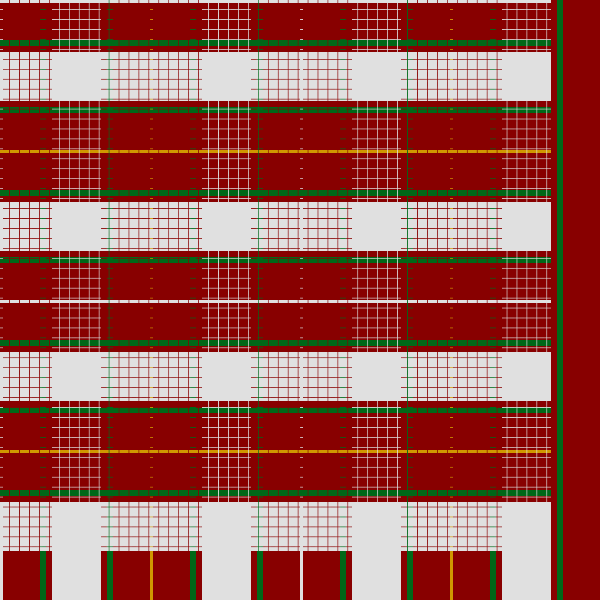 MacFie DressDress tartan · Register ref. 2436
A dress version of the clan sett, with a broad white ground set against dark red and green. The Register dates it to 2002 but records no other details.
Get the kilt
When you order a kilt, ask for the tartan by its full name — for example “MacFie” — and say which colourway you want. “Modern” is dark and strong, “ancient” is lighter, “weathered” is muted. The sett is the same in each.
We are choosing retailers we trust and will list them here soon.
Wear the colours
Our own MacFie range is on its way: the name, the tartan and the motto on a heavyweight tee, a hoodie and a mug. About the shop.
Lands and seats
- Colonsay and Oronsay. The clan's ancestral islands, held until the 17th century. The Australian clan society names Oronsay Priory as the place where the chiefs were buried.
Surnames
The clan name and its spellings
- MacFie
- MacPhee
- MacPhie
- MacFee
- MacDuffie
- MacDuffee
- MacDuffy
- MacAfee
- MacVie
Names associated with Clan MacFie
- Fee
- Duffie
- Duffy
- Duffee
- MacGuffie
- MacHaffie
- Mahaffy
- Cathie
- Coffee
- Fee: Listed by COSCA.
- Duffie: Listed by Electric Scotland as a sept.
- Duffy: Listed by COSCA and Electric Scotland. A common Irish surname too, so not every Duffy has a Colonsay link.
- Duffee: Listed by COSCA.
- MacGuffie: Listed by COSCA; Electric Scotland spells it MacGuiffie.
- MacHaffie: Listed by COSCA and Electric Scotland, which calls the MacHaffies the Galloway and Carrick branch.
- Mahaffy: Listed by COSCA.
- Cathie: Listed by COSCA.
- Coffee: Listed by COSCA.
“Associated” means the name appears in published sept lists for this clan. It does not prove descent, and many names are linked to more than one clan. Where your family lived is often the better clue.
Questions people ask
What is the MacFie tartan?
The main sett is registered as MacPhie/Macfie, ref. 2727. It is a red and green tartan first seen in 1880 and recorded by the Lord Lyon in 1991. The Register also lists MacFie Hunting and MacFie Dress versions.
What is the MacFie motto?
COSCA and the Clan Macfie Society of Australia give Pro Rege, which is Latin for "For the King".
Which surnames are linked to MacFie?
The Court of the Lord Lyon names MacDuffie, MacDuffee, MacDuffy, MacFee, MacFie, MacPhee and MacPhie, and also MacAfee. COSCA's long list adds names such as Fee, Duffy, MacGuffie, MacHaffie and Mahaffy.
Does Clan MacFie have a chief?
No, not since Malcolm, the last chief, was killed in 1623. The Court of the Lord Lyon and COSCA say the clan, now named Clan MacDubhsith, has neither a chief nor a commander. A family convention planned for May 2026 to consider a commander was postponed because no suitable candidate had come forward.
Sources
- MacFie — COSCA - Council of Scottish Clans & Associations
- Clan MacDubhsith announces search for Commander — COSCA - Council of Scottish Clans & Associations
- Clan Commander announcements — Court of the Lord Lyon
- Clan MacFie history — Electric Scotland
- Our History — Clan Macfie Society of Australia
- Clan Symbols — Clan Macfie Society of Australia
- The Clan MacDubhsith Council of Presidents Announcement — Clan Macfie Society of Australia
- MacPhie/Macfie (ref. 2727) — Scottish Register of Tartans
- MacFie Hunting (ref. 5035) — Scottish Register of Tartans
- MacFie Dress (ref. 2436) — Scottish Register of Tartans
Clan histories are contested and sources disagree. If you can correct something here with a source, write to hello@tartanflag.com. Last updated 12 November 2026.