Clan MacInnes
MacAonghais
MacInnes is a name from Morvern and Ardgour, on the west Highland coast, taken from the Gaelic MacAonghais, 'son of Angus'. The clan has no recognised chief today, and its old seat was Kinlochaline Castle.
History
MacInnes comes from the Gaelic MacAonghais, 'son of Angus'. The clan society places the family among the earliest known people of Morvern, Ardgour, Ardnamurchan and Lochaber, the stretch of coast facing Mull. It says they were settled in Morvern by the time of Somerled, who died in 1164. That is the society's reading of a distant past, and surviving records are too thin to test it.
Kinlochaline Castle is the place most often tied to the clan. It sits on a rocky ridge at the head of Loch Aline. Historic Environment Scotland calls it a tower house, probably of the fifteenth century, and mentions the view that the MacLeans of Duart built it. Clan tradition has another version. A MacInnes woman, Dubh Chal, 'the lady of the black veil', is said to have settled with the builder by handing over butter in quantity to match the castle, hence the name Caisteal an Ime, the castle of butter. It is a good story, and we offer it as a story.
Tradition holds that the castle suffered in the wars of the seventeenth century. The clan society's account has it besieged and burned in 1644, during the campaigns of Montrose, with a MacInnes garrison inside. Historic Environment Scotland records a major restoration in 1890, and a later conversion to a dwelling is recorded in the late 1990s. We have not tried to trace what happened in the years between.
The clan society also tells of a turning point in the fourteenth century. Its account says that around 1358 the last MacInnes chief and his sons were killed, on the orders of the Lord of the Isles, and that the chiefship ended with them. The society places the killings at Ardtornish. We have only the society's telling of this, and we cannot say how well the detail stands up. What is clear is the result: the clan has no chief today.
The society says that after the loss of their leaders many MacInnes families moved away and sought the protection of neighbouring clans. One line became hereditary bowmen to the Mackinnon chiefs of Strath, known as Sliochd Neill a' bhogha, 'the line of Neil of the bow'. Later emigrants carried the name to Canada and elsewhere, among them settlers at Malagawatch in Nova Scotia.
Today Clan MacInnes is armigerous, meaning it has arms on record but no chief. The International Association of Clan MacInnes has corporate arms from the Lord Lyon, announced through the Council of Scottish Clans and Associations. The clan society gives the plant badge as holly. The motto we give is the one linked with the arms matriculated in 1960 by the Malagawatch branch, and an older motto, 'E Labore Dulcedo', is also recorded by the society.
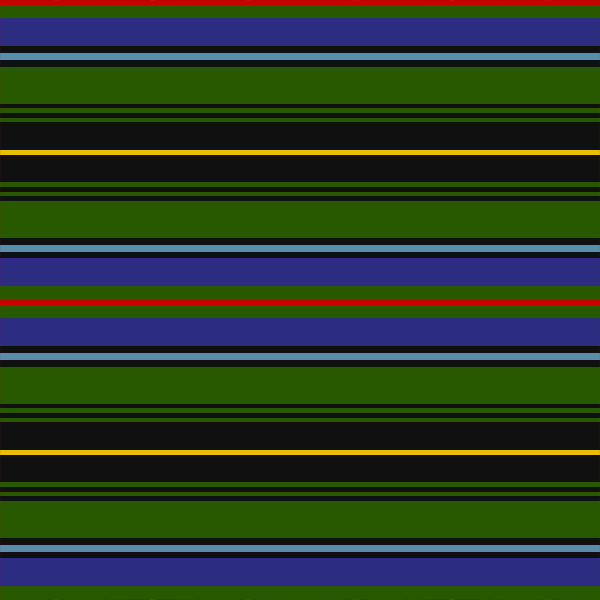
Clan MacInnes tartans
Names and reference numbers follow the Scottish Register of Tartans. Mills sell most setts in modern, ancient and weathered colourways. The pattern is the same; only the shades change.
Get the kilt
When you order a kilt, ask for the tartan by its full name — for example “MacInnes” — and say which colourway you want. “Modern” is dark and strong, “ancient” is lighter, “weathered” is muted. The sett is the same in each.
We are choosing retailers we trust and will list them here soon.
Wear the colours
Our own MacInnes range is on its way: the name, the tartan and the motto on a heavyweight tee, a hoodie and a mug. About the shop.
Lands and seats
- Kinlochaline Castle. A tower house at the head of Loch Aline in Morvern. Historic Environment Scotland lists it in Category B and dates it probably to the fifteenth century.
Surnames
The clan name and its spellings
- MacInnes
- McInnes
- MacInnis
- McInnis
- MacInnish
- MacKinnes
- MacAonghais
Names associated with Clan MacInnes
- MacAngus
- Angus
- MacGinnis
- MacNeish
- Ness
- Innes
- MacAngus: From the same Gaelic MacAonghais; the clan society lists it among its name variations.
- Angus: Listed by the clan society as derived from Aonghais; it is also widely used on its own and is not exclusive to this clan.
- MacGinnis: Listed by the clan society; the same spelling is found in other families, including Irish ones.
- MacNeish: Derived from the same root, but the clan society says a physical connection with Clan MacInnes has not been established for some such names.
- Ness: Listed by the clan society with the MacNeish group, with the same caveat about an unproven connection.
- Innes: The Innes surname has its own origin in Moray; some MacInneses dropped the Mac, which is why the clan society lists it.
“Associated” means the name appears in published sept lists for this clan. It does not prove descent, and many names are linked to more than one clan. Where your family lived is often the better clue.
Questions people ask
What is the MacInnes tartan?
The Scottish Register of Tartans records the MacInnes clan tartan in blue, green, black, red, azure and yellow, dated 1908. The Register's notes link its design to John MacInnes of Onich, a tailor and merchant, and the clan society calls it the Onich tartan.
Does Clan MacInnes have a chief?
No. The clan has had no recognised chief for centuries and is armigerous, with arms on record at the Lord Lyon's office but no chief. The clan society links the loss of the chiefship to events around 1358.
What is the MacInnes motto?
The motto linked with the clan's modern arms is 'Irid Ghipt Dhe Agus an Righ', which the clan society translates as 'By the grace of God and the King'. The spelling varies between sources.
Where is Clan MacInnes from?
The clan comes from Morvern, Ardgour, Ardnamurchan and Lochaber on the west Highland coast. Its traditional seat was Kinlochaline Castle, at the head of Loch Aline.
Sources
- MacInnes (ref. 1464) — Scottish Register of Tartans
- About the Clan MacInnes: General Information — International Association of Clan MacInnes (macinnes.org)
- Symbols of the Clan MacInnes: arms, crests, tartans — International Association of Clan MacInnes (macinnes.org)
- Clan MacInnes name variations — International Association of Clan MacInnes (macinnes.org)
- Kinlochaline Castle or The Butter Castle — International Association of Clan MacInnes (macinnes.org)
- Ardtornish Estate, Kinlochaline Castle (LB13960) — Historic Environment Scotland
- International Association of Clan MacInnes Announces Corporate Arms — COSCA - Council of Scottish Clans & Associations
Clan histories are contested and sources disagree. If you can correct something here with a source, write to hello@tartanflag.com. Last updated 6 October 2026.