Clan MacIver
MacIver is an Argyll name with roots in Cowal, at Lergachonzie and Asknish. The main line took the Campbell name after 1688, and no chief of the name is recognised today.
History
MacIver comes from the Gaelic personal name Iver, and the people who bear it were never a single tidy family. Electric Scotland says the family first held Lergachonzie and Asknish, along with some further land in Cowal, in Argyll. It also records families of the name in Caithness, Inverness-shire and Lewis.
The early story is tradition. One account says the ancestor was Iver, a son of Duncan of Lochow, in the time of Malcolm IV. Another says Iver Crom took Cowal for Alexander II in the thirteenth century. Principal Campbell, writing around 1870, argued for a Glenlyon origin. These accounts disagree, and we cannot check any of them against records of the time. A Robertson society page offers a different tradition, in which MacIvers fled Glenlyon after a fight in 1476. It presents this as one possible origin for some of the name.
Firmer ground begins in the sixteenth century. Electric Scotland gives a Malcolm MacIver in 1292 and an Iver MacIver of Lergachonzie around 1500. In 1564, Electric Scotland says, the fifth Earl of Argyll resigned the chieftainship in favour of Iver of Lergachonzie and Asknish. Even so, the family stayed closely tied to the Campbells.
That closeness cost them. Electric Scotland says MacIver attended the ninth Earl of Argyll with a hundred men in 1679. In 1685 he joined the Earl's rising and was forfeited when it failed. After the Revolution the tenth Earl restored them to Duncan MacIver, provided that he and his heirs adopted the Campbell surname and coat of arms. Our source gives the date as both 1688 and 1689. From then on the chiefly line is found as Campbell of Asknish, and several other MacIver houses also became Campbells.
In 1853 the Lord Lyon, through his depute, recognised Duncan MacIvor Campbell of Asknish as heir of line of the MacIvors of Asknish. He was told to use both the Campbell and MacIver arms and surname. We have found no later recognition of a chief of the name, and the Standing Council of Scottish Chiefs lists none, so we treat the clan as armigerous.
Elsewhere the name carried on by itself. A Lochaber branch, called MacGlasrich, followed Macdonald of Keppoch, and other MacIvers settled in Lewis and Caithness. Electric Scotland also notes that MacIvers in Argyll are linked with Campbell, those in Ross and Lewis with MacKenzie, and those in Perthshire with Robertson. Today the name is kept alive by a clan society and by descendants across the world.
Clan MacIver tartans
Names and reference numbers follow the Scottish Register of Tartans. Mills sell most setts in modern, ancient and weathered colourways. The pattern is the same; only the shades change.
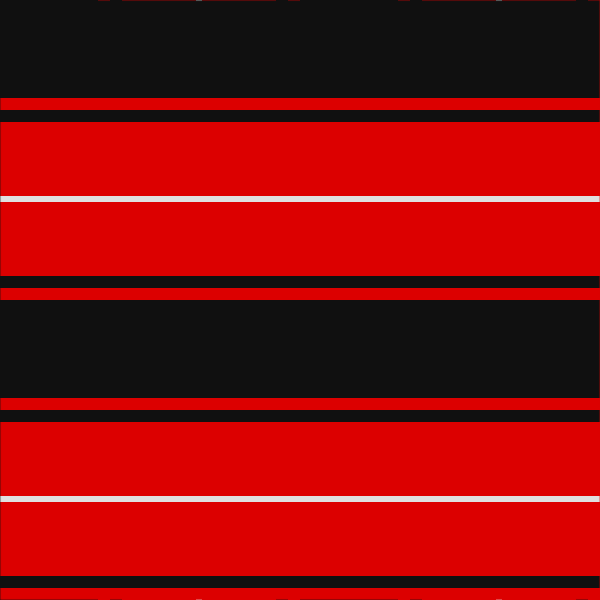 MacIverClan tartan · Register ref. 2489
The Register says this sett appears only in Robert Bain's The Clans and Tartans of Scotland, 1953 edition.
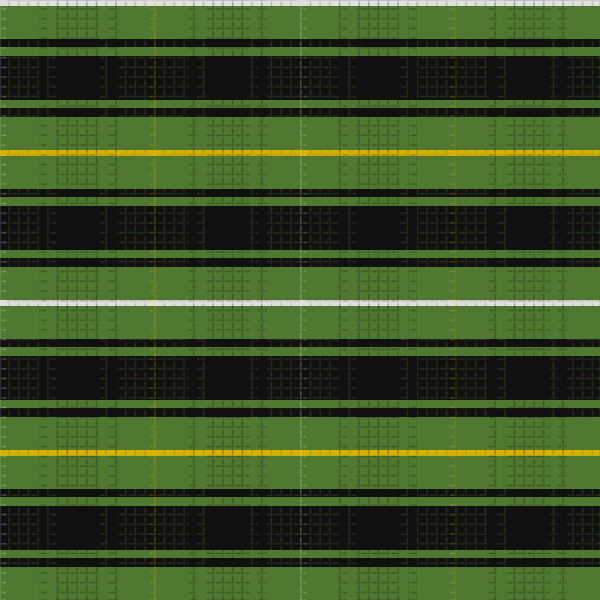 MacIver HuntingHunting tartan · Register ref. 2493
The Register says the red ground of the main sett changes to green here, and that the Scottish Tartans Society noted it worn in 1998 by Ian MacIver, Chairman of the MacIver Society. It adds that the sett was found on the west coast of Scotland and avoids confusion with MacArthur Hunting.
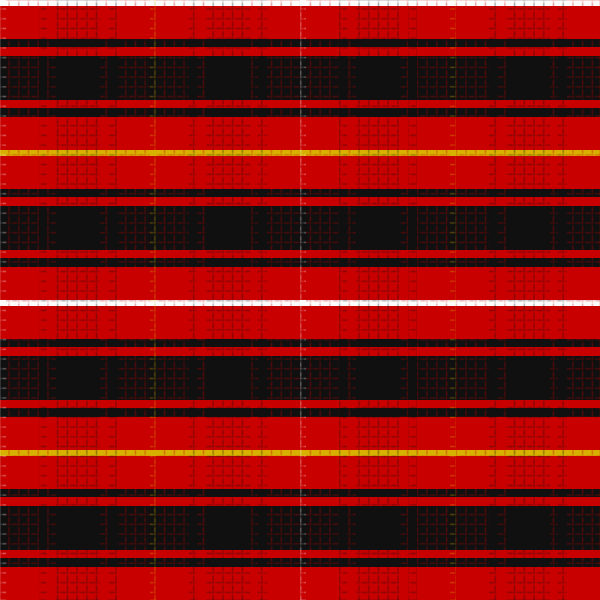 MacIver (third sett)Clan tartan · Register ref. 2491
The Register says this sett is derived from the Lord of the Isles tartan and is the same as MacFie. It also records that Kith and Kin lists MacIvers in Argyll linked with Campbell, in Ross and Lewis with MacKenzie, and in Perthshire with Robertson.
Get the kilt
When you order a kilt, ask for the tartan by its full name — for example “MacIver” — and say which colourway you want. “Modern” is dark and strong, “ancient” is lighter, “weathered” is muted. The sett is the same in each.
We are choosing retailers we trust and will list them here soon.
Wear the colours
Our own MacIver range is on its way: the name, the tartan and the motto on a heavyweight tee, a hoodie and a mug. About the shop.
Lands and seats
- Asknish. Estate in Cowal, Argyll. Electric Scotland says the MacIver chiefs were known as of Asknish only from the mid-seventeenth century.
Surnames
The clan name and its spellings
- MacIver
- MacIvor
- MacIvar
- MacIverach
- MacKiver
Names associated with Clan MacIver
- MacGlasrich
- MacGlasserig
- Iver
- Iverach
- MacCure
- MacGiver
- MacQuay
- Ure
- Urie
- Orr
- MacGlasrich: Listed by Electric Scotland, which links it to the Lochaber branch.
- MacGlasserig: Listed by Electric Scotland.
- Iver: Listed by Electric Scotland.
- Iverach: Listed by Electric Scotland.
- MacCure: Listed by Electric Scotland. Also found in other families.
- MacGiver: Listed by Electric Scotland. Also found in other families.
- MacQuay: Listed by Electric Scotland. Also found in other families.
- Ure: Listed by Electric Scotland. Also found in other families.
- Urie: Listed by Electric Scotland. Also found in other families.
- Orr: Listed by Electric Scotland. Also found in other families.
“Associated” means the name appears in published sept lists for this clan. It does not prove descent, and many names are linked to more than one clan. Where your family lived is often the better clue.
Questions people ask
What is the MacIver tartan?
The Scottish Register of Tartans lists several MacIver setts. The plain MacIver, ref. 2489, is recorded only in Robert Bain's 1953 book. The Register also lists a MacIver Hunting sett, ref. 2493, dated 1998, and MacIver #3.
What is the MacIver clan motto?
Electric Scotland gives the motto as 'Nunquam obliviscar', Latin for 'I will never forget'.
Which surnames are linked to Clan MacIver?
Electric Scotland lists spellings such as MacIvor, MacIvar and MacKiver, and further names such as MacGlasrich, Ure and Orr. We treat the wider names as associated, and some are also found in other families.
Where is Clan MacIver from?
The original lands were Lergachonzie, Asknish and other ground in Cowal, Argyll. Families of the name were also found in Lochaber, Caithness and Lewis.
Sources
- Clan MacIver — Electric Scotland
- Clan MacIver history — Electric Scotland
- MacIvor — Electric Scotland
- Origin of the MacIver/MacIvor sept — Clan Donnachaidh Society (robertson.org)
- Members — Standing Council of Scottish Chiefs
- MacIver (ref. 2489) — Scottish Register of Tartans
- MacIver Hunting (ref. 2493) — Scottish Register of Tartans
- MacIver #3 (ref. 2491) — Scottish Register of Tartans
Clan histories are contested and sources disagree. If you can correct something here with a source, write to hello@tartanflag.com. Last updated 9 November 2026.