Clan MacKellar
Mac Ealair
MacKellar is an Argyll name, tied to Ardare on Loch Awe from the 1470s and long counted a sept of Clan Campbell. There is no chief on the Standing Council's list.
History
The name MacKellar is an anglicised Mac Ealair, which Electric Scotland and the Campbell septs list both translate as 'son of Hilary'. Each connects it with Hilarius, bishop of Poitiers, but they disagree on the period: Electric Scotland gives about 1230, while the septs list points to the saint of the 4th century. Electric Scotland also places the principal family in Argyll from the 13th century. That reaches well back before the surviving records, which begin later.
Charters of the 1400s quoted in the septs list give the earliest names. A MacKellar, recorded in Latin form as 'Felanus Hilarii', witnessed a charter issued by Duncan, 1st Lord Campbell, in 1432. It suggests a family already moving among the Campbells.
Ardare, on the south bank of Loch Awe, is the home with the fullest record. In 1470 Colin, 1st Earl of Argyll, issued a precept to Cristinus McAlare of Ardare. Six years later Gilchrist Makalare of Ardare, thought to be the same man, resigned the lands to the Crown; his wife Mariota MacIsaac resigned Craigmurell, and both properties were regranted to Gilchrist. A licence to trade in England was given to an Archibald Makelar of Argile in 1489.
Further branches settled in Cowal and beside Loch Fyne. The list notes a sasine at Lochgoilhead in 1494 and Kilmun charters of 1520 and 1528, and describes families in Glendaruel, Cruachan and Glenshira. Only three small MacKellar lairdships were left by the 1751 valuation, yet 25 separate families lived on the Knockbuy estate later in the century.
Through all of this runs the connection with the Campbells. According to the septs list, MacKellars were part of the Campbell chiefs' bodyguard and served as their musicians, and Duke Niall believed they arrived in Cowal as officers of the Argyll family. These are traditions and opinions, not documents. The Register adds that the white and yellow lines in the tartan were intended to mark the clan as a Campbell sept.
In later years the family dispersed. The same list says Glassary families appear to have gone to Canada and Loch Fyne families to Australia, while many MacKellars in Glasgow became seafarers and shipowners. We found no MacKellar chief on the Standing Council's chiefs list, so we call the name armigerous. For the early centuries, Duncan Beaton's 2001 article in The Scottish Genealogist is the study to seek out; we have not read it.
Clan MacKellar tartans
Names and reference numbers follow the Scottish Register of Tartans. Mills sell most setts in modern, ancient and weathered colourways. The pattern is the same; only the shades change.
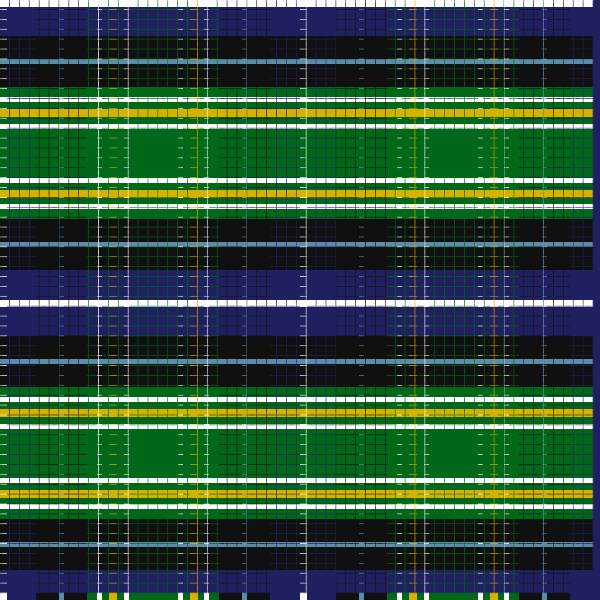 MacKellarClan tartan · Register ref. 2514
The Register says this sett appears in Johnston & Ross lists from about 1930. Its white and yellow lines are said to mark the family as a Campbell sept. One suggestion is that it was the version worn by the tenor Kenneth MacKellar.
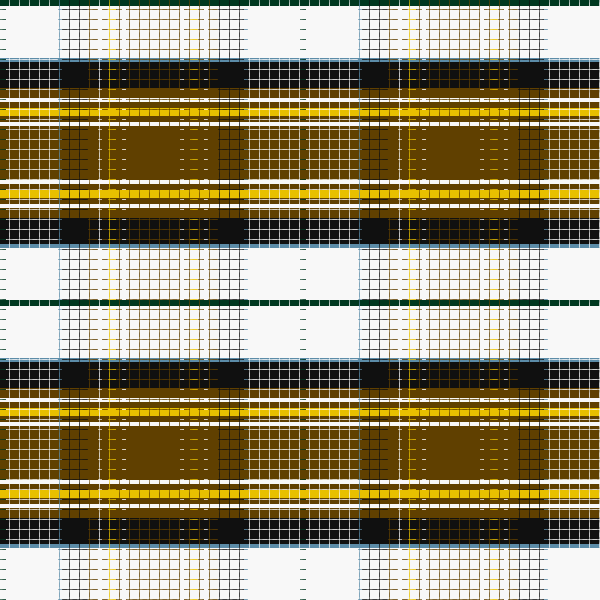 MacKellar DressDress tartan · Register ref. 2516
The Register records this as a Peter Macarthur & Co design from 2002, sold to the trade as Mackellar Dress. A sample reached the Scottish Tartans Society in 1976.
Get the kilt
When you order a kilt, ask for the tartan by its full name — for example “MacKellar” — and say which colourway you want. “Modern” is dark and strong, “ancient” is lighter, “weathered” is muted. The sett is the same in each.
We are choosing retailers we trust and will list them here soon.
Wear the colours
Our own MacKellar range is on its way: the name, the tartan and the motto on a heavyweight tee, a hoodie and a mug. About the shop.
Lands and seats
- Ardare, Loch Awe. Held by the MacKellars on the south bank of Loch Awe; recorded in 1470 and regranted in 1476.
Surnames
The clan name and its spellings
- MacKellar
- Maceller
- M'Kellar
- M'Allar
- M'Callar
- Makalare
- McAlare
- Alarii
Names associated with Clan MacKellar
- Kellar
- Keller
- Kellar: Listed in the entry heading of the Campbell septs list (Clan Campbell Society, North America).
- Keller: Listed in the entry heading of the Campbell septs list. Also a common name of other origins.
“Associated” means the name appears in published sept lists for this clan. It does not prove descent, and many names are linked to more than one clan. Where your family lived is often the better clue.
Questions people ask
What is the MacKellar tartan?
The Scottish Register of Tartans lists MacKellar (1964), a sett traced to Johnston & Ross lists of about 1930, and a MacKellar Dress sett dated 2002. The white and yellow lines in the first are said to mark the Campbell link.
Is MacKellar a sept of Clan Campbell?
The Campbell society's official septs list includes MacKellar, and the Register tartan notes say the same. The link goes back to the 1400s in the charters it quotes.
Does MacKellar have a chief?
We found none. The Standing Council of Scottish Chiefs does not list a MacKellar chief, so we describe the name as armigerous.
Where do the MacKellars come from?
Argyll. The best-recorded home is Ardare on Loch Awe, with later branches in Cowal, Glendaruel and along Loch Fyne.
Sources
- Septs of Clan Campbell (MacKellar entry) — Clan Campbell Society (North America)
- MacKellar is the Gaelic — Electric Scotland
- Chiefs — Standing Council of Scottish Chiefs
- The Clan Mackellar - The Early History up to the 18th Century (catalogue entry) — Foundation for Medieval Genealogy
- MacKellar (ref. 2514) — Scottish Register of Tartans
- MacKellar Dress (ref. 2516) — Scottish Register of Tartans
Clan histories are contested and sources disagree. If you can correct something here with a source, write to hello@tartanflag.com. Last updated 4 November 2026.