Clan MacLennan
Mac Gille Fhinnein
MacLennan is a Kintail name, tied to the Mackenzies as standard-bearers and to the hard fighting at Auldearn in 1645. The chiefship lay unclaimed for centuries before it was recognised again in the late twentieth century.
History
The name comes from the Gaelic Mac Gille Fhinnein, usually taken to mean 'son of the devotee of St Finnan'. Electric Scotland gives several possible origins, including a link to St Adamnan, and notes that one theory, 'son of the sweetheart', rests only on similar sounds. A tradition also traces the line to Gilliegorm, chief of the Logans of Drumderfit in Easter Ross. That story is traditional rather than documented, and any link to the Lowland Logans of Restalrig is unproven.
The clan's long home was Kintail, in Wester Ross, shared with the MacRaes. Electric Scotland places MacLennans in Glenshiel early on and describes them as allies of the Mackenzies, not a conquered people. They served as Mackenzie standard-bearers. The two families intermarried yet stayed distinct, and their tartans are said to have differed.
The clan is best remembered for Auldearn, fought in May 1645 during the Wars of the Three Kingdoms. One account has the MacLennans carrying Lord Seaforth's banner, the 'Caber feidh', with many dying around it. Another says the order to retreat never reached them and the Gordon cavalry cut them down. Eighteen clan captains are said to have fallen, and the chief, Ruairidh Ban, is reported to have declined honourable surrender and been shot. These details come from clan histories on Electric Scotland, so treat them with care. The MacRaes are said to have married many of the widows.
For a long period the clan had no recognised chief, and its men often followed other chiefs, so its true strength is hard to judge. Electric Scotland counts only twelve MacLennans at Culloden in 1746.
The chiefship returned in the later twentieth century. The clan society says the clan was 'reborn' in 1978 after more than three hundred years without a chief. Sources give differing dates for the Lord Lyon's recognition, so we give none. Electric Scotland says the present chief succeeded his father in 1989, as the thirty-fifth chief, aged twelve. The clan society and COSCA both name a chief, who is styled MacLennan of MacLennan.
Kintail remains the heartland in clan tradition. COSCA's list of associated surnames is long and includes Lobban, Gilfillan and Winning. Several are also borne by families of other origins, so we list them as associated names only.
Clan MacLennan tartans
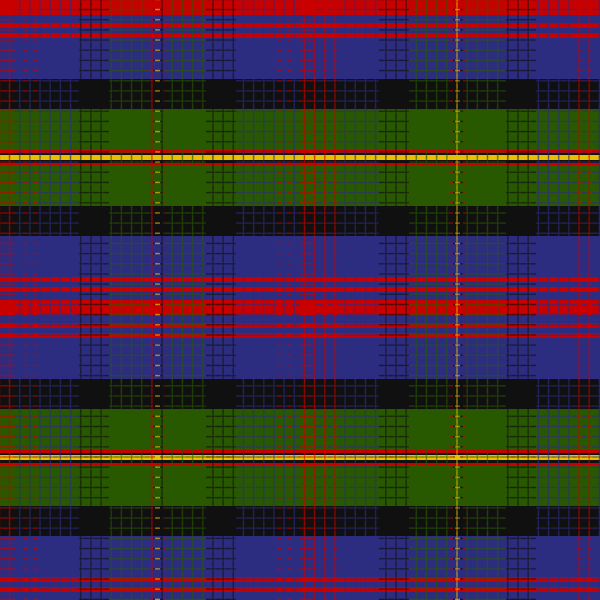
Names and reference numbers follow the Scottish Register of Tartans. Mills sell most setts in modern, ancient and weathered colourways. The pattern is the same; only the shades change.
Get the kilt
When you order a kilt, ask for the tartan by its full name — for example “MacLennan” — and say which colourway you want. “Modern” is dark and strong, “ancient” is lighter, “weathered” is muted. The sett is the same in each.
We are choosing retailers we trust and will list them here soon.
Wear the colours
Our own MacLennan range is on its way: the name, the tartan and the motto on a heavyweight tee, a hoodie and a mug. About the shop.
Surnames
The clan name and its spellings
- MacLennan
- Mac Lennan
- Mac Lennon
- Mac Lyndon
Names associated with Clan MacLennan
- Lennan
- Lennon
- Leonard
- Linden
- Lyndon
- Lobban
- Logan
- Gilfillan
- Clelland
- Winan
- Winning
- Winton
- Lennon: Also an Irish surname with separate origins.
- Leonard: Shared with families of other origins.
- Lobban: Shared with families of other origins.
- Logan: Shared with the Logans of Restalrig and others; a link to the Highland family is unproven.
- Clelland: Also a Lowland surname with its own origins.
- Winton: Shared with other families of that name.
“Associated” means the name appears in published sept lists for this clan. It does not prove descent, and many names are linked to more than one clan. Where your family lived is often the better clue.
Questions people ask
What is the MacLennan tartan?
The Scottish Register of Tartans lists one MacLennan clan tartan, in blue, green, black and red with a yellow overcheck. It is dated 1880, and its threadcount was recorded at the Lyon Register in 1967.
What is the MacLennan motto?
The motto is Dum spiro spero, Latin for 'While I breathe, I hope'. The plant badge is furze.
Where is Clan MacLennan from?
The clan is tied to Kintail in Wester Ross, where its people lived alongside the MacRaes and served as standard-bearers to the Mackenzies. A tradition also points to Drumderfit in Easter Ross.
Does Clan MacLennan have a chief?
Yes. The chief is styled MacLennan of MacLennan, and both COSCA and the clan society name one. The chiefship was revived in the late twentieth century after a very long gap.
Sources
- MacLennan (ref. 2625) — Scottish Register of Tartans
- MacLennan — COSCA - Council of Scottish Clans & Associations
- Clan MacLennan History — Electric Scotland
- Clan MACLENNAN — Electric Scotland
- Clan MacLennan Worldwide — clanmaclennan-worldwide.com
Clan histories are contested and sources disagree. If you can correct something here with a source, write to hello@tartanflag.com. Last updated 31 October 2026.