Clan MacMillan
Mac Mhaolain
A Knapdale clan whose name recalls a tonsured churchman, later chiefed from Finlaystone on the Clyde and, further afield, linked in name to the Macmillan publishing house.
History
The Macmillan name is generally explained as Mac Mhaolain, 'son of the tonsured one', pointing to a churchman ancestor rather than a warrior one — an origin the clan's own genealogical material sets out as tradition rather than a documented pedigree. The clan's own account names Gilchrist, son of a churchman remembered as Cormac 'the Great Bishop', as the founding figure.
After the crown broke up the old mormaerdom of Moray, the family is said to have held land first at Loch Arkaig in Lochaber before being moved to crown lands on Loch Tay in the twelfth century. In the late fourteenth century they were expelled from Loch Tay for backing the Lord of the Isles, and resettled in Knapdale in Argyll, where Chief Malcolm Mòr Macmillan is said to have received land from the Lord of the Isles around 1360.
Knapdale became the clan's heartland for the next century and more. Alexander Macmillan kept Castle Sween on Loch Sween for the Lord of the Isles through the 1470s. He married into the family that had held the castle before him, and two things of his are said to survive there still: a round tower he is credited with building, and the carved stone cross nearby that bears his name, Macmillan's Cross. When the Lordship of the Isles fell in the following decades, Knapdale passed to the Campbells, and the Macmillans who remained became their tenants; a branch of the family re-established itself back in Lochaber, on Loch Arkaig-side, under the protection of Cameron of Lochiel.
In the eighteenth century John MacMillan, a minister deprived of his Presbyterian charge in 1703 over his refusal to accept the church and civil settlement of the time, went on to found what became the Reformed Presbyterian Church in 1743 — a distinct strand of Scottish church history, and not part of the clan's own chiefly line. In the twentieth century, General Sir Gordon MacMillan — a decorated soldier of both World Wars who went on to serve as Governor of Edinburgh Castle — is said to have had no idea he held the clan's chiefly line at all, until the paperwork for flying arms over the Castle raised the question and the title turned out to be his. He was duly recognised as chief and, on his death in 1986, was succeeded by his son George MacMillan of MacMillan and Knap.
Clan Macmillan International, based today at Finlaystone in Renfrewshire, grew out of a Clan Macmillan Society founded in 1892. Its museum and centre at Finlaystone, established in 1991, still bring together the clan's worldwide branches, including long-running societies in North America and France.
Clan MacMillan tartans
Names and reference numbers follow the Scottish Register of Tartans. Mills sell most setts in modern, ancient and weathered colourways. The pattern is the same; only the shades change.
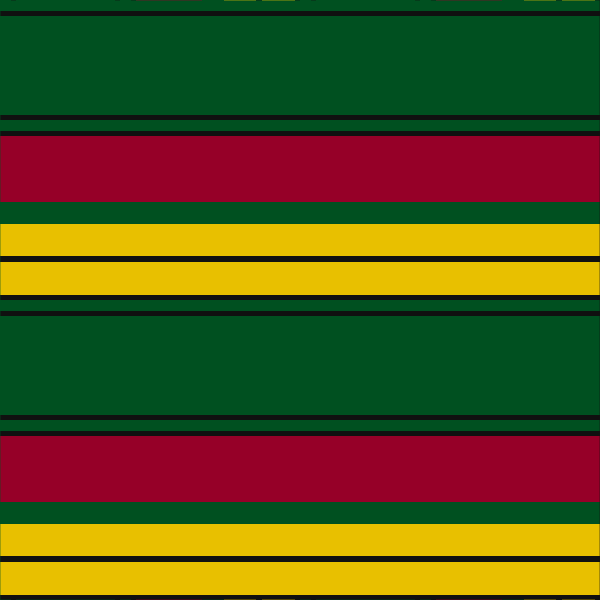 MacMillanClan tartan · Register ref. 2657
The Register notes that this sett's 'ancient' form differs from the modern MacMillan tartans by more than the usual softening of colour, which is unusual enough to justify the name. It is generally treated as the clan's principal tartan.
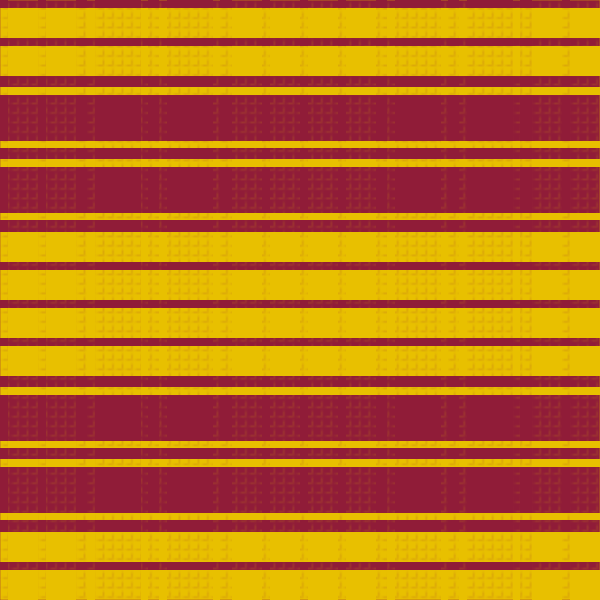 MacMillan DressDress tartan · Register ref. 2658
A two-colour maroon and yellow dress sett recorded by the Register with a date of 1880.
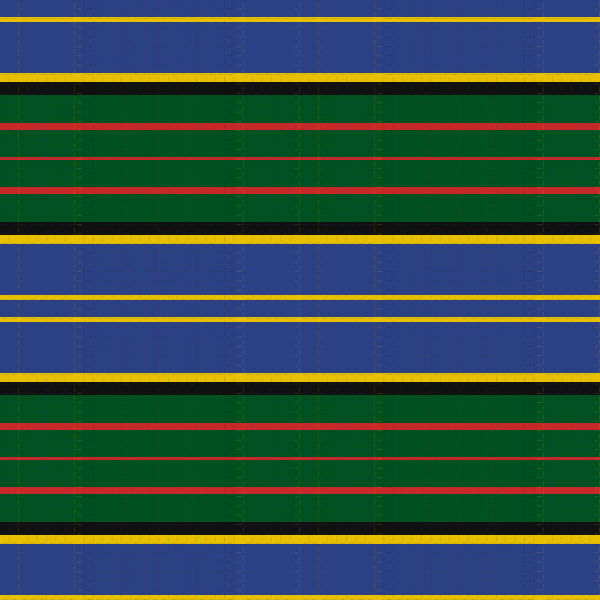 MacMillan HuntingHunting tartan · Register ref. 2659
The Register describes this modern hunting sett as combining the red and yellow lines of the ancient design with the greens and blues of the Vestiarium Scoticum version.
Get the kilt
When you order a kilt, ask for the tartan by its full name — for example “MacMillan” — and say which colourway you want. “Modern” is dark and strong, “ancient” is lighter, “weathered” is muted. The sett is the same in each.
We are choosing retailers we trust and will list them here soon.
Wear the colours
Our own MacMillan range is on its way: the name, the tartan and the motto on a heavyweight tee, a hoodie and a mug. About the shop.
Lands and seats
- Finlaystone. Near Langbank in Renfrewshire, home of the chief since 1955 and now the centre for Clan MacMillan International.
Surnames
The clan name and its spellings
- MacMillan
- Macmillan
- MacMillen
Names associated with Clan MacMillan
- Bell
- Baxter
- Brown
- Gibson
- MacGill
- Walker
- Bell: The Bells of Knapdale, in Gaelic Na Belaich, are reckoned among the clan's oldest and largest associated families.
“Associated” means the name appears in published sept lists for this clan. It does not prove descent, and many names are linked to more than one clan. Where your family lived is often the better clue.
Questions people ask
What is the MacMillan tartan?
The main MacMillan tartan, registered as MacMillan Ancient, is a green sett with black, red and yellow lines. A maroon-and-yellow MacMillan Dress tartan and a MacMillan Hunting tartan, in blue, green, black, red and yellow, are also registered.
What is the MacMillan motto and crest?
The motto is 'Miseris succurrere disco', Latin for 'I learn to succour the unfortunate'. The crest badge shows two hands together holding a two-handed sword upright, a design the clan links to an ancestor's exploit.
Where is Clan MacMillan from?
The clan's main territory was Knapdale in Argyll, held from Castle Sween from the fifteenth century. An earlier branch had held land at Loch Arkaig in Lochaber, and a Lochaber branch was later re-established there under Cameron of Lochiel. The chief's seat today is Finlaystone, near Langbank on the Clyde.
Which surnames are associated with Clan MacMillan?
Bell (Na Belaich in Gaelic) is one of the clan's oldest and largest associated families, from Knapdale. Baxter, Brown, Gibson, MacGill and Walker are also listed as associated names.
Sources
- History — Clan MacMillan International
- Symbols — Clan MacMillan International
- Chief — Clan MacMillan International
- The Clan MacMillan International Centre — Clan MacMillan International
- Septs — Clan MacMillan International
- Scottish Register of Tartans: MacMillan Ancient — tartanregister.gov.uk
- Scottish Register of Tartans: MacMillan Dress — tartanregister.gov.uk
- Scottish Register of Tartans: MacMillan Hunting — tartanregister.gov.uk
Clan histories are contested and sources disagree. If you can correct something here with a source, write to hello@tartanflag.com. Last updated 18 September 2026.