Clan Menzies
Menzies (traditionally pronounced "Ming-iss") is a Highland clan from Perthshire, seated for centuries at Castle Menzies near Aberfeldy, with a chiefship re-established from the Culdares branch in 1957.
History
The Menzies name is generally traced to Mesnières, near Rouen in Normandy, and the family's first recorded appearance in Scotland comes with Robert de Meyners, who was at the court of Alexander II in the early thirteenth century and rose to become Chamberlain of Scotland around 1249. Through this office he was granted lands in Glen Lyon and Atholl, giving the family its first foothold in the central Highlands.
His son Alexander built on that start, adding the lands of Strathtay and Weem and marrying a daughter of the Stewart family. Over the following generations the Menzies pushed further into Highland Perthshire, holding ground around Loch Tay, Loch Rannoch and Glen Lyon, and became one of the settled landed families of the district rather than newcomers.
Comrie Castle, on the River Lyon, served as the family's earliest seat until fire took it in 1487. The eighth chief, Sir Robert Menzies, answered by beginning a replacement at Weem the next year; that house did not last either, burned in 1502 during a quarrel with a neighbour over the lands of Fortingall and Rannoch, with early clan records lost in the blaze. The Crown intervened on the family's behalf: James IV had the Menzies lands raised into a free barony in 1510, after which the chief took the style Menzies of that Ilk and the newly built house became known as Castle Menzies.
The Jacobite risings split the clan rather than uniting it. In 1715 the chief was a boy of nine, and his regent kept the clan out of the rising, though Menzies of Culdares, Bolfracks and Shian took up arms for the Stuart cause on their own account; Jacobite forces occupied Castle Menzies that year regardless. In 1745 the chief again stayed neutral, but the clan itself was "out" under Menzies of Shian, who paid for it with his life, and the castle was occupied once more, briefly by Prince Charles Edward Stuart on his way to Culloden and then, within days, garrisoned by the Duke of Cumberland's government troops.
The direct Menzies of Weem line ran out not long after, and the chiefship stood vacant for decades: the Menzies baronetcy became extinct on the death of Sir Neil Menzies in 1910, and no chief was recognised again until 1957, when the Court of the Lord Lyon confirmed Ronald Steuart Menzies of Culdares in the title. That same year, the newly revived Menzies Clan Society, first founded in 1892, bought the by then near-derelict Castle Menzies for under £300 and began the long work of restoring it, work that continued into the 1990s with support that included grants from what is now Historic Environment Scotland.
Castle Menzies today draws visitors rather than housing the chief: it holds Category A listed status and is looked after by the Menzies Charitable Trust. The current chief, Robert Menzies of Menzies, succeeded his father David Steuart Menzies of Menzies on the latter's death in 2023, continuing a chiefship re-established from Culdares stock less than seventy years before.
Clan Menzies tartans
Names and reference numbers follow the Scottish Register of Tartans. Mills sell most setts in modern, ancient and weathered colourways. The pattern is the same; only the shades change.
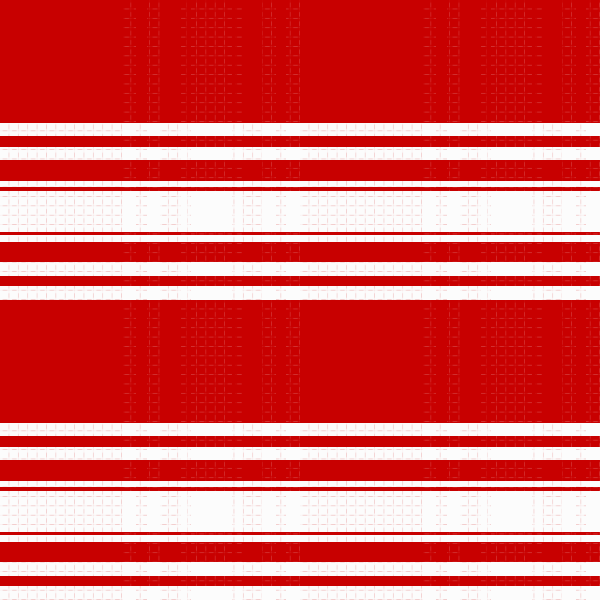 MenziesClan tartan · Register ref. 2923
This is the familiar red-and-white Menzies check. The Register traces it to the Cockburn Collection of around 1815, where it was recorded under the name MacFarlane, an error the Register puts down to how unsettled clan-tartan naming still was at that early date; the clan chief certified it as Menzies around 1816, in the Highland Society of London's own collection. The same pattern has since been woven in other colourways, including green and black, alongside the certified red and white.
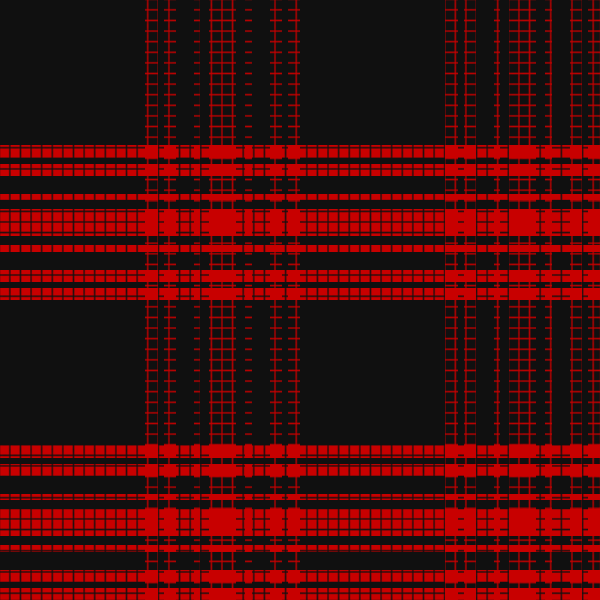 Menzies HuntingHunting tartan · Register ref. 2929
Recorded from W & A K Johnston in 1906. As with the main Menzies sett, this design has been woven in other colours over the years, but the version certified to the clan is black and red.
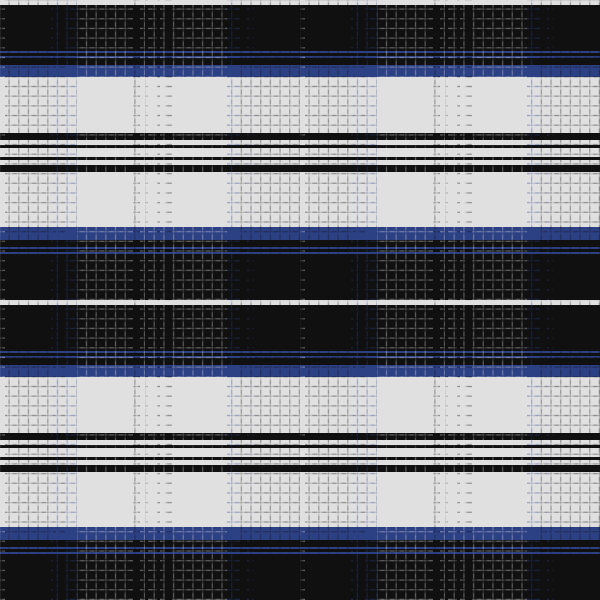 Menzies Black DressDress tartan · Register ref. 2925
A lighter dress version of the Menzies tartan, built around black and blue with white brightening the ground. The Register attributes it to D.C. Dalgliesh, the Selkirk weaving firm, and records no registration date.
Get the kilt
When you order a kilt, ask for the tartan by its full name — for example “Menzies” — and say which colourway you want. “Modern” is dark and strong, “ancient” is lighter, “weathered” is muted. The sett is the same in each.
We are choosing retailers we trust and will list them here soon.
Wear the colours
Our own Menzies range is on its way: the name, the tartan and the motto on a heavyweight tee, a hoodie and a mug. About the shop.
Lands and seats
- Castle Menzies. At Weem, near Aberfeldy. Building began in 1488 under the eighth chief; bought in a near-ruinous state by the newly revived Menzies Clan Society in 1957 for under £300 and restored over the following decades. It is now a Category A listed visitor attraction cared for by the Menzies Charitable Trust, rather than a chief's residence.
- Comrie Castle. On the River Lyon, the family's earlier seat before Castle Menzies was built. It was destroyed by fire in 1487, prompting the move to a new residence at Weem; that building was in turn burned in 1502 in a dispute with a neighbour, taking early clan records with it.
Surnames
The clan name and its spellings
- Menzies
- Meyners
- Mengues
- Mennie
- Mein
- Minn
- Minnis
Names associated with Clan Menzies
- Dewar
- MacIndeoir
- Dewar: Families of this name on Menzies lands traditionally served as hereditary keepers of the Quigrich, St Fillan's crozier. Dewar is also linked to other clans, including Buchanan and MacNab.
- MacIndeoir: A Gaelic patronymic form meaning roughly 'son of the dewar (keeper)', associated with the same Dewar families.
“Associated” means the name appears in published sept lists for this clan. It does not prove descent, and many names are linked to more than one clan. Where your family lived is often the better clue.
Questions people ask
How is Menzies pronounced?
In Scotland the name is traditionally pronounced "Ming-iss", not as it is spelled. This comes from an old Scots letter, yogh, which looked like a 'z' in later printing but originally sounded like a 'y'.
What is the Menzies tartan?
The best-known Menzies tartan is a bold red-and-white check, first recorded around 1815 and certified to the clan chief the following year. There are also certified hunting (black and red) and dress (black, white and blue) versions.
Does Clan Menzies have a chief?
Yes. Robert Menzies of Menzies is the current chief, having succeeded his father in 2023. The chiefship itself was vacant for much of the early twentieth century after the original Menzies of Weem line died out, and was only re-established in 1957.
What surnames are linked to Clan Menzies?
Meyners, Mengues, Mennie, Mein, Minn and Minnis are older spelling variants of Menzies itself. Dewar and its Gaelic form MacIndeoir are traditionally associated with the clan through families who served as hereditary keepers of St Fillan's crozier on Menzies land.
Sources
- Menzies tartan (ref. 2923) — Scottish Register of Tartans
- Menzies Hunting tartan (ref. 2929) — Scottish Register of Tartans
- Menzies Black Dress tartan (ref. 2925) — Scottish Register of Tartans
- Menzies — COSCA - Council of Scottish Clans & Associations
- Clan Menzies Announces Death of Chief Captain David R. Steuart Menzies of Menzies — COSCA - Council of Scottish Clans & Associations
- Clan Menzies Hereditary Chiefs — Menzies Clan Society
- Detailed History of Clan Menzies — Menzies Clan Society
- Septs and Names — Menzies Clan Society
- The Story Behind the Crest — Menzies Clan Society
- Frequently Asked Questions — Menzies Clan Society
- History of Castle Menzies — Castle Menzies
- Saving and restoring Castle Menzies — Castle Menzies
Clan histories are contested and sources disagree. If you can correct something here with a source, write to hello@tartanflag.com. Last updated 27 September 2026.