Clan Munro
Clann an Rothaich
Clan Munro held Easter Ross from Foulis Castle on the Cromarty Firth. Its chiefs served Denmark, Sweden and the British crown, and the chiefship is styled The Munro of Foulis.
History
Clan tradition holds that the first Munros were Irish soldiers who crossed to Ross-shire and were given land after helping a Scottish king see off a Viking raid. The clan's own name is usually explained as a form of the Gaelic bun Rotha, 'foot of the river Roe', a river in what is now County Londonderry. None of this can be documented. What can be shown is that a family known as of Foulis, in the parish of Kiltearn on the north shore of the Cromarty Firth, held land there as vassals of the Earls of Ross by the fourteenth century, and held it directly of the Crown once that earldom was forfeited.
The earliest chief who can be proved from contemporary record is Robert de Munro, who died in 1369; everything claimed before him rests on later tradition rather than evidence. His descendants built up their standing in Easter Ross over the following century. Around the middle of the fifteenth century, probably in 1452 though the exact date is disputed, a force of Munros and their Dingwall allies fought a hard action remembered as Bealach nam Broig against men loyal to the Mackenzies of Kintail, who were holding a Ross hostage. The Munros won the field and freed the hostage, but at heavy cost to their own number.
The Munros supplied Ross-shire's Barons of Foulis for generations, and in the seventeenth century many of them left home to fight as professional soldiers on the Continent. Robert Munro of Foulis, nicknamed the Black Baron, raised a company of some 700 men, all Munros, within a Highland Protestant regiment that entered the service of the King of Denmark in 1626 during the Thirty Years' War. When Denmark made peace, the regiment took service with Sweden instead, and a number of Munro officers went on to reach senior rank in the Swedish army.
In the Jacobite risings the Munros stood with the government. Sir Robert Munro, 6th Baronet of Foulis, was the first lieutenant-colonel of the Black Watch and had fought at Fontenoy; he was killed fighting the Jacobites at Falkirk Muir in January 1746, reportedly cut off from his men and overwhelmed by six Camerons. During the 1745 rising Foulis Castle itself was burned. Sir Harry Munro, who succeeded to the baronetcy, returned afterwards to find his home destroyed and rebuilt it in the mid-eighteenth century, working around what survived of the older tower house.
Clan Munro's chiefship is recognised by the Standing Council of Scottish Chiefs and styled The Munro of Foulis. Foulis Castle remains in the family's hands. The tartan now regarded as the standard Munro sett has an odd history of its own: Wilsons of Bannockburn originally recorded it as a Cameron of Lochiel pattern, and how it came to be worn by the Munros is not clear. It is shown under the Munro name in two books published in 1850, and has been accepted as the clan tartan ever since.
Clan Munro tartans
Names and reference numbers follow the Scottish Register of Tartans. Mills sell most setts in modern, ancient and weathered colourways. The pattern is the same; only the shades change.
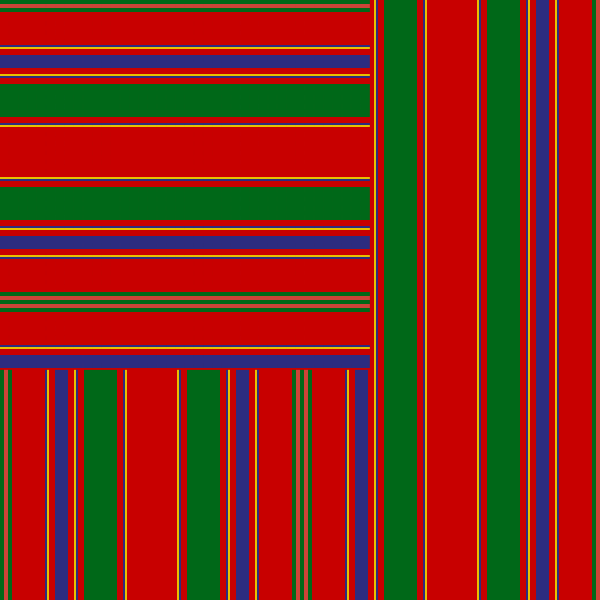 MunroClan tartan · Register ref. 3048
This sett began life on Wilsons of Bannockburn's books as a Cameron of Lochiel pattern. Quite how it was picked up as the Munro tartan is not recorded, but it appears under the Munro name in two separate books published in 1850 and has been treated as the standard Munro sett ever since.
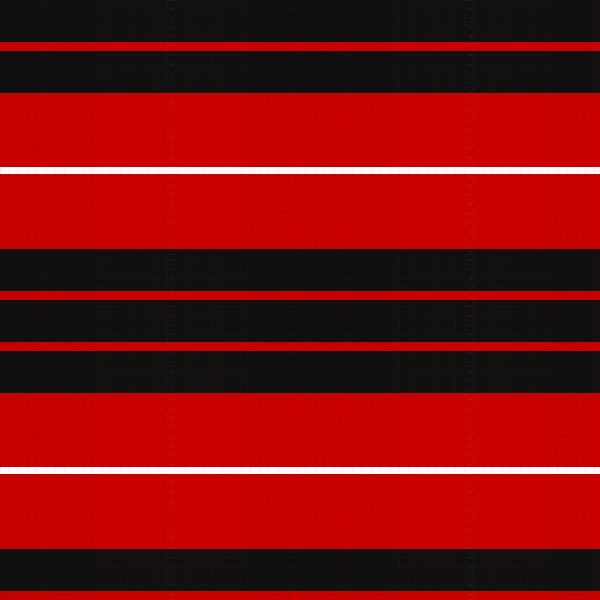 Munro (Black and Red)Other sett · Register ref. 3049
This severe black-and-red design comes from the Vestiarium Scoticum of 1842, a book whose historical claims tartan historians now treat with real caution. Whatever its origins, this particular sett has stayed in circulation as an alternative Munro pattern.
Get the kilt
When you order a kilt, ask for the tartan by its full name — for example “Munro” — and say which colourway you want. “Modern” is dark and strong, “ancient” is lighter, “weathered” is muted. The sett is the same in each.
We are choosing retailers we trust and will list them here soon.
Wear the colours
Our own Munro range is on its way: the name, the tartan and the motto on a heavyweight tee, a hoodie and a mug. About the shop.
Lands and seats
- Foulis Castle. Near Evanton in Ross-shire. Held by the Munros since at least the fourteenth century, burned during the 1745 rising, rebuilt in the mid-eighteenth century, and still the family's home.
Surnames
The clan name and its spellings
- Munro
- Monro
- Munroe
- Monroe
Names associated with Clan Munro
- Dingwall
- Foulis
- Fowlis
- Vass
- Wass
- MacCulloch
- MacLulich
- MacLullich
- Keddie
- Kiddie
- MacAdie
- MacEddie
- MacKeddie
“Associated” means the name appears in published sept lists for this clan. It does not prove descent, and many names are linked to more than one clan. Where your family lived is often the better clue.
Questions people ask
What is the Munro tartan?
The main Munro tartan is a red, green, blue and yellow sett recorded in the Scottish Register of Tartans with a date of 1850. It began as a Cameron of Lochiel pattern in Wilsons of Bannockburn's books; how it came to be used by the Munros is unclear, but it has long been treated as the standard Munro sett. A separate black-and-red pattern, drawn from the 1842 Vestiarium Scoticum, is also registered under the Munro name.
What is the Munro motto and crest?
The motto is 'Dread God'. The crest badge shows an eagle perched, worn by clan members within a strap and buckle bearing the motto.
Which surnames are associated with Clan Munro?
Spelling variants such as Monro, Munroe and Monroe are all forms of the clan name itself. Associated names include Dingwall, Foulis, Vass, Wass, MacCulloch and several forms built on Keddie, such as MacKeddie and MacAdie.
Where is Clan Munro from?
The clan's heartland is Easter Ross, on the north shore of the Cromarty Firth. Its historic seat is Foulis Castle near Evanton, which the family has held since at least the fourteenth century.
Sources
- Short History of the Munros — Clan Munro Association
- Info No 1 (motto, crest and plant badge) — Clan Munro Association
- Info No 5 (septs and associated names) — Clan Munro Association
- Sir Robert Munro — Clan Munro Association
- The Conflict of Bealach-na-Broige — Tain & District Museum
- Foulis Castle — Ross and Cromarty Heritage
- Foulis Castle — Historic Houses
- Members: chiefs — Standing Council of Scottish Chiefs
- Clan Munro — Wikipedia (supplementary check)
- Scottish Register of Tartans: Munro — tartanregister.gov.uk
- Scottish Register of Tartans: Munro (Black and Red) — tartanregister.gov.uk
Clan histories are contested and sources disagree. If you can correct something here with a source, write to hello@tartanflag.com. Last updated 17 September 2026.