Clan Murray
Clan Murray traces its line to Freskin, a twelfth-century lord in Moray. The chiefs became Dukes of Atholl, with their seat at Blair Castle in Perthshire.
History
Clan Murray looks back to Freskin, a lord of the twelfth century who settled in Scotland in the reign of David I. He is generally thought to have been Flemish, though that is a likelihood rather than a documented fact. He held lands in Moray, and his descendants took the name de Moravia, 'of Moray'. In Scots that became Murray.
One line moved south. In 1242 the family of Walter of Moray acquired Bothwell in Clydesdale, and Walter or his son William 'the Rich' began Bothwell Castle. Its huge round tower is still one of the finest stone buildings of medieval Scotland. Andrew Moray raised the north against Edward I in 1297 and joined forces with William Wallace, but he did not long outlive their victory at Stirling Bridge. Bothwell later passed out of the family. In 1362 Joanna Moray, its heiress, married Archibald 'the Grim' of the Black Douglases.
The chiefship settled on the Murrays of Tullibardine in Perthshire, a property Sir William de Moravia is said to have acquired in 1282. In 1586, and again a few years later, a number of Murray lairds signed bonds of association recognising Sir John Murray of Tullibardine as their chief. He was made Earl of Tullibardine in 1606. The earldom of Atholl came to the Murrays in 1629. They were raised to Marquess of Atholl in 1676 and Duke of Atholl in 1703.
The Jacobite risings split the family. The 1st Duke backed the Hanoverian succession, but in 1715 his sons William, Marquess of Tullibardine, and Lord George Murray came out for the Jacobites. In 1745 Lord George, a younger son of the 1st Duke, served as lieutenant general of the Jacobite army. He was largely responsible for the victory at Prestonpans and directed the retreat from Derby. He argued against fighting on the ground at Culloden. After the defeat he escaped to the Continent and died at Medemblik in Holland in 1760. Tullibardine, who raised the prince's standard at Glenfinnan, died in the Tower of London in July 1746. Their brother James, the 2nd Duke, supported the government.
Blair Castle at Blair Atholl is the family's seat. Its earliest part, Comyn's Tower, is dated to 1269. The 2nd Duke turned it into a Georgian house in the 1740s, and the 7th Duke gave it its present baronial look in the 1860s and 1870s. In 1765 the Duke of Atholl sold the sovereignty of the Isle of Man to the British government for £70,000.
The castle is also home to the Atholl Highlanders. Raised in 1777 as the 77th Regiment of Foot, they were re-formed in 1839 as the duke's bodyguard. They escorted Queen Victoria in 1842 and mounted guard when she stayed at Blair in 1844. Revived in 1966, they are often described as the last private army left in Europe.
Clan Murray tartans
Names and reference numbers follow the Scottish Register of Tartans. Mills sell most setts in modern, ancient and weathered colourways. The pattern is the same; only the shades change.
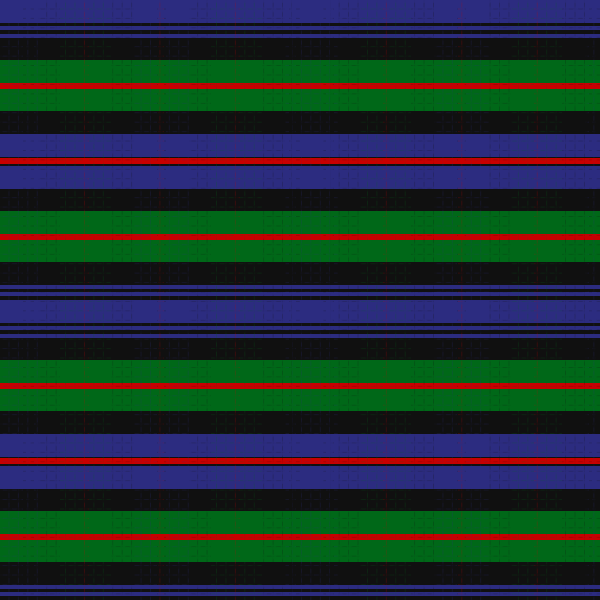 Murray of AthollClan tartan · Register ref. 3063
The familiar Murray of Atholl sett: blue, black and green with red lines, close to the Black Watch. The Register records it from the Cockburn Collection, dates it to 1810 and notes it is also known as the Atholl district tartan. James Logan thought the red lines were added to the military sett by Lord Murray.
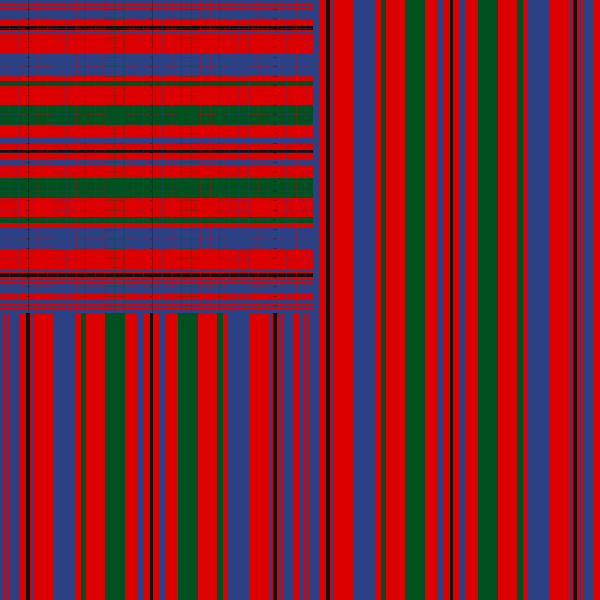 Murray of TullibardineOther sett · Register ref. 3070
A red-ground sett named for the Tullibardine line from which the chiefs descend. The Register records it from the pattern books of Wilsons of Bannockburn, the weaving firm founded near Stirling around 1770.
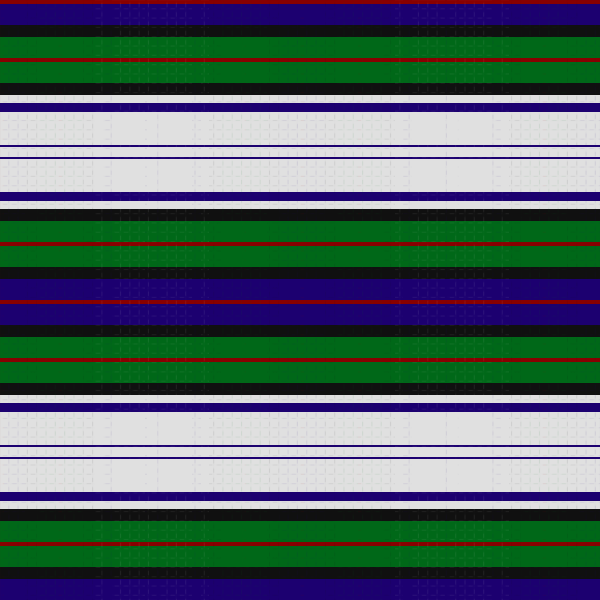 Murray of Atholl DressDress tartan · Register ref. 3064
A dress version with broad white bands, taken from the Clans Originaux pattern book of 1880, where it is simply called Murray Dress.
Get the kilt
When you order a kilt, ask for the tartan by its full name — for example “Murray of Atholl” — and say which colourway you want. “Modern” is dark and strong, “ancient” is lighter, “weathered” is muted. The sett is the same in each.
We are choosing retailers we trust and will list them here soon.
Wear the colours
Our own Murray range is on its way: the name, the tartan and the motto on a heavyweight tee, a hoodie and a mug. About the shop.
Lands and seats
- Blair Castle. Seat of the Dukes of Atholl at Blair Atholl. Its oldest part, Comyn's Tower, is dated to 1269.
- Bothwell Castle. Great thirteenth-century castle on the Clyde begun by the Morays of Bothwell. Now cared for by Historic Environment Scotland.
Surnames
The clan name and its spellings
- Murray
- Moray
- Murrie
- Murry
Names associated with Clan Murray
- MacMurray
- Rattray
- Small
- Spalding
- Balneaves
- Neaves
- Butters
- Fleming
- Moncreiffe
- Piper
- MacMurray: Given as a variation of Murray.
- Small: Listed with forms such as Smail and Smeal.
- Butters: The clan society mentions the Butters of Pitlochry.
- Fleming: A widespread surname with many other origins.
- Piper: Listed with Pyper.
“Associated” means the name appears in published sept lists for this clan. It does not prove descent, and many names are linked to more than one clan. Where your family lived is often the better clue.
Questions people ask
What is the Murray tartan?
The best-known Murray tartan is Murray of Atholl, a dark sett of blue, black and green with red lines. The Scottish Register of Tartans dates its recorded version to 1810 and notes that it is also known as the Atholl district tartan. Murray of Tullibardine is a red alternative.
What is the Murray motto and crest?
The motto is 'Furth fortune and fill the fetters', with a crest of a wild man holding a dagger and a key. A mermaid crest, with the motto Tout prest ('Ready'), is also widely used.
Which surnames are associated with Clan Murray?
Names found in published sept lists include MacMurray, Moray, Rattray, Small and Spalding, along with Balneaves, Butters, Fleming, Moncreiffe and Piper. Several of these are common surnames with other origins too.
Where do the Murrays come from?
The name comes from the province of Moray in the north-east. The chiefly line later settled at Tullibardine and then Atholl in Perthshire, where Blair Castle remains the seat of the Dukes of Atholl.
Sources
- Badges & Tartans — clanmurray.org
- Clan History — clanmurray.org
- Family Fortunes — The Murray Clan Society
- The Septs — The Murray Clan Society
- Blair Castle: History — Atholl Estates
- The Atholl Highlanders — Atholl Estates
- Bothwell Castle: History — Historic Environment Scotland
- Lord George Murray — Encyclopaedia Britannica
- Clan Murray — Electric Scotland
- Andrew Murray — Undiscovered Scotland
- Tullibardine, William Murray, marquis of — Encyclopedia.com
- Clan Murray — Wikipedia (supplementary check)
- Duke of Atholl — Wikipedia (supplementary check)
- Scottish Register of Tartans: Murray of Atholl #3 — tartanregister.gov.uk
- Scottish Register of Tartans: Murray of Tullibardine — tartanregister.gov.uk
- Scottish Register of Tartans: Murray of Atholl Dress — tartanregister.gov.uk
Clan histories are contested and sources disagree. If you can correct something here with a source, write to hello@tartanflag.com. Last updated 17 September 2026.