Clan Ogilvy
Clan Ogilvy takes its name from lands in Angus, and its chief is the Earl of Airlie. Its history runs from a fifteenth-century peerage through Civil War losses and Jacobite risings to the family's long tenure at Cortachy Castle.
History
Gillechrist, Earl of Angus, held lands in the parish of Glamis that King William the Lion had granted him during the later twelfth century. It was his younger son Gillebride who gave the family its name, taking it from Ogilvy, one of the baronies that lay within that Glamis grant. Across the generations that followed, the family widened its holdings around Angus, and its members turn up with growing frequency in the surviving records of the Scottish crown.
By the early fifteenth century the Ogilvys had reached national prominence. Sir Walter Ogilvy of Lintrathen served as Lord High Treasurer of Scotland between 1425 and 1431, one of the first members of the family to hold high office at court. His descendants added Airlie to the family's Angus holdings in 1459, and in 1491 Sir James Ogilvy was raised to the peerage as Lord Ogilvy of Airlie by James IV, giving the family its first title.
The family's standing was confirmed in 1639, when its head was created Earl of Airlie by Charles I; sources differ on whether he was the seventh or eighth Lord Ogilvy of Airlie at the time. The new earldom was tested almost at once. During the Covenanting wars of the 1640s the Ogilvys refused to sign the National Covenant, and in 1640 the Earl of Argyll's forces sacked and burned Airlie Castle, an episode later remembered in the ballad "The Bonnie House o' Airlie." Five years later the family fought for the Marquis of Montrose's royalist campaign, sharing his victory at Kilsyth in August 1645 and his defeat at Philiphaugh only weeks after. Family tradition holds that a young Ogilvy captured at Philiphaugh escaped execution by changing clothes with his sister in prison; it is a good story, but tradition rather than documented fact.
With Airlie Castle in ruins, the family made Cortachy Castle, acquired in 1473, its main home, and it has remained the Ogilvys' seat ever since. The eighteenth century brought further setbacks tied to the family's Jacobite sympathies: a son of the house was attainted for his part in the 1715 rising, though later pardoned, and Cortachy was forfeited to the Crown for around thirty years after the family's involvement in the 1745 rising before it was restored to them.
More recent generations of the family have combined their Angus estate with public and royal service. David Ogilvy, 13th Earl of Airlie, who held the earldom from 1968 until his death in June 2023, chaired the merchant bank Schroders, served as Lord Chamberlain of the Royal Household, and was later President of the National Trust for Scotland. On his death the earldom, and with it the chiefship of Clan Ogilvy, passed to his eldest son, David Ogilvy, 14th Earl of Airlie, who holds the title and chiefship today.
The Ogilvy name is now carried by far more people than could ever trace a direct line to the earls, spread across Scotland and well beyond it, in its Ogilvy and Ogilvie spellings and in older variants recorded alongside them. What holds the clan together today has less to do with any single feudal holding than with that shared name, and with the Airlie family's recognised place, under Scots heraldic law, as its chiefly house.
Clan Ogilvy tartans
Names and reference numbers follow the Scottish Register of Tartans. Mills sell most setts in modern, ancient and weathered colourways. The pattern is the same; only the shades change.
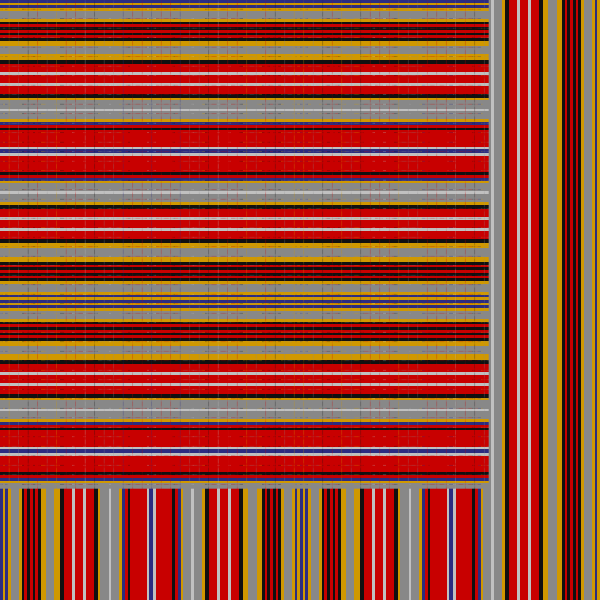 OgilvyClan tartan · Register ref. 3222
This intricate sett is taken from a documented sample in a historic tartan collection. The Scottish Register records this pattern, usually called Ogilvy of Airlie, as the most usual form of the Ogilvy or Ogilvie tartan, a distinct design from the separate Drummond or Ogilvie sett that marks a nineteenth-century marriage between the two families.
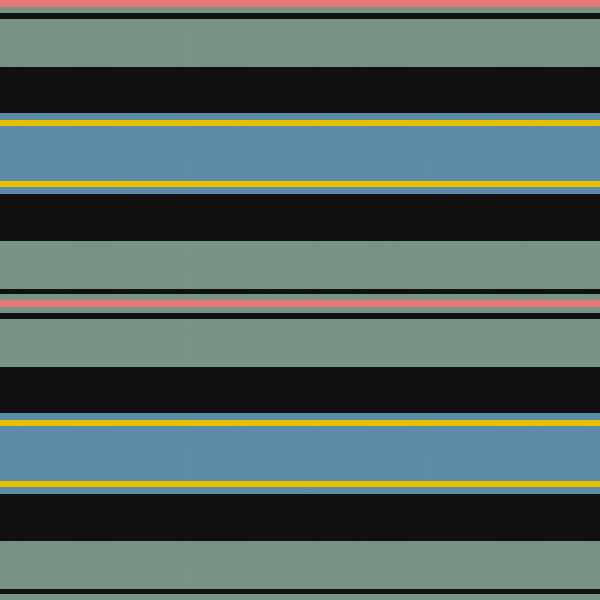 Ogilvy HuntingHunting tartan · Register ref. 3231
This lighter, everyday sett was registered around 2000. Some earlier woven samples carried a "restricted, family only" label, but the tartan is now produced and sold without that restriction.
Get the kilt
When you order a kilt, ask for the tartan by its full name — for example “Ogilvy” — and say which colourway you want. “Modern” is dark and strong, “ancient” is lighter, “weathered” is muted. The sett is the same in each.
We are choosing retailers we trust and will list them here soon.
Wear the colours
Our own Ogilvy range is on its way: the name, the tartan and the motto on a heavyweight tee, a hoodie and a mug. About the shop.
Lands and seats
- Cortachy Castle. Near Kirriemuir in Angus; acquired by the family in 1473 and their main seat since Airlie Castle was destroyed in the 1640s.
- Airlie Castle. The family's earlier stronghold in Glen Isla, burned by the Earl of Argyll's forces in 1640; its ruins still stand on the estate.
Surnames
The clan name and its spellings
- Ogilvy
- Ogilvie
- Ogilby
Names associated with Clan Ogilvy
- Airlie
- Findlater
- Futhie
- Gilchrist
- MacGilchrist
- Richardson
- Storey
- Storrie
- Ogilvie-Grant
- Airlie: The territorial name of the chiefly earldom, also recorded as a surname.
- Findlater: Surname of a cadet branch of the Ogilvys, created Earls of Findlater in 1638.
- Gilchrist: Reflects the family's traditional descent from Gillechrist, Earl of Angus.
- MacGilchrist: A Gaelic form linked to the same traditional descent as Gilchrist.
- Storey: Also recorded as Storrie.
- Storrie: Variant spelling of Storey.
- Ogilvie-Grant: Surname later borne by the Earls of Seafield, a family descended from a younger branch of the Ogilvys of Findlater.
“Associated” means the name appears in published sept lists for this clan. It does not prove descent, and many names are linked to more than one clan. Where your family lived is often the better clue.
Questions people ask
Is it Ogilvy or Ogilvie?
Both spellings are genuinely used. The chiefly family, the Earls of Airlie, spell their name Ogilvy, while Ogilvie is the more common spelling found among the wider name-group today.
Who is the chief of Clan Ogilvy?
The chiefship goes with the Earldom of Airlie. David Ogilvy, 14th Earl of Airlie, succeeded his father, the 13th Earl, in June 2023.
What is the Ogilvy tartan?
There are two registered Ogilvy tartans: a complex clan sett dating from 1842, most often called Ogilvy of Airlie, and a lighter hunting tartan registered around 2000.
Where is Clan Ogilvy from?
The clan's traditional lands lie in Angus. Its historic stronghold, Airlie Castle, was burned in 1640, after which the family made nearby Cortachy Castle its seat, and Cortachy remains the family home today.
Sources
- Ogilvy tartan, reference 3222 — The Scottish Register of Tartans
- Ogilvie Hunting tartan, reference 3231 — The Scottish Register of Tartans
- Ogilvie clan profile — Council of Scottish Clans & Associations (COSCA)
- 1911 Encyclopaedia Britannica: Ogilvy — Encyclopaedia Britannica (11th ed., 1911), via Wikisource
- Cortachy Castle — Historic Environment Scotland (trove.scot)
- The Ogilvys of Airlie: A Noble Heritage Revealed — Lyon & Turnbull
- A tribute to our former President, Lord Airlie — National Trust for Scotland
- Airlie, Earl of (S, 1639) — Cracroft's Peerage
- Airlie Castle — The Castles of Scotland (Goblinshead)
Clan histories are contested and sources disagree. If you can correct something here with a source, write to hello@tartanflag.com. Last updated 26 September 2026.