Clan Oliphant
The Oliphants were a Perthshire and Fife family who rose to the rank of Lords of Parliament in the fifteenth century. The chiefship lay unclaimed for over two centuries before the Lord Lyon recognised a chief in 2003.
History
The family name appears in early records as Olifard, later Olifaunt and then Oliphant, from the old French word for an elephant. Clan tradition looks back to Normandy in the eleventh century, but that far-off lineage is better treated as family lore. What is firmer is that the name was settled in Scotland, with land in Perthshire, by the time of the wars of independence.
Sir William Oliphant is the figure most often remembered from that era. He is recorded as the commander of Stirling Castle in 1304, the last major stronghold still held against Edward I. The siege lasted about three months and the garrison surrendered in July. Tradition says William was sent south as a prisoner afterwards. Aberdalgie, near Perth, is named by the clan society as an early principal seat, and the family also held ground at Gask and Condie.
In Fife, the Oliphants came to hold the barony of Kellie in the fourteenth century. Some accounts link this to a marriage with the royal house of Bruce, but the details differ from one telling to the next, so we leave them there. The family kept Kellie for around 250 years and enlarged the castle. In 1613 they sold it to Thomas Erskine, later the first Earl of Kellie.
The family rose in rank. Sir Laurence Oliphant became the first Lord Oliphant, and the clan society says the title existed by 1455. He is recorded sitting in Parliament as a Lord in 1467. The family later divided into branches. The Gask line, descended from a son of the first Lord, became known for loyalty to the Stuart cause in the Jacobite risings of 1715 and 1745.
The line of Lords then faded. The Register of Tartans dates the end of the line to the death of the 10th Lord in 1748, and says that by 1815 nobody could say who the chief was. The clan society gives 1751 as the start of its period without a recognised chief. Our sources differ on the exact year, and a dormant title is not quite the same thing as a chiefship, so we do not try to settle the finer points here.
The revival came through research into the male line, which led to a claim at the Court of the Lord Lyon. In 2003 the Lord Lyon confirmed a Chief of the Name and Arms of Oliphant, styled Oliphant of that Ilk, the first for more than two centuries. The clan society was re-formed in 2014. The Register's note on the tartan adds that the chief claimed it with the Lord Lyon in 2004.
Clan Oliphant tartans
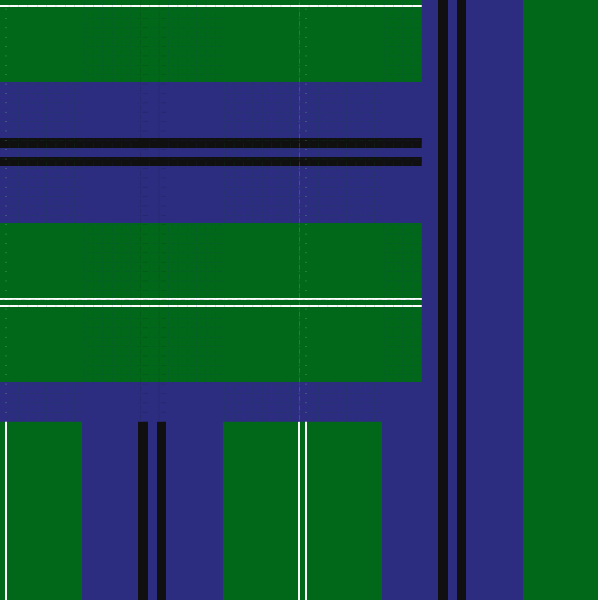
Names and reference numbers follow the Scottish Register of Tartans. Mills sell most setts in modern, ancient and weathered colourways. The pattern is the same; only the shades change.
Get the kilt
When you order a kilt, ask for the tartan by its full name — for example “Oliphant” — and say which colourway you want. “Modern” is dark and strong, “ancient” is lighter, “weathered” is muted. The sett is the same in each.
We are choosing retailers we trust and will list them here soon.
Wear the colours
Our own Oliphant range is on its way: the name, the tartan and the motto on a heavyweight tee, a hoodie and a mug. About the shop.
Lands and seats
- Aberdalgie. The clan society describes Aberdalgie in Perthshire as the principal early seat of the family.
- Kellie Castle. In Fife, held by the Oliphants for roughly 250 years until it was sold in 1613; it is now cared for by the National Trust for Scotland.
Surnames
The clan name and its spellings
- Oliphant
- Olifard
- Olyphant
- Olifant
- Olivent
- Holifard
Names associated with Clan Oliphant
- Kinloch
- Barclay
- Blair
- Fotheringham
- Mercer
- Rattray
- Rollo
- Gorthy
- Kinloch: The clan society says Kinloch is the one family that today regards itself as a sept; the link comes from bonds of protection.
- Barclay: Barclay of Strowie appears in the society's theoretical list, based on historic bonds.
- Blair: Blair of Balthayock appears in the society's theoretical list, based on historic bonds.
- Fotheringham: Fotheringham of Prowie appears in the society's theoretical list, based on historic bonds.
- Mercer: Mercer of Innerpeffray appears in the society's theoretical list, based on historic bonds.
- Rattray: A theoretical link only; Clan Rattray is a clan in its own right and would likely object, says the society.
- Rollo: A theoretical link only; Clan Rollo is a clan in its own right and would likely object, says the society.
- Gorthy: Gorthy of that Ilk appears in the society's theoretical list, based on historic bonds.
“Associated” means the name appears in published sept lists for this clan. It does not prove descent, and many names are linked to more than one clan. Where your family lived is often the better clue.
Questions people ask
What is the Oliphant tartan?
The Scottish Register of Tartans records one Oliphant clan tartan, in blue, green, black and white, dated 1842. The Register notes that the chief claimed it with the Lord Lyon in 2004.
What is the Oliphant motto?
The motto is A tout pourvoir, French for 'Provide for all'.
Does Clan Oliphant have a chief?
Yes. The Lord Lyon confirmed a Chief of the Name and Arms of Oliphant in 2003, the first for over two centuries. The chief is styled Oliphant of that Ilk.
Where do the Oliphants come from?
The family is associated with Aberdalgie and Gask in Perthshire and with Kellie in Fife. The name is traced to the Norman-French Olifard.
Sources
- Oliphant (ref. 242) — Scottish Register of Tartans
- Clan Oliphant Chiefs — Clan Oliphant Association
- Septs of Clan Oliphant — Clan Oliphant Association
- Scottish clan is like a phoenix from the flames — Scottish Field
- Clan OLIPHANT — Electric Scotland
- Oliphant (The Scottish Nation) — Electric Scotland
- Kellie Castle and Garden — National Trust for Scotland
Clan histories are contested and sources disagree. If you can correct something here with a source, write to hello@tartanflag.com. Last updated 6 October 2026.