Clan Pollock
Pollock takes its name from the old lands of Pulloc in Renfrewshire, south of the Clyde, held by the sons of Fulbert in the twelfth century. No chief is currently recognised.
History
The surname comes from Pulloc, an old estate on the south bank of the Clyde in Renfrewshire. The name lives on in Pollok, Pollokshaws and Pollokshields, all now within Glasgow. According to the clan society, Peter, one of Fulbert's sons, was the first person to carry it as a surname.
Little is known about Fulbert from Scottish records. The society's historian argues that he was probably a Norman of real importance in England before the family moved north. His sons Peter, Robert and Helya (Elias) are said to have arrived in Scotland during the twelfth century in the service of Walter fitzAlan, the first High Steward. Land in Renfrewshire was granted to them.
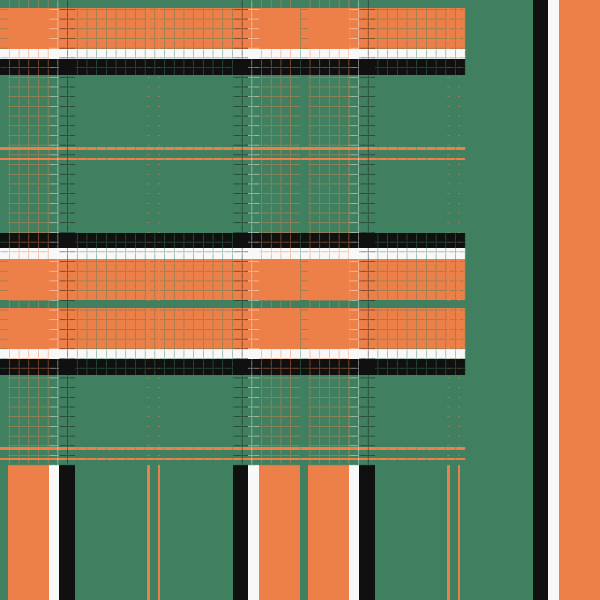
Robert's descendants became the senior branch, known as Pollok of Pollok or Pollok of that Ilk. They held Upper Pollok, and also land at Stenton in East Lothian. Nether Pollok went another way. It passed to Roland of Mearns and later, through marriage, to the Maxwells of Caerlaverock. The two families remained neighbours in the barony, and the society points to a long association between them. The Pollock tartan, built on a Maxwell sett, echoes that connection.
Pollok Castle stood at Upper Pollok and served as the family's seat. Accounts differ on how it looked in its last years, with some describing a Victorian baronial house rebuilt after a fire. All agree that it held military stores in the Second World War and was demolished in 1954. Its sale closed roughly eight hundred years of Pollok ownership of the estate.
In 1703 Sir Robert Pollock was created a baronet of Nova Scotia. The society names the last of the direct male line as Sir Robert Pollok, 18th of that Ilk and 2nd Baronet, who died in 1783. Today nobody holds the title, and Pollock is generally described as an armigerous clan.
The modern clan society grew from an effort led by Rhys Pollock in 1979. In 1980 it adopted a tartan of its own and had it registered. Its badge shows a boar pierced by an arrow, and its motto, Audacter et strenue, means boldly and strongly.
Clan Pollock tartans
Names and reference numbers follow the Scottish Register of Tartans. Mills sell most setts in modern, ancient and weathered colourways. The pattern is the same; only the shades change.
Get the kilt
When you order a kilt, ask for the tartan by its full name — for example “Pollock” — and say which colourway you want. “Modern” is dark and strong, “ancient” is lighter, “weathered” is muted. The sett is the same in each.
We are choosing retailers we trust and will list them here soon.
Wear the colours
Our own Pollock range is on its way: the name, the tartan and the motto on a heavyweight tee, a hoodie and a mug. About the shop.
Lands and seats
- Pollok Castle. The Renfrewshire home of Pollok of that Ilk. Sources differ on its final form, but it stored military supplies in the Second World War and was demolished in 1954.
Surnames
The clan name and its spellings
- Pollock
- Pollok
- Polk
- Polke
- Paulk
- Poalk
- Poalke
- Poulk
- Poolke
- Pook
- Pogue
“Associated” means the name appears in published sept lists for this clan. It does not prove descent, and many names are linked to more than one clan. Where your family lived is often the better clue.
Questions people ask
What is the Pollock tartan?
The Scottish Register of Tartans records one Pollock clan tartan, dated 1980. It is based on the Maxwell hunting sett with a white line in place of green, and it was designed for the clan society.
What is the Pollock motto?
The motto is Audacter et strenue, Latin for 'Boldly and strongly'. The clan badge shows a boar pierced by an arrow.
Does Clan Pollock have a chief?
No chief is currently recognised. The clan society dates the end of the direct male line to 1783, so Pollock is described as an armigerous clan.
Where does the Pollock name come from?
It comes from Pulloc, an old estate in Renfrewshire south of the Clyde. The name survives in Pollok, Pollokshaws and Pollokshields in Glasgow.
Sources
- Pollock (ref. 867) — Scottish Register of Tartans
- Clan Pollock History — Clan Pollock International
- Pollock and Maxwell — Clan Pollock International
- Pollok Castle — Clan Pollock International
- Tartan — Clan Pollock International
- Clan POLLOCK — Electric Scotland
Clan histories are contested and sources disagree. If you can correct something here with a source, write to hello@tartanflag.com. Last updated 6 October 2026.