Clan Rose
Rose of Kilravock is a Nairnshire family of Anglo-Norman origin, settled on the Moray Firth since the 13th century. The chief is styled Baron of Kilravock, and the historic seat is Kilravock Castle.
History
The Roses are a Moray Firth family of Anglo-Norman origin. Clan Rose International says the name descends from the de Ros family, who appeared in the Nairn area in the 12th century, in the reign of David I. Other accounts trace the name to Ros, near Caen in Normandy. The details are uncertain, and the society itself calls one proposed link to the de Ros family of Helmsley unproven. It is a separate name from that of the Celtic Ross family.
Kilravock came through marriage. Hugh de Ros of Geddes married Marie de Bosco, whose mother was a Bisset heiress. Historic Environment Scotland places the family at Kilravock from the 13th century and says the lands have stayed with them since. The clan society adds that the family backed the Scottish cause in the wars of independence. The Chisholm boar's head entered the family arms after Hugh, 4th of Kilravock, married Janet Chisholm. The society says early charters were lost when Elgin Cathedral was attacked in 1390, and that replacements followed.
The present castle dates from about 1460. Historic Environment Scotland describes a 15th-century keep, built after a licence from the Lord of the Isles, with a 17th-century mansion joined to it by a stair tower. Scotland.org records a charter for Kilravock and Geddes in 1475, after the Earls of Ross were forfeited. The society says Mary, Queen of Scots stayed in 1562, and that James VI visited in 1598 and thought well of the 10th laird.
The 17th century drew the Roses into national quarrels. Scotland.org says the 13th baron signed the National Covenant and led his clan against Montrose at Auldearn in 1645, which is the accepted date of the battle. The clan society's history gives 1643, which looks like a slip. He died in 1649, and the estate was deep in debt. In 1715 Arthur Rose was killed leading a clan detachment to seize Inverness for the Government.
Kilravock's best-known guest night came before Culloden in 1746. Historic Environment Scotland records that Prince Charles Edward Stuart dined there, and the clan society says the 16th laird entertained him. The Duke of Cumberland came soon afterwards. The 16th laird is said to have favoured the Government but had no force to resist an army. Historic Environment Scotland also notes a visit by Robert Burns on 6 September 1787.
In the 20th century, Hugh, son of the 24th baron, was killed at the second battle of El Alamein in 1942, according to Scotland.org. The clan society says he served with the Black Watch. The chiefship passed to his sister, and later to the present holder of the title.
Clan Rose tartans
Names and reference numbers follow the Scottish Register of Tartans. Mills sell most setts in modern, ancient and weathered colourways. The pattern is the same; only the shades change.
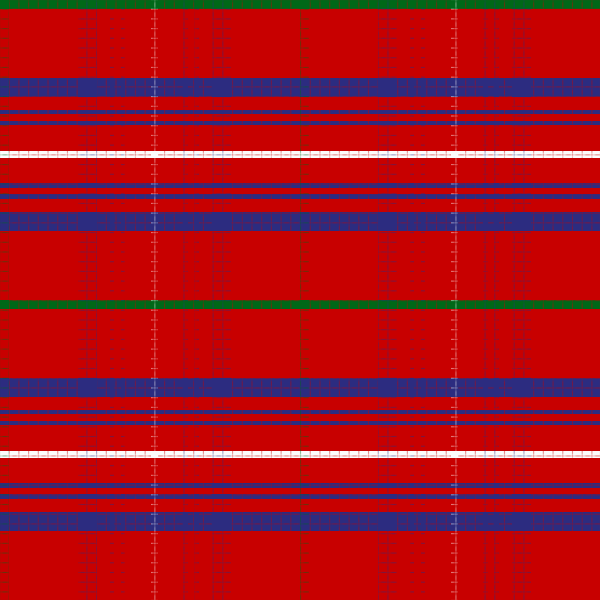 RoseClan tartan · Register ref. 3547
The Register dates this to the Vestiarium Scoticum and notes that the text gives purple and crimson, though the plate shows mid blue and scarlet. It adds that D.C. Stewart regarded the sett as a 'dress' tartan, and that James Logan records a 'hunting' version.
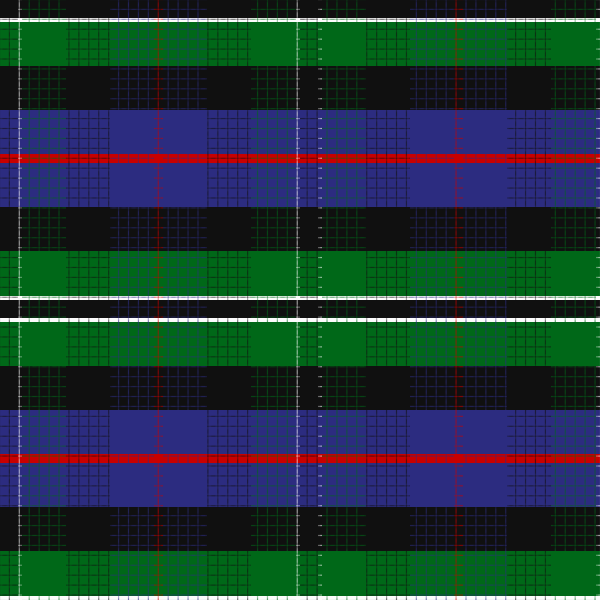 Rose HuntingHunting tartan · Register ref. 3548
The Register says this was first recorded in 1831 in James Logan's 'The Scottish Gael'. It also appears in J. Claude's 1880 pattern books 'Clans Originaux' and 'Scotch Tartans'.
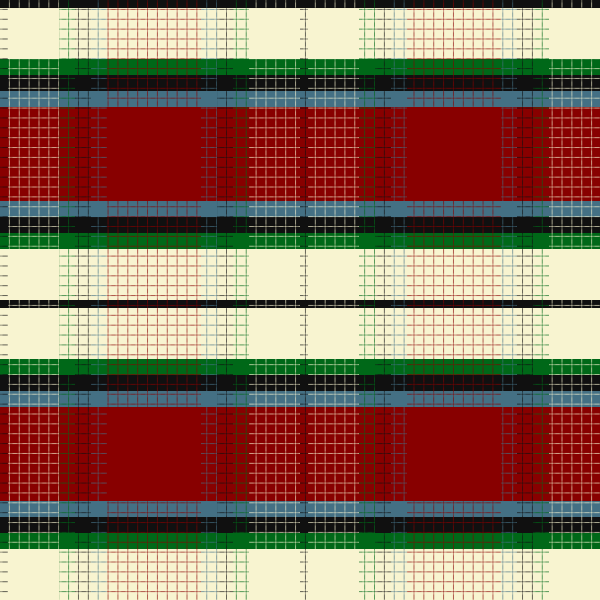 Rose White DressDress tartan · Register ref. 3549
The Register says the name 'White Dress' comes from the Rose Society US website, but that it does not appear to have general acceptance as a Dress Rose. It suggests the sample dates from between 1930 and 1950.
Get the kilt
When you order a kilt, ask for the tartan by its full name — for example “Rose” — and say which colourway you want. “Modern” is dark and strong, “ancient” is lighter, “weathered” is muted. The sett is the same in each.
We are choosing retailers we trust and will list them here soon.
Wear the colours
Our own Rose range is on its way: the name, the tartan and the motto on a heavyweight tee, a hoodie and a mug. About the shop.
Lands and seats
- Kilravock Castle, near Nairn. Historic Environment Scotland lists it as a Category A building, with a 15th-century keep and a 17th-century mansion, and records the lands as held by the Rose family since the 13th century. A local newspaper reports that the castle passed to a Christian trust in 1984.
Surnames
The clan name and its spellings
- Rose
- de Ros
- de Rose
Names associated with Clan Rose
- Baron
- Barron
- Geddes
- Geddas
- Geddeis
- Geddess
- Geddis
- Gedes
- Baron: Listed by COSCA among Rose names; a common word and name with other origins.
- Barron: Listed by COSCA among Rose names; a common word and name with other origins.
- Geddes: Listed by COSCA among Rose names. The family held Geddes, near Nairn, and the name is also used by other families.
- Geddas: Listed by COSCA among Rose names.
- Geddeis: Listed by COSCA among Rose names.
- Geddess: Listed by COSCA among Rose names.
- Geddis: Listed by COSCA among Rose names.
- Gedes: Listed by COSCA among Rose names.
“Associated” means the name appears in published sept lists for this clan. It does not prove descent, and many names are linked to more than one clan. Where your family lived is often the better clue.
Questions people ask
What is the Rose tartan?
The Scottish Register of Tartans lists Rose, dated 1842, from the Vestiarium Scoticum, with Rose Hunting, recorded in 1831. It also lists a Rose White Dress, which the Register says lacks general acceptance.
What is the Rose clan motto?
Clan Rose International and COSCA give the motto as 'Constant and True'.
Which surnames are linked to Clan Rose?
COSCA lists Rose, de Ros, de Rose, Baron, Barron and several spellings of Geddes. We treat the names other than Rose as associated, and some are shared with other families.
Where is Clan Rose from?
The Roses are from the Nairn area on the Moray Firth. The historic seat is Kilravock Castle, where Historic Environment Scotland records the family as holding the lands since the 13th century.
Sources
- Rose — COSCA - Council of Scottish Clans & Associations
- Our Clan Chief — Clan Rose International
- The Rose family line in Scotland — Clan Rose International
- Heraldic badge and crest — Clan Rose International
- Kilravock Castle, Dovecote and Garden Walls (LB1841) — Historic Environment Scotland
- Rose — Scotland.org
- Members — Standing Council of Scottish Chiefs
- Rose (ref. 3547) — Scottish Register of Tartans
- Rose Hunting (ref. 3548) — Scottish Register of Tartans
- Rose White Dress (ref. 3549) — Scottish Register of Tartans
- Centuries of highs and lows for a Nairnshire-based clan — Inverness Courier
Clan histories are contested and sources disagree. If you can correct something here with a source, write to hello@tartanflag.com. Last updated 5 November 2026.