Clan Ross
Clann Anndrais
A Highland clan from Easter Ross, descended from the medieval Earls of Ross. Its chiefs were long seated at Balnagown, north of the Cromarty Firth.
History
The clan takes its name from the old province of Ross in the northern Highlands. The word is usually explained as a Celtic term for a promontory, describing the land between the Cromarty and Dornoch firths. In Gaelic the clan is Clann Anndrais, the children of Andrew. Older writers connect this with a follower of St Andrew and with a family called O'Beolan. The evidence for those early generations is thin.
Firmer ground begins with Fearchar mac an t-Sagairt, the 'son of the priest'. He helped Alexander II put down a rising in the north and was knighted for it. By 1234 he was recognised as Earl of Ross. His successors were among the great lords of the north. Men of Ross are said to have fought at Largs in 1263 and at Dunbar in 1296. An Earl of Ross was at Bannockburn in 1314 and put his seal to the Declaration of Arbroath in 1320. Earl Hugh, a brother-in-law of Robert the Bruce, was killed at Halidon Hill in 1333.
The last earl of the old line, William, died in 1372 without a son. The earldom passed through the female line and out of the family, and rival claims to it later led to the battle of Harlaw in 1411. The chiefship took a different path. It went to William's brother, Hugh Ross of Rarichies, who received a charter for the lands of Balnagown in 1374. His descendants led the clan from Balnagown for some three centuries.
Those centuries were not quiet. In the 1480s a feud with the Mackays brought a Ross victory at Tarbat and then a heavy defeat at Aldy Charrish, where the chief and many of his men were killed. Accounts differ on whether that battle was fought in 1486 or 1487. In 1651 David Ross, twelfth of Balnagown, led clansmen in the royalist army at Worcester. He was captured there and held in the Tower of London.
By the early eighteenth century Balnagown was deep in debt. In 1711 the estate went to General Charles Ross, of the unrelated Lowland family of Ross of Hawkhead in Renfrewshire. The chiefship did not go with it. It passed instead to the Rosses of Pitcalnie as heirs of the old line. A Miss Ross of Pitcalnie matriculated the chiefly arms in 1903. In 1968 the chiefship passed to David Ross of Ross and Balnagowan of the Shandwick branch.
He held the chiefship for more than fifty years and died in 2024. A successor from his family is now named as chief by at least one Clan Ross association. We have not been able to confirm the Lord Lyon's recognition from an official source. When we last checked, the Standing Council of Scottish Chiefs listed the Ross chiefship as 'under consideration'. We will update this page when the position is clear.
Clan Ross tartans
Names and reference numbers follow the Scottish Register of Tartans. Mills sell most setts in modern, ancient and weathered colourways. The pattern is the same; only the shades change.
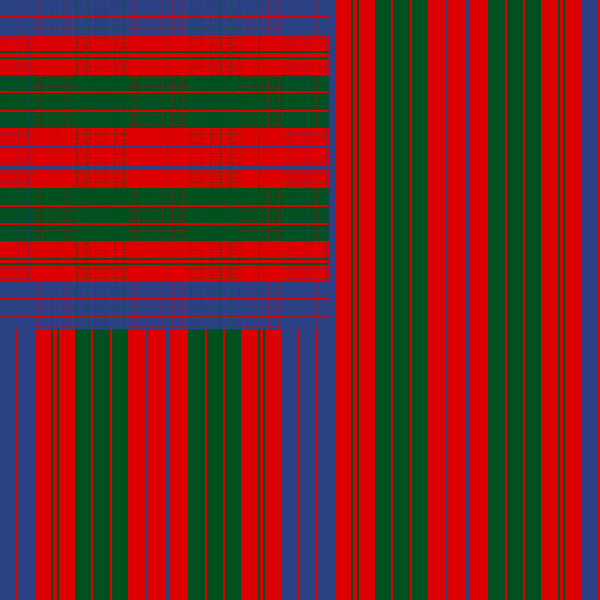 RossClan tartan · Register ref. 3552
The red Ross sett as recorded from James Grant's The Tartans and the Clans of Scotland (1886) and repeated by W & A K Johnston in 1906. The Register cautions that it may carry forward errors made by earlier illustrators such as Logan and McIan.
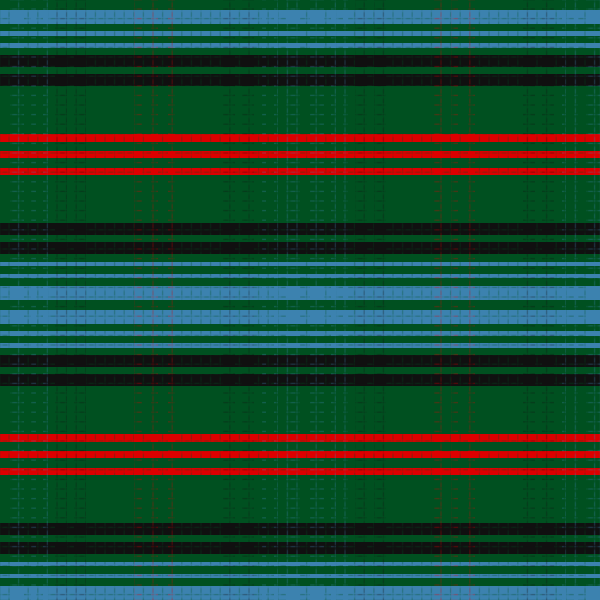 Ross HuntingHunting tartan · Register ref. 3560
A green hunting sett. The Register's sample comes from the MacGregor-Hastie collection and was unmarked; it is thought to date from between 1930 and 1950.
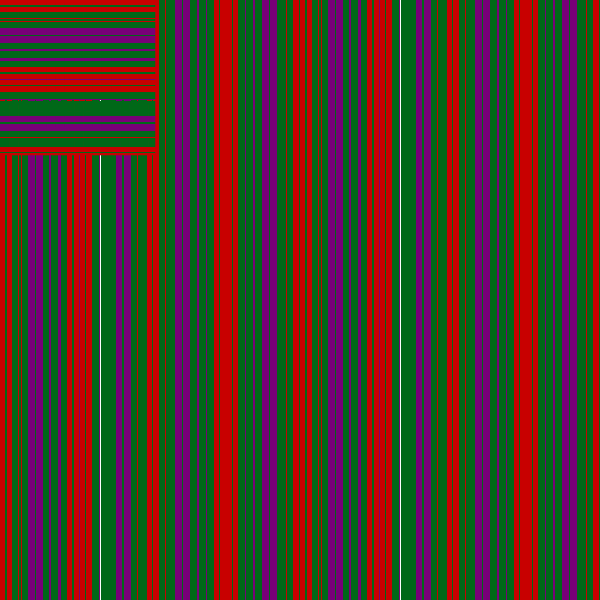 Ross (Wilsons of Bannockburn)Other sett · Register ref. 4985
The Ross pattern from the 1819 Key Pattern Book of Wilsons of Bannockburn. The Register notes that it belongs to a family of more than a dozen related designs, probably sharing a mid-eighteenth-century ancestor.
Get the kilt
When you order a kilt, ask for the tartan by its full name — for example “Ross” — and say which colourway you want. “Modern” is dark and strong, “ancient” is lighter, “weathered” is muted. The sett is the same in each.
We are choosing retailers we trust and will list them here soon.
Wear the colours
Our own Ross range is on its way: the name, the tartan and the motto on a heavyweight tee, a hoodie and a mug. About the shop.
Lands and seats
- Balnagown Castle. Seat of the Ross chiefs from a charter of 1374 until the estate passed to the Rosses of Hawkhead in 1711.
Surnames
The clan name and its spellings
- Ross
Names associated with Clan Ross
- Anderson
- Andrew
- Dingwall
- Gillanders
- MacAndrew
- MacCulloch
- MacLulich
- MacTaggart
- MacTear
- MacTier
- MacTire
- Taggart
- Vass
- Wass
- Anderson: Appears in the Ross sept list published by Electric Scotland.
- Andrew: Appears in the Ross sept list published by Electric Scotland.
- Dingwall: Appears in the Ross sept list published by Electric Scotland.
- Gillanders: Appears in the Ross sept list published by Electric Scotland.
- MacAndrew: Appears in the Ross sept list published by Electric Scotland.
- MacCulloch: Appears in the Ross sept list published by Electric Scotland.
- MacLulich: Appears in the Ross sept list published by Electric Scotland.
- MacTaggart: Appears in the Ross sept list published by Electric Scotland.
- MacTear: Appears in the Ross sept list published by Electric Scotland.
- MacTier: Appears in the Ross sept list published by Electric Scotland.
- MacTire: Appears in the Ross sept list published by Electric Scotland.
- Taggart: Appears in the Ross sept list published by Electric Scotland.
- Vass: Appears in the Ross sept list published by Electric Scotland.
- Wass: Appears in the Ross sept list published by Electric Scotland.
“Associated” means the name appears in published sept lists for this clan. It does not prove descent, and many names are linked to more than one clan. Where your family lived is often the better clue.
Questions people ask
What is the Ross tartan?
The best-known Ross tartan is a red sett with blue and green, recorded in the Scottish Register of Tartans as reference 3552. There is also a green Ross Hunting tartan and an older version from Wilsons of Bannockburn's 1819 pattern book.
What is the Clan Ross motto?
The motto is 'Spem successus alit', Latin for 'Success nourishes hope'. The crest is a hand holding a laurel garland.
Where does Clan Ross come from?
The clan comes from Easter Ross in the northern Highlands, between the Cromarty and Dornoch firths. Its chiefs descended from the medieval Earls of Ross and were seated at Balnagown from 1374.
Which surnames are associated with Clan Ross?
Published sept lists include names such as Anderson, Dingwall, Gillanders, MacCulloch, MacTaggart, Taggart, Vass and Wass. These names are associated with the clan in those lists; that is not the same as belonging to it.
Sources
- Members (list of chiefs) — Standing Council of Scottish Chiefs
- Ross — scotland.org.uk
- Clan Ross — Electric Scotland
- Scottish clan septs — Electric Scotland
- Fairbairn's Book of Crests of the Families of Great Britain and Ireland, vol. 1 (entry for Ross of Balnagowan) — James Fairbairn (1905 ed.), via Internet Archive
- List of Officers — Clan Ross Association of New Zealand
- Clan Ross; Chiefs of Clan Ross (supplementary check) — Wikipedia
- Ross – tartan details — The Scottish Register of Tartans
- Ross Hunting – tartan details — The Scottish Register of Tartans
- Ross (Wilsons) – tartan details — The Scottish Register of Tartans
Clan histories are contested and sources disagree. If you can correct something here with a source, write to hello@tartanflag.com. Last updated 12 November 2026.