Clan Scrymgeour
Scrymgeour is a Fife and Dundee name whose chiefs carried the royal banner of Scotland. The chief is the Earl of Dundee, the motto is Dissipate, and the family seat is Birkhill, near Cupar.
History
Scrymgeour is an occupational name. Sources agree it comes from an old word for a swordsman or fencer, and one history on Electric Scotland reads it as a skirmisher. Fife was the family's first home; the link with Dundee came later. Where they came from before that is less certain. One account traces them to the O'Neills, who were kings in northern Ireland. The herald Sir Iain Moncreiffe pointed instead to the Macduff Earls of Fife, and the Electric Scotland history notes that the Scrymgeour arms look like the Fife lion with its colours reversed.
The family's fame rests on one duty: carrying the king's banner into battle. Alexander Scrymgeour was confirmed in that role in March 1298, by a grant from William Wallace and the Scots parliament that also made him Constable of Dundee and gave him land at Dudhope. That same year he bore the banner at Falkirk, a Scots defeat. Later he threw in his lot with Robert the Bruce. The Gazetteer for Scotland says he was captured at Methven in 1306 and executed at Newcastle, and Scotland.org adds that Edward I ordered it.
Sources differ on who carried the banner at Bannockburn in 1314. Scotland.org names a second Alexander, while Anderson's Scottish Nation appears to credit the same Sir Alexander who fought at Falkirk. According to Anderson, Bruce later gave his son Nicholas a charter that made the standard bearer's office hereditary. Argyll entered the story around 1370, when a Scrymgeour married Agnes, the heiress of Glassary, and her lands came with her. At Flodden in 1513 the banner went into battle once more. John Scrymgeour of Glassary bore it there and was mortally wounded.
The 17th century brought titles, then ruin. In 1604 Sir James Scrymgeour was named a commissioner for a proposed union with England. Charles I created his son John Viscount of Dudhope in 1641. The second viscount fought with the Covenanters and died of wounds after Marston Moor in 1644. His heir took the other side. A royalist, he fought at Worcester in 1651, and in 1660 he became Earl of Dundee. When he died childless in 1668, the Duke of Lauderdale took the estates. Dudhope later went to John Graham of Claverhouse.
The claim to the titles stayed alive through cousins, among them the Scrymgeours of Kirkton and of Birkhill. In the late 18th century the Birkhill line also inherited the Wedderburn estates; Scotland.org gives the year as 1788, Anderson as 1778. When Edward VII was crowned, Henry Scrymgeour Wedderburn bore Scotland's standard. In 1953 his line took its claim to the House of Lords, which recognised the eleventh Earl of Dundee. Scotland.org says he was made Baron Glassary in 1954 and rose to be Deputy Leader of the House of Lords.
Scotland.org names his son, the twelfth Earl, as the present chief. The Standing Council of Scottish Chiefs lists the Earl of Dundee as chief of the name. The family tartan dates from 1971, and the Register says it was shown at a gathering of Scrymgeours at Dudhope Castle soon after.
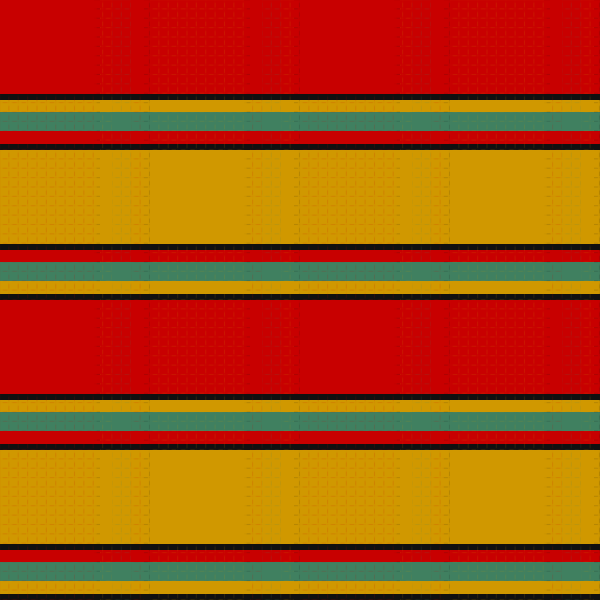
Clan Scrymgeour tartans
Names and reference numbers follow the Scottish Register of Tartans. Mills sell most setts in modern, ancient and weathered colourways. The pattern is the same; only the shades change.
Get the kilt
When you order a kilt, ask for the tartan by its full name — for example “Scrymgeour” — and say which colourway you want. “Modern” is dark and strong, “ancient” is lighter, “weathered” is muted. The sett is the same in each.
We are choosing retailers we trust and will list them here soon.
Wear the colours
Our own Scrymgeour range is on its way: the name, the tartan and the motto on a heavyweight tee, a hoodie and a mug. About the shop.
Lands and seats
- Birkhill, near Cupar, Fife. Scotland.org gives Birkhill, north of Cupar, as the family's seat today.
- Dudhope Castle, Dundee. Scotland.org says Dudhope was the family seat until 1668. The Register says a Scrymgeour gathering was held there in 1971 or 1972.
- Fincharn, on Loch Awe. Scotland.org says the family's Argyll estates were run from here.
Surnames
The clan name and its spellings
- Scrymgeour
- Scrimgeour
- Scrymseour
- Scrimseour
- Scrimger
- Scrimmiger
- Scrimmiser
- Scrimser
- Scrim
- Srimjer
“Associated” means the name appears in published sept lists for this clan. It does not prove descent, and many names are linked to more than one clan. Where your family lived is often the better clue.
Questions people ask
What is the Scrymgeour tartan?
The Scottish Register of Tartans lists Scrymgeour, ref. 3754, dated 1971. It was designed for the family by Trudi Mann and vetted by D.C. Stewart, and was later adopted as the clan tartan.
Who is the chief of Clan Scrymgeour?
The Standing Council of Scottish Chiefs and COSCA list the Earl of Dundee as chief. The family were long the hereditary standard bearers of Scotland, and Scotland.org says the family still has its seat at Birkhill, near Cupar in Fife.
What is the Scrymgeour motto?
COSCA gives the motto as Dissipate, translated as "Disperse".
Which surnames are linked to Scrymgeour?
COSCA lists many spellings of the name, including Scrimgeour, Scrymseour, Scrimger, Scrimmiger, Scrimser and Scrim. These are variants of Scrymgeour itself rather than separate septs.
Sources
- Scrymgeour — COSCA - Council of Scottish Clans & Associations
- Members — Standing Council of Scottish Chiefs
- Scrymgeour — Scotland.org
- Scrymgeour — Electric Scotland
- The Scottish Nation: Scrimgeour — Electric Scotland
- Clans and Families of Ireland and Scotland: The Gaels — Electric Scotland
- Sir Alexander Scrymgeour — Gazetteer for Scotland
- Scrymgeour (ref. 3754) — Scottish Register of Tartans
Clan histories are contested and sources disagree. If you can correct something here with a source, write to hello@tartanflag.com. Last updated 12 November 2026.