Clan Stewart
Stiùbhart
The Stewarts began as hereditary High Stewards of Scotland and became its royal house in 1371. Branches settled in Appin, Atholl, Bute and Galloway. The clan as a whole has no chief today.
History
The Stewarts take their name from a job. The family came from Dol in Brittany. Alan fitz Flaad, a Breton knight, was given lands in Shropshire by Henry I of England. His son Walter fitz Alan entered the service of David I of Scotland around 1136 and became the king's steward. In 1157 Malcolm IV confirmed the office as hereditary, along with wide lands around Renfrew and Paisley. Walter founded a priory at Paisley in 1163 and died in 1177.
The High Stewards became one of the great families of the kingdom. The 2nd Steward had won Bute back from Norwegian control by 1200, and his son probably built the first stone castle at Rothesay. Walter, the 6th High Steward, married Marjorie, daughter of Robert the Bruce. Their son Robert was born in 1316 and became steward at the age of ten. On the death of David II in 1371 he took the throne as Robert II, the first Stewart king.
The royal Stewarts reigned for more than three centuries. In 1603 James VI inherited the English throne and united the crowns. The dynasty was interrupted by the Commonwealth in 1649, restored in 1660, and ended in 1714 when the crown passed to the House of Hanover. The spelling Stuart is a French form. A note in the Scottish Register of Tartans links it to Mary, Queen of Scots, since French had no letter w.
Around the royal house grew many branches. The best known are the Stewarts of Appin, Atholl, Bute, Galloway and Balquhidder. Robert Stewart, Duke of Albany, acquired Doune in 1361 and governed Scotland for much of the period from 1386 to 1420. The Earls of Galloway, a title created in 1623, have been regarded as the senior representatives of the High Stewards since the Lennox line died out, though the Stewarts of Castlemilk also claimed the honour.
The Stewarts of Appin are the main Highland branch. They trace their line to Dugald, a son of Sir John Stewart, Lord of Lorn, who was murdered in 1463. Their seat was Castle Stalker on Creag an Sgairbh, the Cormorant's Rock, which also gave them their war cry. Appin men fought for Montrose at Inverlochy in 1645 and for the Jacobites in 1715 and 1745. The Stewart Society records that at Culloden the Appin Regiment lost 92 killed and 65 wounded out of about 300 men. In 1752 the shooting of Colin Campbell of Glenure, a government factor, led to the hanging of James Stewart of the Glens, who was convicted on thin evidence by a jury that included eleven Campbells. The Appin Murder later inspired Stevenson's Kidnapped.
Clan Stewart as a whole has no chief today, so it is usually classed as an armigerous clan. The Stewart Society, founded in 1899, is open to Stewarts, Stuarts, Steuarts and Stewards, and to associated families.
Clan Stewart tartans
Names and reference numbers follow the Scottish Register of Tartans. Mills sell most setts in modern, ancient and weathered colourways. The pattern is the same; only the shades change.
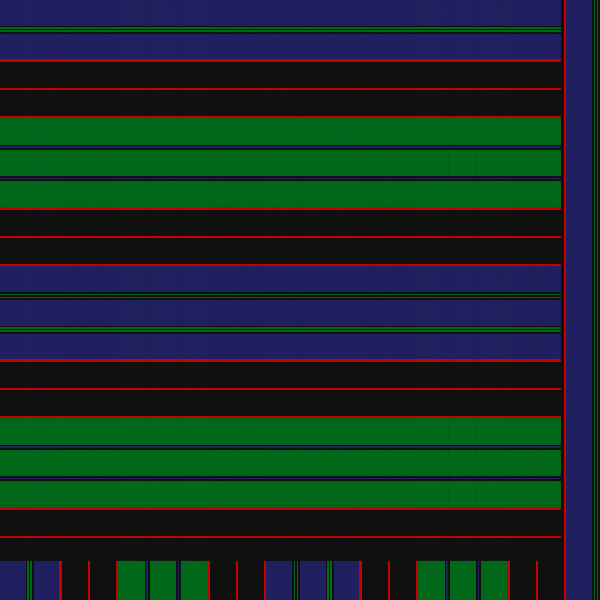 StewartClan tartan · Register ref. 3941
Often treated as the 'clan' Stewart tartan, as distinct from the Royal Stewart. The Register dates it to 1745 and quotes W. & A. Smith, who in 1850 linked it to the Stewarts of Appin and of Grandtully. It has also been recorded under the name Stewart of Bute.
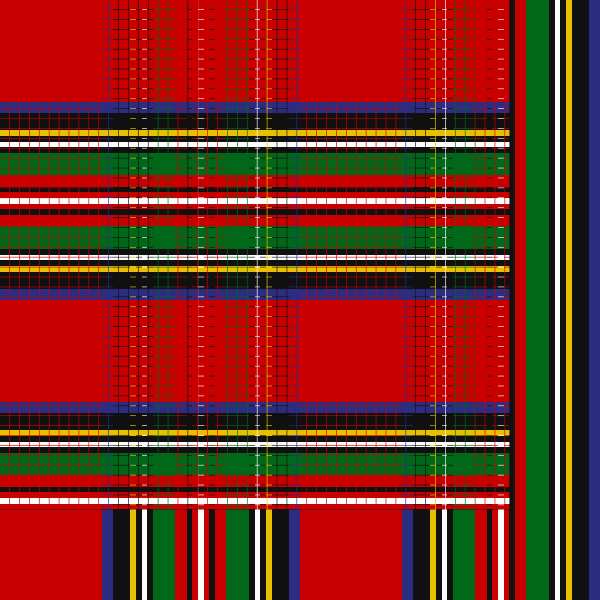 Royal StewartOther sett · Register ref. 3958
The Royal Stewart, probably the best-known tartan of all. The Register files it as a royal tartan, the sett of the Royal House of Stewart and, in theory, the monarch's own. In practice it has been worn so widely for so long that the Register notes it is now treated as a universal tartan, open to anyone without a clan tartan of their own.
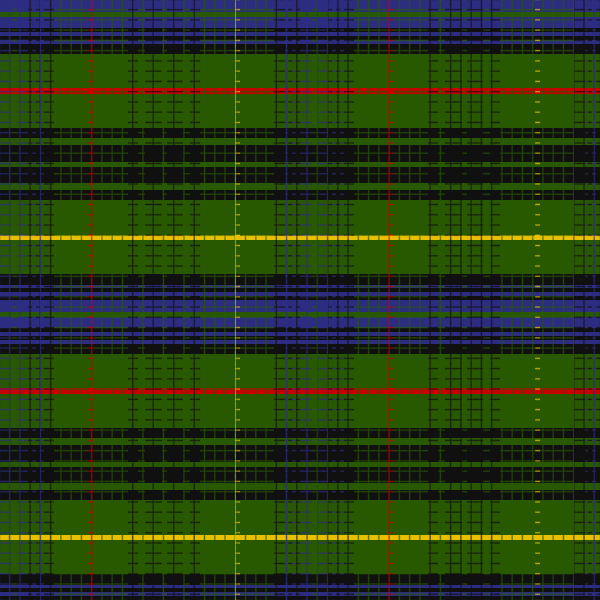 Stewart HuntingHunting tartan · Register ref. 3934
First recorded in the pattern books of Wilsons of Bannockburn and not published until 1886. The Register notes that the sett is unusual: it repeats across the cloth rather than reversing to form a symmetrical square.
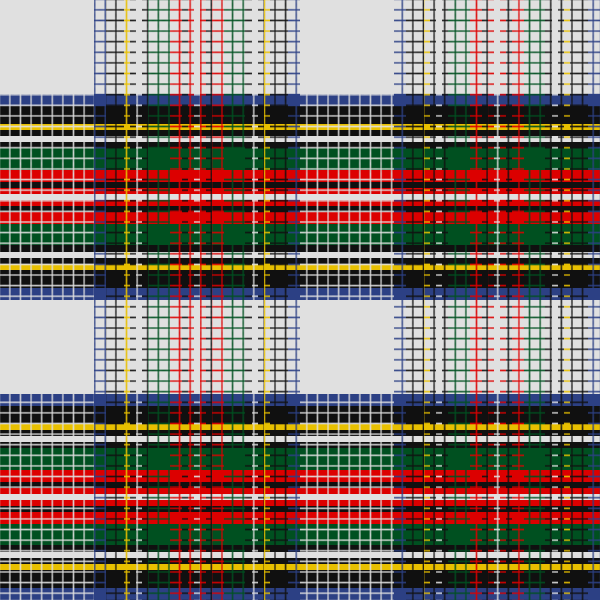 Dress StewartDress tartan · Register ref. 4002
The dress form of the Royal Stewart, with the red ground replaced by white. The Register calls it, with the Royal Stewart itself, a tartan known around the world as a symbol of Scotland.
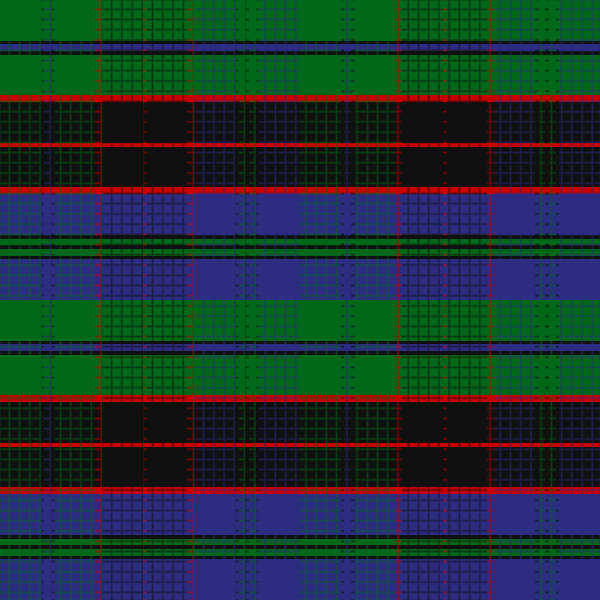 Stewart of AppinOther sett · Register ref. 3948
Citing the Stewart Society, the Register says this was made for Stewart of Achnacone by Haggarts of Aberfeldy and later adopted as Stewart of Appin by the chief. The thread count is from D. C. Stewart's 1950 book of setts.
Get the kilt
When you order a kilt, ask for the tartan by its full name — for example “Stewart” — and say which colourway you want. “Modern” is dark and strong, “ancient” is lighter, “weathered” is muted. The sett is the same in each.
We are choosing retailers we trust and will list them here soon.
Wear the colours
Our own Stewart range is on its way: the name, the tartan and the motto on a heavyweight tee, a hoodie and a mug. About the shop.
Lands and seats
- Rothesay Castle. On Bute. Historic Environment Scotland says the 3rd High Steward probably built the first stone castle here in the early 1200s. The heir to the throne is still Duke of Rothesay.
- Doune Castle. Stronghold of Robert Stewart, Duke of Albany, who governed Scotland for much of the period from 1386 to 1420.
- Castle Stalker. Tower house on a rock off the Appin shore, stronghold of the Stewarts of Appin.
Surnames
The clan name and its spellings
- Stewart
- Stuart
- Steuart
- Steward
Names associated with Clan Stewart
- Boyd
- France
- Lennox
- Menteith
- Carmichael
- Livingstone
- MacCombich
- MacLeay
- MacMichael
- MacColl
- Cruickshank
- Gray
- MacGlashan
- Bannatyne
- Fullarton
- Hunter
- Jameson
- MacCaw
- MacCloy
- MacKirdy
- Boyd: Listed under the royal Stewarts. Boyd is also a family in its own right, headed by the Lords Kilmarnock, with its own society.
- France: Listed under the royal Stewarts.
- Lennox: Listed under the royal Stewarts. Lennox is also treated as a clan in its own right.
- Menteith: Listed under the royal Stewarts; also spelt Monteith.
- Carmichael: Listed under both Appin and Galloway. Clan Carmichael is a separate clan with its own chief, listed by the Standing Council of Scottish Chiefs.
- Livingstone: Listed under the Stewarts of Appin.
- MacCombich: Listed under the Stewarts of Appin.
- MacLeay: Listed under the Stewarts of Appin, with forms such as Maclay and Maclea.
- MacMichael: Listed under both Appin and Galloway.
- MacColl: Listed under the Stewarts of Appin; the High Council of Clan Donald also counts MacColls as a Clan Donald family.
- Cruickshank: Listed under the Stewarts of Atholl, with Crookshanks.
- Gray: Listed under the Stewarts of Atholl. A common surname with many other origins.
- MacGlashan: Listed under the Stewarts of Atholl; also appears in the Clan Donnachaidh Society's list of names.
- Bannatyne: Listed under the Stuarts of Bute; also appears in Clan Campbell sept lists.
- Fullarton: Listed under the Stuarts of Bute.
- Hunter: Listed under the Stuarts of Bute. Clan Hunter is a separate clan with its own chief, listed by the Standing Council of Scottish Chiefs.
- Jameson: Listed under the Stuarts of Bute.
- MacCaw: Listed under the Stuarts of Bute.
- MacCloy: Listed under the Stuarts of Bute.
- MacKirdy: Listed under the Stuarts of Bute.
“Associated” means the name appears in published sept lists for this clan. It does not prove descent, and many names are linked to more than one clan. Where your family lived is often the better clue.
Questions people ask
What is the Stewart tartan?
There are many. The sett often treated as the clan tartan is a dark pattern of blue, green and black with red lines, which the Scottish Register of Tartans dates to 1745. Hunting Stewart, Dress Stewart and branch tartans such as Stewart of Appin are also widely worn.
Can anyone wear Royal Stewart?
In practice, yes. The Register describes Royal Stewart as the tartan of the royal house and, in theory, the monarch's personal tartan. It adds that it became so popular that it is now regarded as a universal tartan, open to anyone without a clan tartan of their own.
Does Clan Stewart have a chief?
Not the clan as a whole. It is usually classed as armigerous, meaning it has no chief at present. The Earls of Galloway are regarded as the senior representatives of the High Stewards, and the Stewarts of Appin count as a Highland clan in their own right.
Is it Stewart or Stuart?
Both are the same name. Stewart is the Scots form, taken from the office of steward. Stuart is a French-influenced spelling that the Scottish Register of Tartans links to Mary, Queen of Scots.
Sources
- The Stewart Society — stewartsociety.org
- Walter, 1st High Steward — The Stewart Society
- The First High Steward of Scotland: Walter FitzAlan — Dundonald Castle
- The Appin Regiment — The Stewart Society
- Stewarts of Galloway — Clan Stewart Society in America
- Stewarts of Appin — Clan Stewart Society in America
- Members: chiefs — Standing Council of Scottish Chiefs
- Last Clansman Trail (the Appin Murder) — Undiscovered Scotland
- Stewart Clan Crest — Scots Connection
- Chiefs of Name — House of Boyd Society
- Lennox — Council of Scottish Clans & Associations
- Rothesay Castle: History — Historic Environment Scotland
- Doune Castle: History — Historic Environment Scotland
- Robert II, king of Scotland — Encyclopaedia Britannica
- House of Stuart — Encyclopaedia Britannica
- Clan Stewart — Electric Scotland
- Clan Stewart — Wikipedia (supplementary check)
- Walter fitz Alan — Wikipedia (supplementary check)
- Clan Stewart of Appin — Wikipedia (supplementary check)
- Earl of Galloway — Wikipedia (supplementary check)
- Scottish Register of Tartans: Stewart/Stuart, Royal #2 — tartanregister.gov.uk
- Scottish Register of Tartans: Stewart/Stuart — tartanregister.gov.uk
- Scottish Register of Tartans: Stewart Hunting — tartanregister.gov.uk
- Scottish Register of Tartans: Stuart/Stewart Dress Royal — tartanregister.gov.uk
- Scottish Register of Tartans: Stewart/Stuart of Appin — tartanregister.gov.uk
- Scottish Register of Tartans: Stewart/Stuart Royal (VS) — tartanregister.gov.uk
Clan histories are contested and sources disagree. If you can correct something here with a source, write to hello@tartanflag.com. Last updated 17 September 2026.