Clan Urquhart
Urquhart is a Highland clan rooted in Cromarty on the Black Isle, where the family held the hereditary sheriffdom for three centuries. Its best-known figure is Sir Thomas Urquhart, the eccentric translator of Rabelais.
History
The Urquharts take their name from the district of Urquhart in Ross-shire, though the family's documented history begins not there but at Cromarty, on the Black Isle. The first Urquhart to appear in the record is William de Urchard, remembered for defending the motte of Cromarty during Scotland's wars of independence in the late thirteenth century. David II confirmed his descendant Adam de Urquhart in the office of sheriff of Cromarty during the 1350s, and, with interruptions, Urquharts kept hold of it for roughly three centuries afterward.
That sheriffdom gave the family its base. In 1470 James III allowed Sir William Urquhart to build a tower on the old motte at Cromarty, and later, under Thomas Urquhart, the seventh chief, this grew into a proper castle overlooking the Cromarty Firth. From here the Urquharts of Cromarty acted as hereditary sheriffs, effectively the crown's men on the ground in that part of Ross-shire long before Scotland had any other form of local government.
The family's best-remembered chief held the title in the seventeenth century. Sir Thomas Urquhart of Cromarty was knighted by Charles I in 1639 for his part in routing Covenanter forces at the so-called Trot of Turriff. When his father died in 1642, the estates he took on came burdened with debts that outweighed them. He is remembered now chiefly as a writer: an inventive, digressive prose stylist whose translation of Rabelais's Gargantua and Pantagruel is still read for its sheer relish of language. Financial and political trouble, including a period as a prisoner after the Royalist defeat at Worcester, followed him for the rest of his life.
A cadet branch took root further east. John Urquhart, known as the Tutor of Cromarty for his role managing the family's affairs, built Craigston Castle near Turriff in Aberdeenshire between 1604 and 1607. Unlike the chiefly seat at Cromarty, Craigston has stayed in Urquhart hands ever since, and the family still lives there today.
The senior line's fortunes did not hold as well. Cromarty Castle was sold out of the family in 1763, and its new owner, George Ross, had it demolished in 1772 to make way for Cromarty House. Worth noting here: the well-known ruin called Urquhart Castle, on Loch Ness, is a different building with a different history. It passed to Clan Grant in the sixteenth century and was never the Cromarty Urquharts' seat, whatever the shared name might suggest.
The chiefship itself carried on through a branch of the family long settled in Louisiana. Kenneth Trist Urquhart, an academic who brought a notably modern, businesslike approach to the role, served as the 27th chief until his death in October 2012. His son, a retired United States Air Force officer, succeeded him as the 28th chief, styled Urquhart of Urquhart. In 2014 the chiefly line passed ownership of Castle Craig, a ruined tower on the Cromarty Firth and the clan's oldest surviving building, to the Clan Urquhart Foundation for preservation. The Clan Urquhart Association today brings together Urquharts and related families worldwide.
Clan Urquhart tartans
Names and reference numbers follow the Scottish Register of Tartans. Mills sell most setts in modern, ancient and weathered colourways. The pattern is the same; only the shades change.
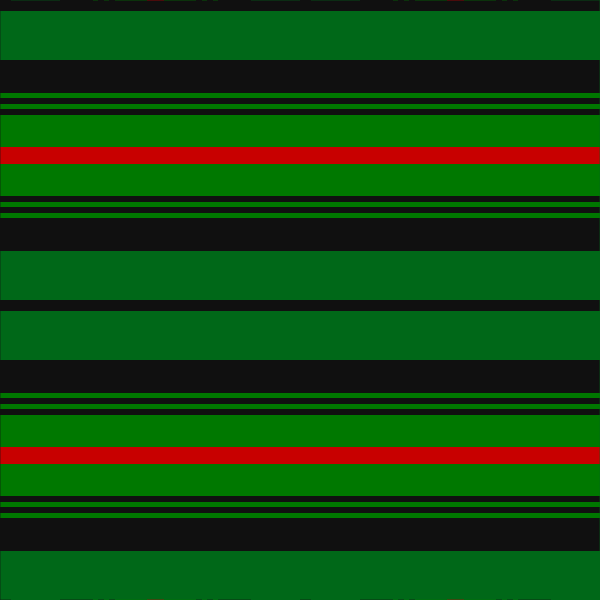 UrquhartClan tartan · Register ref. 4431
The threadcount was set down in the Lyon Court Books in 1991 by Kenneth Urquhart of Urquhart, then chief of the clan. The earliest known sample of the pattern survives in the Cockburn Collection, put together in Glasgow's Mitchell Library between 1810 and 1815, which places this sett in use well before most registered clan tartans.
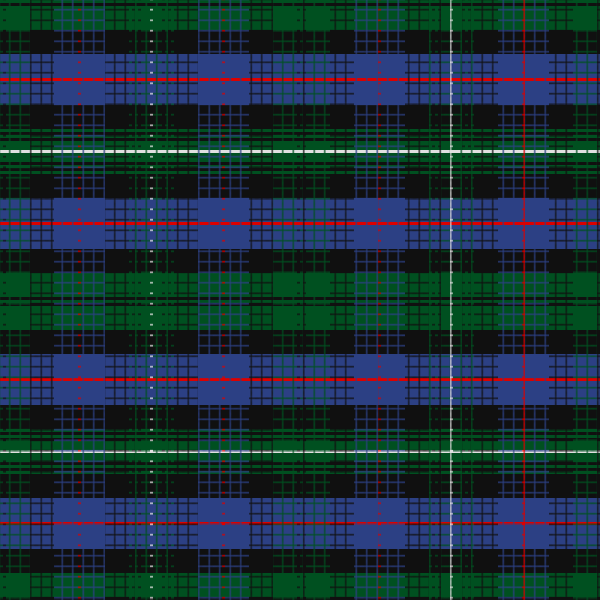 Urquhart, BrydoneOther sett · Register ref. 4429
This sett was recorded by John MacGregor Hastie, who attributed it to James Brydone and dated it to 1862. Despite carrying the Urquhart name in the Register, its documented origin lies with the Brydone family rather than with the clan's own chiefly line.
Get the kilt
When you order a kilt, ask for the tartan by its full name — for example “Urquhart” — and say which colourway you want. “Modern” is dark and strong, “ancient” is lighter, “weathered” is muted. The sett is the same in each.
We are choosing retailers we trust and will list them here soon.
Wear the colours
Our own Urquhart range is on its way: the name, the tartan and the motto on a heavyweight tee, a hoodie and a mug. About the shop.
Lands and seats
- Castle Craig. A ruined tower house on the Cromarty Firth, probably built for the Urquharts of Cromarty to mark the western edge of their sheriffdom. The 28th chief transferred its ownership to the Clan Urquhart Foundation in 2014 for preservation.
- Craigston Castle. Built between 1604 and 1607 near Turriff, Aberdeenshire, by John Urquhart, known as the Tutor of Cromarty, for a cadet branch of the family. It has stayed in Urquhart hands ever since and remains a family home today.
Surnames
The clan name and its spellings
- Urquhart
- Urchard
- Urcutt
- Orcutt
- Cromartie
Names associated with Clan Urquhart
- Cromarty
- Munro
- Ross
- Mackenzie
- Cromarty: Recognised as a sept by the current chief, taken from the family's historic barony and sheriffdom of Cromarty.
- Munro: A neighbouring Ross-shire family, traditionally linked to the Urquharts of Cromarty by territory and marriage rather than by formal sept status.
- Ross: Traditionally linked to the Urquharts through their shared ground in Ross-shire.
- Mackenzie: Traditionally linked to the Urquharts through territory and marriage in the Cromarty area.
“Associated” means the name appears in published sept lists for this clan. It does not prove descent, and many names are linked to more than one clan. Where your family lived is often the better clue.
Questions people ask
What is the Urquhart tartan?
The main Urquhart tartan was recorded in the Lyon Court Books in 1991, though its earliest known sample dates to 1810-15 and is held in Glasgow's Mitchell Library. A second, separate design on the Register, the Urquhart (Brydone) tartan, is dated to 1862 and is linked to the Brydone family rather than to the clan itself.
What does the Urquhart motto mean?
The motto is 'Meane weil, speak weil and doe weil', plain Scots for 'mean well, speak well, and do well'. It appears on the crest badge, wrapped around a figure of a woman holding a sword and a palm branch.
Does Clan Urquhart have a chief?
Yes. The chief is styled Urquhart of Urquhart, the 28th to hold the chiefship since it passed from Kenneth Trist Urquhart, the 27th chief, on his death in October 2012.
What surnames are linked to Clan Urquhart?
Urchard, Urcutt and Orcutt are older spellings or variants of Urquhart itself. Cromarty and Cromartie are recognised as a sept, taken from the family's historic barony of Cromarty. Munro, Ross and Mackenzie are traditionally linked through territory and marriage in Ross-shire, though not as formal septs.
Sources
- Urquhart tartan (ref. 4431) — Scottish Register of Tartans
- Urquhart (Brydone) tartan (ref. 4429) — Scottish Register of Tartans
- History of Clan Urquhart — Clan Urquhart Association
- History of the Chiefship — Clan Urquhart Association
- Transfer of Castle Craig — Clan Urquhart Association
- Obituary: Kenneth Urquhart of Urquhart, clan chief and academic who brought 21st-century expertise to an ancient tradition — The Scotsman
- Sir Thomas Urquhart: Biography — Undiscovered Scotland
- Castlecraig — Canmore, National Record of the Historic Environment
- Urquhart Castle: History and stories — Historic Environment Scotland
Clan histories are contested and sources disagree. If you can correct something here with a source, write to hello@tartanflag.com. Last updated 27 September 2026.