Clan Anderson
Anderson means "son of Andrew" and grew up independently across Scotland, from the Highland MacAndrews to the Lowland burghs. There is no clan chief today. Its crest is an oak tree and its motto is Stand Sure.
History
Anderson means "son of Andrew", and because Andrew is Scotland's patron saint, the name took root wherever people used it, rather than spreading out from one family in one place. The Clan Anderson Society is candid about this: there is no single point of origin. In the Lowlands the surname settled as Anderson; in the Highlands the same idea produced MacAndrew. The society gives Gillanders as a Gaelic rendering, meaning roughly "servant of Andrew", though how closely that form relates to Anderson is not agreed everywhere. The earliest trace usually cited comes from 1296, when a David, son of Andrew, of Peebles, and a Duncan, son of Andrew, of Dumfries, swore fealty to Edward I of England.
The Highland branch sits inside Clan Chattan. Tradition, as the society tells it, traces the MacAndrews to a servant who travelled north with a bride of Clan Donald marrying into the Mackintoshes in the 1400s; his descendants are said to have taken the name MacAndrew, "son of the servant of Andrew". Whatever that story is worth, the link is more than legend: the Clan Chattan Association today lists MacAndrew among the septs of Clan Mackintosh. The Scottish Register of Tartans notes separately that Anderson is also recognised as a name within other Highland clans, including Ross and Donald.
South of the Highland line, the Anderson story belongs to burghs and small estates rather than glens. Records place the name in Dumfries and Peebles from the 1500s, and in several other Scottish towns over the two centuries that followed. Two landed branches stand out. At Candacraig, in Strathdon, tradition holds that a Patrick Anderson became laird in the mid-1500s after finding silver beneath a boulder on the land; whatever the truth of that tale, an Anderson family did hold Candacraig for roughly ten generations before selling it in 1866. Near Glasgow, the Andersons of Dowhill and Stobcross kept their lands into the 1740s; one of them, John Anderson of Dowhill, served as Provost of the city. The name lives on in the district of Anderston.
The name has also produced more than its share of scholars. Alexander Anderson, born in Aberdeen, settled in Paris and there edited the mathematician François Viète's papers between 1612 and 1619. His cousin David Anderson of Finshaugh earned the nickname "Davie do a' thing" for solving practical problems around Aberdeen, among them clearing a rock that blocked the harbour mouth. John Anderson, who held the natural philosophy chair at Glasgow from 1760, wrote the widely reprinted Institutes of Physics and designed a light field gun with an early hydraulic recoil check. William Anderson compiled The Scottish Nation in 1863, and Sir John Anderson served as Chancellor of the Exchequer from 1943 to 1945.
The chiefship tells a quieter story. Arms were recorded for an "Anderson of that Ilk" in the sixteenth century, but the family that held them cannot now be traced, and no chief has followed. Anderson does not appear among the clans listed by the Standing Council of Scottish Chiefs, so it counts as an armigerous clan: arms, a crest and a motto, but no chief the Lord Lyon currently recognises. The Clan Anderson Society, formed to gather the name's scattered branches, has used Wyseby, near Dumfries, as its Scottish base since 1989, with a clan room of records and artefacts. The society describes its long-serving office-holder there, Hope Vere Anderson, as its Scottish head.
Clan Anderson tartans
Names and reference numbers follow the Scottish Register of Tartans. Mills sell most setts in modern, ancient and weathered colourways. The pattern is the same; only the shades change.
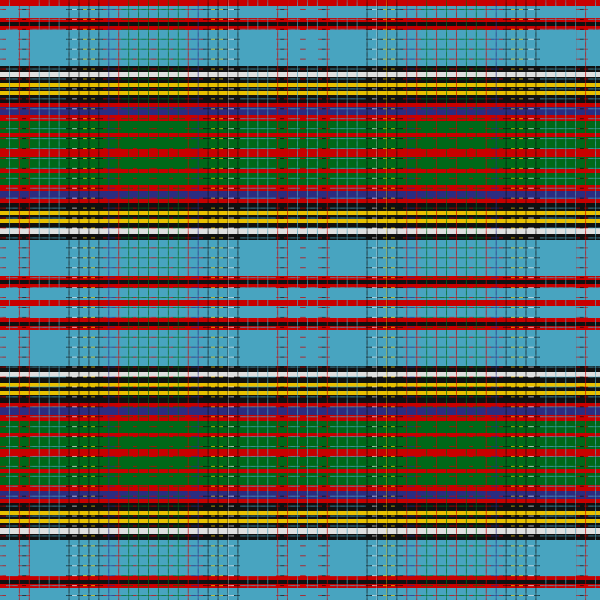 AndersonClan tartan · Register ref. 82
This sett is unusually intricate and has appeared in a number of small variations since the early 1900s. No one knows how it began. The tartan historian James Scarlett suggested it started as one of the 'fancy' patterns fashionable in the years just before George IV's state visit to Edinburgh in 1822, and was only later adopted as a clan tartan.
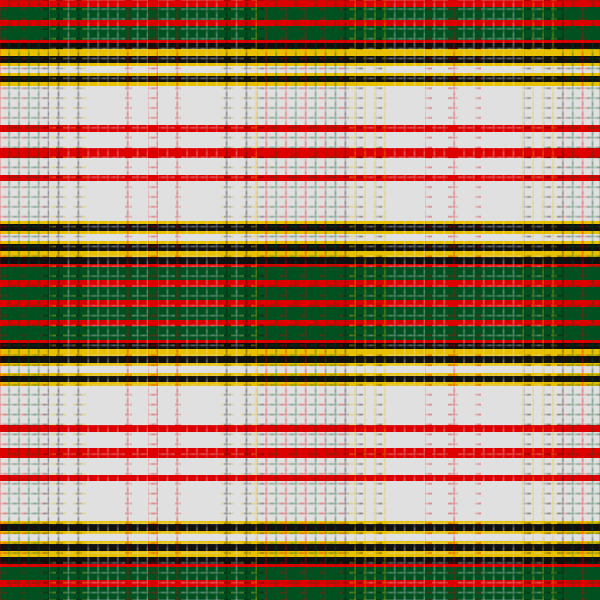 Anderson DressDress tartan · Register ref. 84
This sett comes from the old Scottish Tartans Society archive, folded into the Register when it was set up. The Register records no date for it and gives no further history.
Get the kilt
When you order a kilt, ask for the tartan by its full name — for example “Anderson” — and say which colourway you want. “Modern” is dark and strong, “ancient” is lighter, “weathered” is muted. The sett is the same in each.
We are choosing retailers we trust and will list them here soon.
Wear the colours
Our own Anderson range is on its way: the name, the tartan and the motto on a heavyweight tee, a hoodie and a mug. About the shop.
Lands and seats
- Wyseby. Near Dumfries. The Clan Anderson Society's Scottish base since 1989, with a clan room holding records and artefacts. A modern headquarters, not an ancient family seat.
- Candacraig, Strathdon. An Aberdeenshire estate held by an Anderson family for about ten generations, from the mid-1500s until its sale in 1866. Tradition credits the first laird, Patrick Anderson, with a lucky find of silver on the land.
- Stobcross, Glasgow. Home of the Andersons of Dowhill and Stobcross into the 1740s. The house is long gone, though the nearby district of Anderston still carries the family's name.
Surnames
The clan name and its spellings
- Anderson
Names associated with Clan Anderson
- MacAndrew
- Gillanders
- Andrews
- Andison
- MacAndrew: The Highland form of the name. The Clan Chattan Association lists it as a sept of Clan Mackintosh.
- Gillanders: Given by the Clan Anderson Society as a Gaelic form of the name, meaning roughly "servant of Andrew".
- Andrews: Listed by the Clan Anderson Society among historical spellings of the name.
- Andison: Listed by the Clan Anderson Society among historical spellings of the name.
“Associated” means the name appears in published sept lists for this clan. It does not prove descent, and many names are linked to more than one clan. Where your family lived is often the better clue.
Questions people ask
What is the Anderson tartan?
There are two Anderson tartans in the Scottish Register of Tartans. The main Anderson sett (ref. 82) is an unusually elaborate pattern of unknown origin, likely a 'fancy' design from just before 1822 that was later taken up as a clan tartan. Anderson Dress (ref. 84) is a lighter, brighter companion sett with no recorded date.
What is the Anderson clan motto?
The motto is "Stand Sure". The crest that goes with it is an oak tree, shown in its natural colours.
Who is the chief of Clan Anderson?
There is no recognised chief. Arms were recorded for an Anderson of that Ilk in the sixteenth century, but that family line cannot be traced today, and Anderson does not appear among the members of the Standing Council of Scottish Chiefs. The Clan Anderson Society acts as the gathering point for the name.
What surnames are linked to Clan Anderson?
MacAndrew, Gillanders, Andrews and Andison are associated forms of the name, drawn from the Clan Anderson Society's own lists. MacAndrew is also recognised as a sept of Clan Mackintosh, within the Clan Chattan confederation.
Sources
- The Sons of Andrew: A History of the Anderson Name — Clan Anderson Society
- Origins in Photos — Clan Anderson Society
- The Historical Seat of Clan Anderson: Wyseby and Its Legacy in Scotland — Clan Anderson Society
- Tartan and Arms — Clan Anderson Society
- The Scottish Nation: Anderson — Electric Scotland
- Members — Standing Council of Scottish Chiefs
- Clan Country — The Clan Chattan Association
- Past Chancellors of the Exchequer — GOV.UK
- Anderson (ref 82) — The Scottish Register of Tartans
- Anderson Dress (ref 84) — The Scottish Register of Tartans
- John Anderson (natural philosopher) — Wikipedia (supplementary check)
- John Anderson, 1st Viscount Waverley — Wikipedia (supplementary check)
Clan histories are contested and sources disagree. If you can correct something here with a source, write to hello@tartanflag.com. Last updated 17 September 2026.