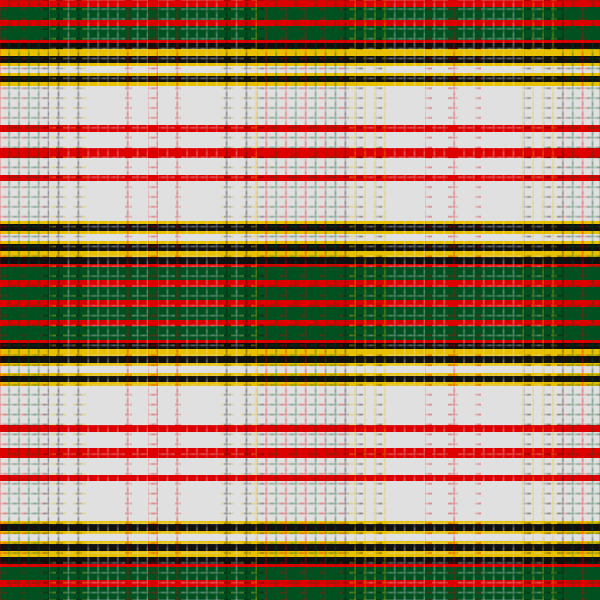
Anderson tartan
Clan tartan of Clan Anderson.
This sett is unusually intricate and has appeared in a number of small variations since the early 1900s. No one knows how it began. The tartan historian James Scarlett suggested it started as one of the 'fancy' patterns fashionable in the years just before George IV's state visit to Edinburgh in 1822, and was only later adopted as a clan tartan.
Thread count
R/6 AL12 R4 K4 R4 AL36 K6 W6 K6 DY4 K4 DY4 K8 R4 B8 R6 G12 R4 G12 R/8Each letter is a colour and each number a count of threads. The slashes mark the pivots: the pattern runs to the end, then reverses back on itself.
Colours
- R — Red
- AL — Anderson Blue
- K — Black
- W — White
- DY — Gold
- B — Blue
- G — Green
Shades follow the Register's palette for this entry. Woven cloth varies by mill and by colourway.
Get the kilt
When you order a kilt, ask for the tartan by its full name — for example “Anderson” — and say which colourway you want. “Modern” is dark and strong, “ancient” is lighter, “weathered” is muted. The sett is the same in each.
We are choosing retailers we trust and will list them here soon.
Wear the colours
Our own Anderson range is on its way: the name, the tartan and the motto on a heavyweight tee, a hoodie and a mug. About the shop.